Blog - 06/09/2026
Standard Elevator Size in the Philippines: Complete Homeowner Guide
TL;DR
Residential Elevator Dimensions Philippines are an important consideration when planning a home lift. The right elevator size affects comfort, accessibility, capacity, and whether the elevator can be installed in your home without major structural changes.
In the Philippines, where many homes are built on compact urban lots, understanding cab dimensions, door clearances, and shaft requirements early can help avoid costly redesigns later. Whether you are building a new home or upgrading an existing one, proper dimension planning has a direct impact on installation costs, long-term usability, and future accessibility.
This guide explains the most common residential elevator dimensions used in the Philippines, the regulations that apply, and how to choose the right size for your household.
What Are the Standard Residential Elevator Dimensions Philippines?
Standard residential elevator dimensions in the Philippines range from 800mm x 1,000mm (compact) to 1,400mm x 1,400mm (wheelchair-accessible). Most homes use 1,000mm x 1,200mm to 1,100mm x 1,400mm. Hoistway space is typically 200-300mm larger than the cab on each side.
Residential elevator sizes in the Philippines follow both local regulations and international standards. Below is a simplified comparison of common configurations used in Filipino homes:
| Type | Cab Size | Hoistway Required | Capacity | Door Width | Best For |
| Compact | 800 x 1,000 mm | 1,100 x 1,300 mm | ~250 kg | 700-800 mm | Tight spaces, 1-2 persons |
| Standard | 900 x 1,100 mm | 1,200 x 1,400 mm | ~300 kg | 800 mm | Small families |
| 3-Person | 1,000 x 1,200 mm | 1,300 x 1,500 mm | ~400 kg | 800-900 mm | Daily residential use |
| Wheelchair (Min) | 1,100 x 1,400 mm | ~1,500 x 1,600 mm | ~400 kg | 900 mm | Accessibility compliance |
| Wheelchair (Comfortable) | 1,400 x 1,400 mm | ~1,700 x 1,700 mm | ~500 kg | 900 mm+ | Wheelchair + companions |
In dense areas like Metro Manila, where lot space is limited, compact and standard sizes are most common. However, many homeowners now plan ahead for accessibility.
What Standards Must Residential Elevators Meet in the Philippines?
Residential elevators must comply with:
- Batas Pambansa Blg. 344 (Accessibility Law)
- Republic Act No. 7277 (Magna Carta for Disabled Persons)
- National Building Code of the Philippines
- International references like ASME A17.1
Key Accessibility Requirements (BP 344)
- Minimum cab size: 1,100mm x 1,400mm
- Minimum door width: 900mm
- Control height: 900-1,200mm
- Adequate turning space for wheelchair users
These are especially important for multi-generational Filipino households.
What Are the Minimum Space Requirements for a Home Elevator?
The minimum space required depends on the elevator type, but typical requirements include:
- Compact elevator hoistway: ~1,100mm x 1,300mm
- Wheelchair-accessible hoistway: up to ~1,700mm x 1,700mm
- Wall clearance: 75-100mm
- Approach space: At least 1.5 meters in front of doors
Machine-room-less designs can reduce space requirements, depending on the model.

Explore residential elevator dimensions in the Philippines and find the right elevator size for your home.
How Do You Choose the Right Elevator Size for a Philippine Home?
Choosing the right size depends on your household needs, future plans, and available space.
- If your space is very limited: A compact elevator (800 x 1,000 mm) may fit, but it is only suitable for standing passengers.
- If you want everyday convenience: A 3-person or standard size (900 x 1,100 mm to 1,000 x 1,200 mm) offers better usability.
- If you are planning for aging family members or accessibility: Start with at least 1,100 x 1,400 mm to avoid costly future upgrades.
In the Philippines, where multi-generational living is common, planning for accessibility early is often the smarter long-term decision.
How Can You Plan Elevator Space Efficiently in Small Philippine Homes?
Space planning is critical, especially in urban areas like Cebu City or Davao City where vertical expansion is common.
Here are practical tips:
- Plan during design stage: Retrofitting is more expensive and limiting
- Stack floors vertically: Align elevator position across all levels
- Use unused corners: Optimize dead space in layouts
- Consult early: Work with specialists to avoid redesign costs
Modern residential solutions such as those offered by Cibes Lift Philippines are designed specifically for tight spaces and can often be installed with minimal structural changes.
What Is the Ideal Elevator Size for Most Homes in the Philippines?
For most Filipino households, the ideal range is:
- 1,000mm x 1,200mm to 1,100mm x 1,400mm
This size balances:
- Space efficiency
- Comfort
- Future accessibility
While smaller units save space, slightly larger dimensions provide better long-term usability especially for families planning to stay in their homes for many years.
Why Work with a Residential Elevator Specialist?
Installing a home elevator is not just about fitting dimensions it involves compliance, safety, and long-term usability.
Working with an experienced provider like Cibes Lift Philippines helps ensure:
- Proper sizing based on your home layout
- Compliance with Philippine regulations
- Efficient installation even in tight urban spaces
- Future-ready accessibility planning
Final Thoughts
Understanding standard elevator dimensions in the Philippines helps you make smarter decisions early in your project. Whether you’re building a new home or upgrading an existing one, choosing the right size ensures safety, comfort, and long-term value.
Planning ahead – especially for accessibility – can save significant costs and effort in the future.
Frequently Asked Questions
Q: What is the smallest elevator size for a home in the Philippines?
A: Around 800mm x 1,000mm, but this is only suitable for 1–2 standing passengers.
Q: What size elevator is needed for a wheelchair?
A: At least 1,100mm x 1,400mm with a 900mm door width.
Q: How much space do I need for an elevator shaft?
A: Typically 1,100mm x 1,300mm (compact) up to 1,700mm x 1,700mm (large).
Is a permit required for home elevators in the Philippines?
A: Yes, installations must comply with the National Building Code and local permits.
Can elevators fit in small townhouses?
A: Yes. Compact models are specifically designed for tight Philippine homes.
Learn More
- The Complete Home Elevator Installation Cost Breakdown
- Residential Elevator Cabin and Door Specifications in the Philippines
Experience Center and Technical Station Address
Makati City | Balintawak – Quezon City | Mandaluyong City | Cebu City | Ilo-Ilo City | Davao City | Cagayan De Oro City






CIBES AUTHOR
Mylen Posas is the Aftersales Manager at Cibes Lift Philippines. She oversees aftersales operations, ensuring every customer receives reliable support from installation through long-term maintenance. With a strong focus on service quality and customer satisfaction, she works closely with the technical team to deliver prompt assistance and help maintain the long-term performance and safety of every Cibes home lift.



TL;DR The Cibes Experience Center Visayas in Cebu City lets homeowners, architects, designers, contractors, and developers see Cibes home lifts in person. Visitors can experience the lift cabin, review available designs and features, and discuss installation requirements with the Cibes team. The Cebu Experience Center currently lists V90 Elegance, Z85 Antera, and Ascenda among its […]
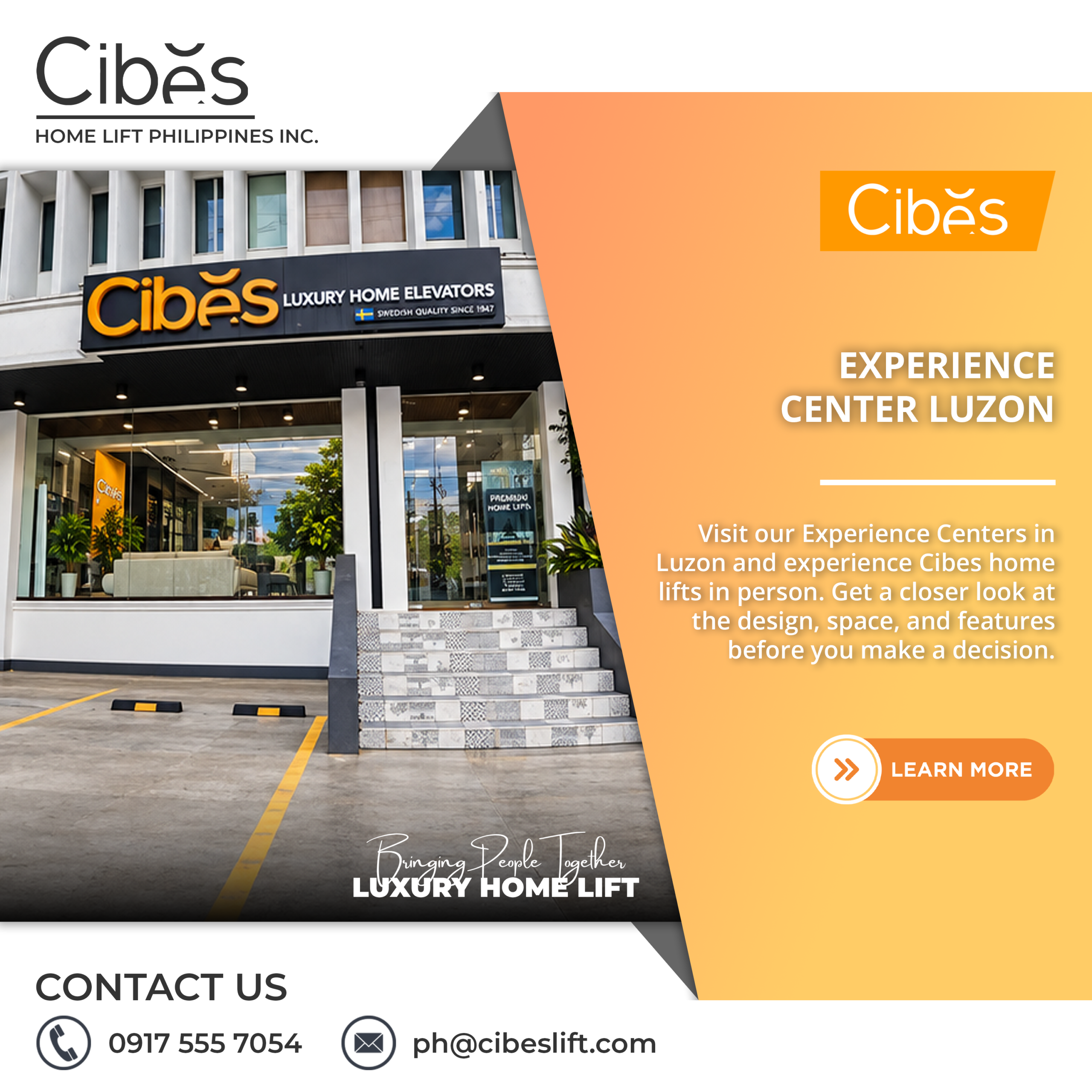
TL;DR Cibes Experience Center Luzon lets homeowners and property professionals experience Cibes home lifts in person before making a decision. Cibes Lift Philippines has 13 demo lifts across three Luzon Experience Centers: Makati (8), Mandaluyong (2), and Balintawak, Quezon City (3). Visitors can ride the lifts, check cabin space, test the controls, explore designs, and […]

TL;DR Sustainable home elevators in the Philippines are becoming an important consideration for homeowners who want to improve accessibility without overlooking environmental responsibility. Modern home elevators can support energy-efficient living through efficient drive systems, durable materials, renewable energy integration, and reduced structural changes compared with major home renovations. The Environmental Case for Sustainable Home Elevators […]

TL;DR Home Elevator Performance plays an important role in the safety, comfort, efficiency, and long-term reliability of a residential lift. While regular maintenance keeps your elevator operating reliably, proper usage, environmental control, component monitoring, electrical optimization, and timely upgrades can further improve its performance. In this guide, discover 8 expert tips to help maximize home […]
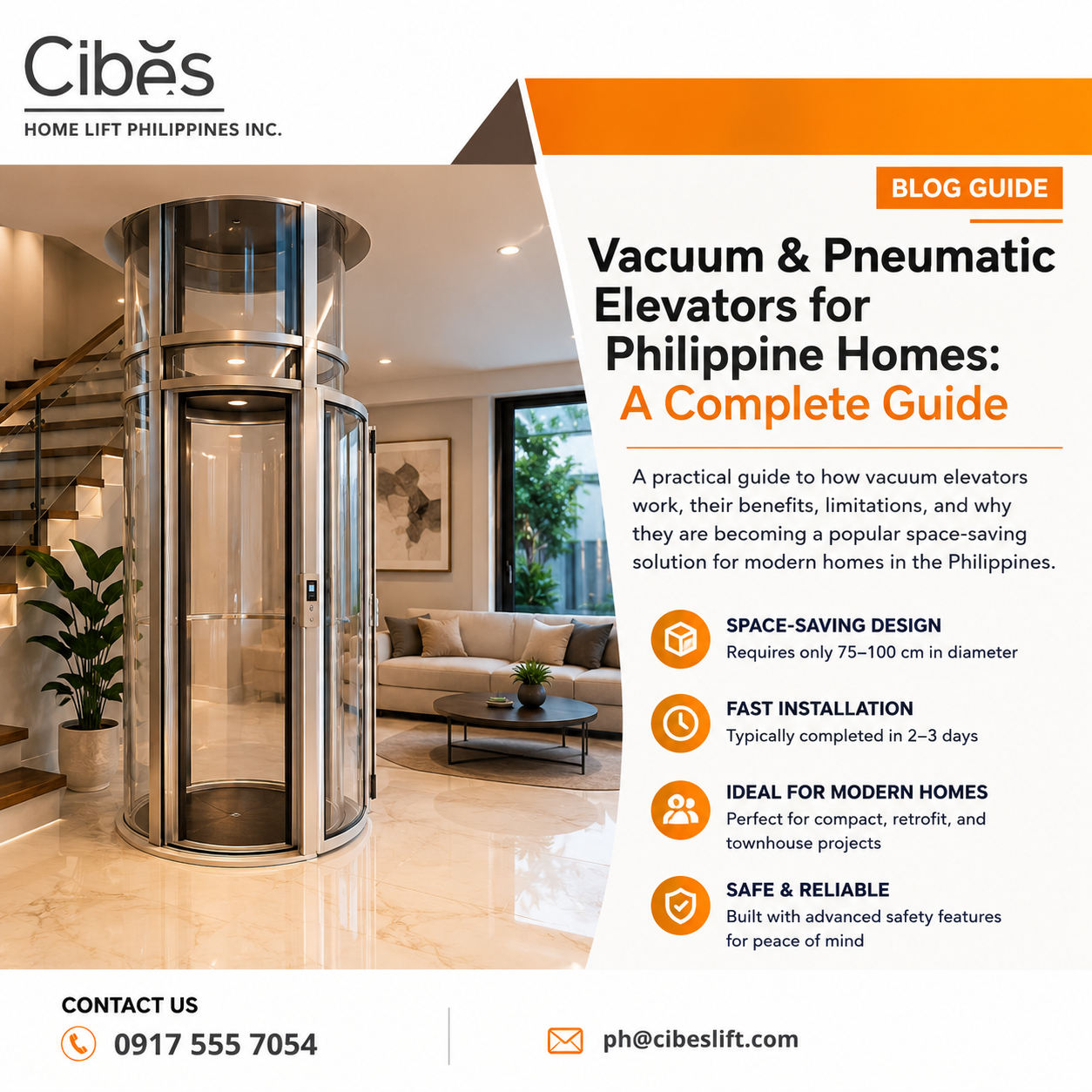
TL;DR Vacuum elevators use air pressure instead of cables or hydraulic systems to move a cabin inside a transparent tube. Most residential models require only 75 to 100 cm of space, serve 2 to 4 floors, carry 205 to 238 kg, and can often be installed in 2 to 3 days with minimal structural work. […]