Blog - 10/07/2026
Home Lifts for OFW Families: Why They’re a Smart Investment
TL;DR
Home Lifts for OFW Families are a smart long-term investment because they improve accessibility, support aging parents, and help future-proof homes for retirement and multi-generational living. Installing a home lift during construction is usually easier and more cost-effective than retrofitting later. Many OFW families choose home lifts to create a safer, more convenient, and higher-value home in the Philippines.
By including Home Lifts for OFW Families during construction, homeowners can create a house that is easier to navigate today and better prepared for the future.
Home Lifts for OFW Families provide long-term value by improving accessibility, enhancing everyday convenience, supporting aging parents, and helping future-proof homes for retirement and multi-generational living.
- Many OFWs build their dream homes as their future retirement homes.
- Home lifts improve accessibility for every generation.
- Installing a home elevator during construction is often easier than retrofitting later.
- Residential lifts help aging parents remain independent.
- A home lift is a long-term investment in comfort, convenience, and home value.
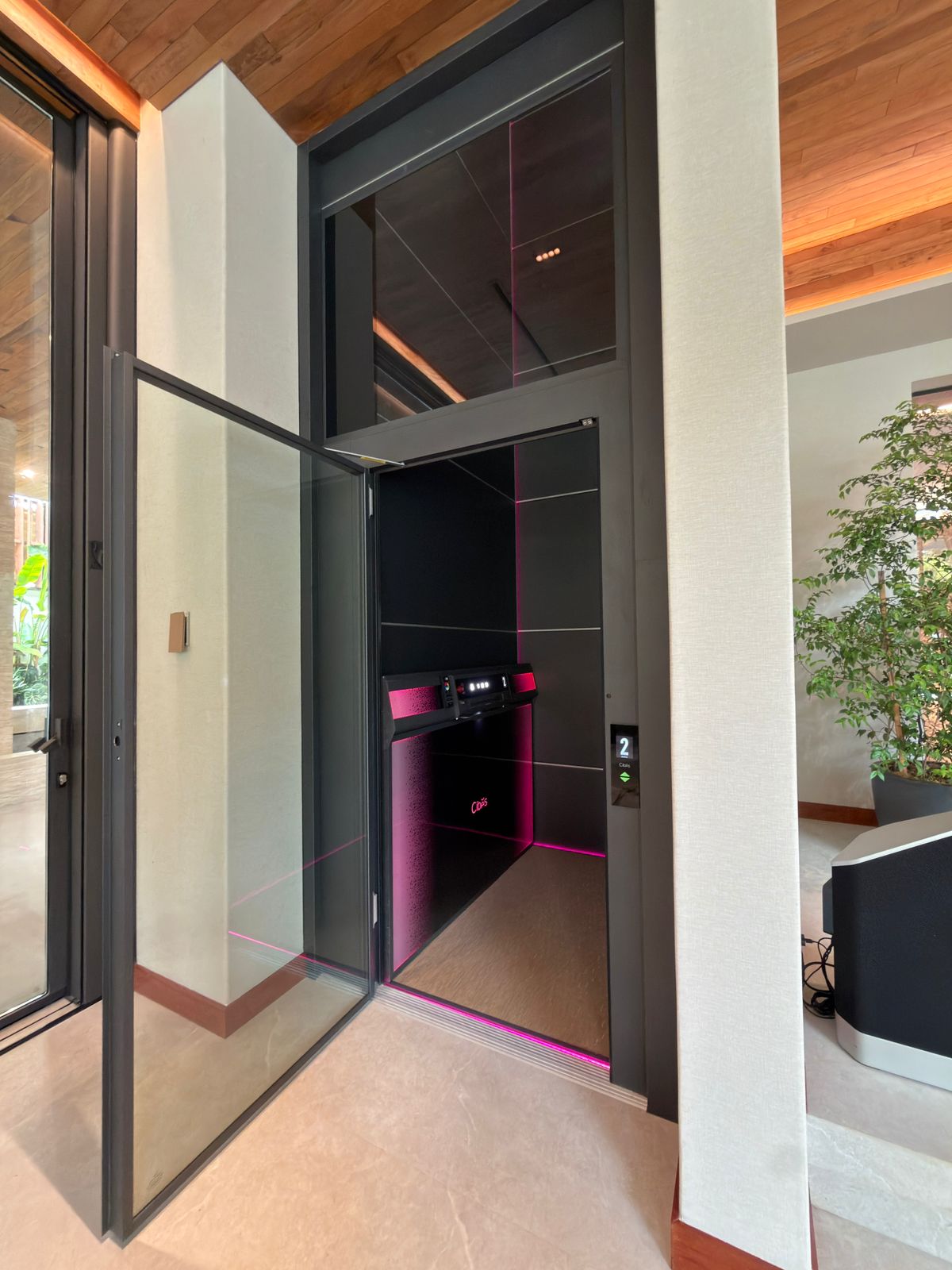
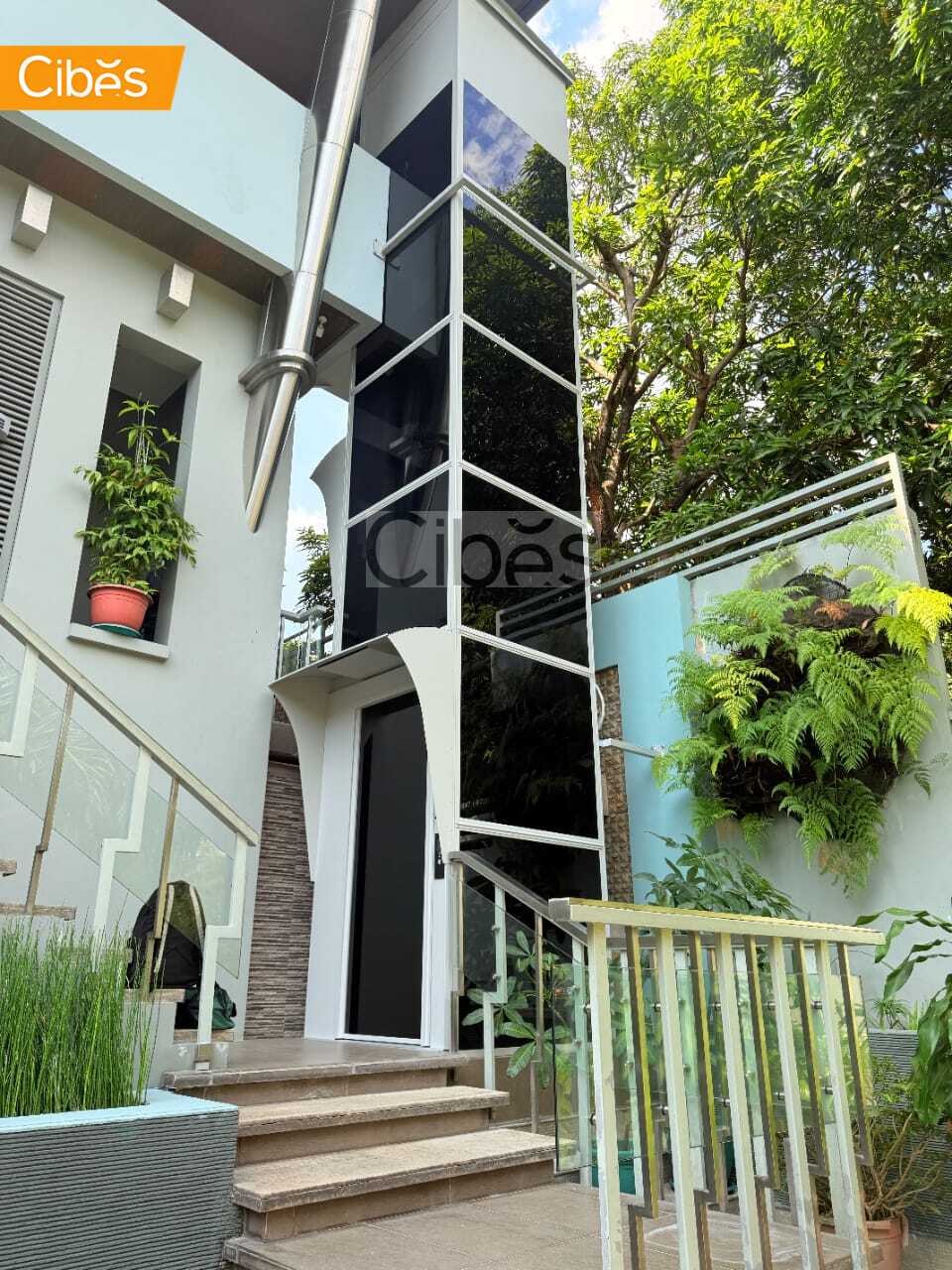
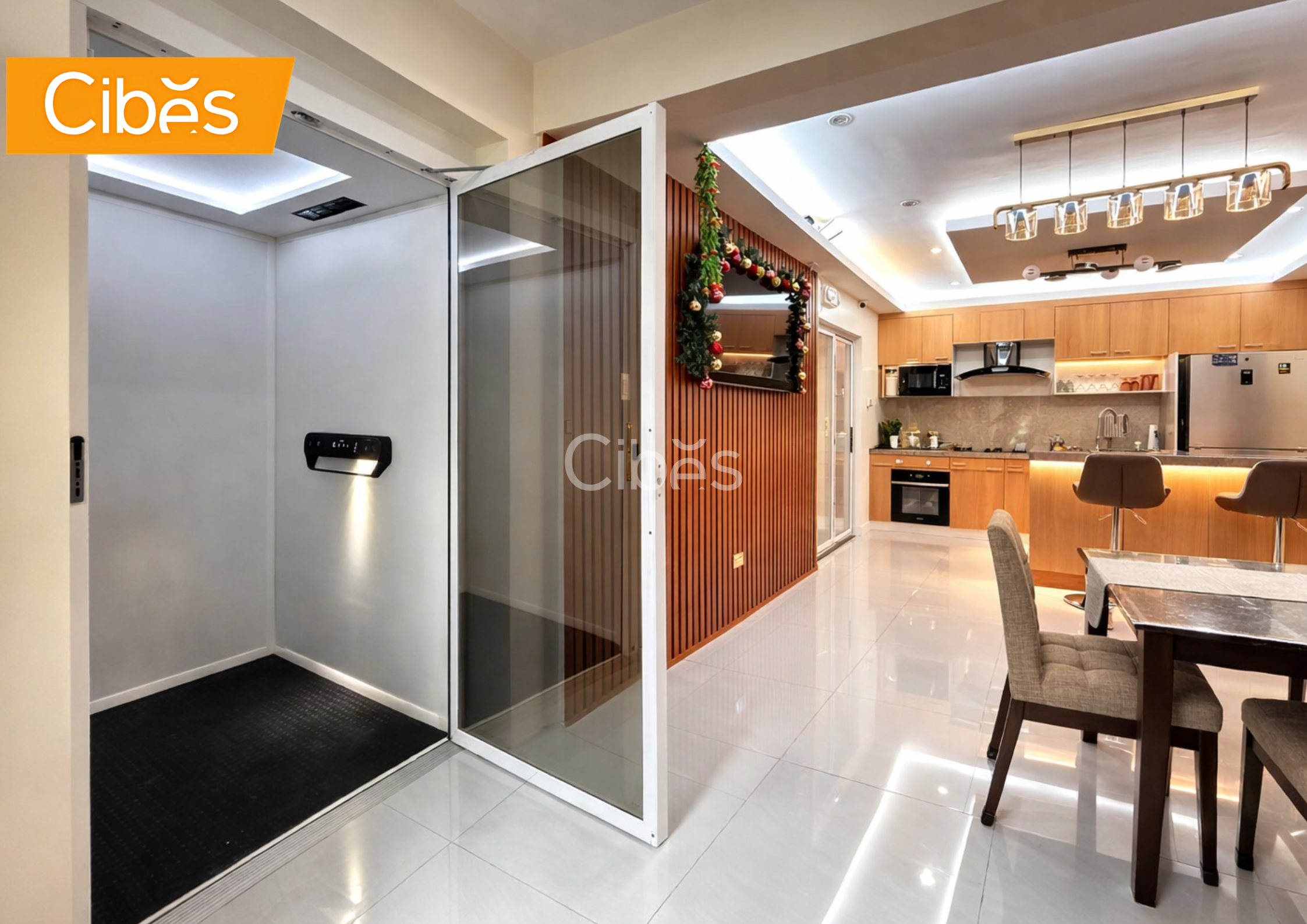
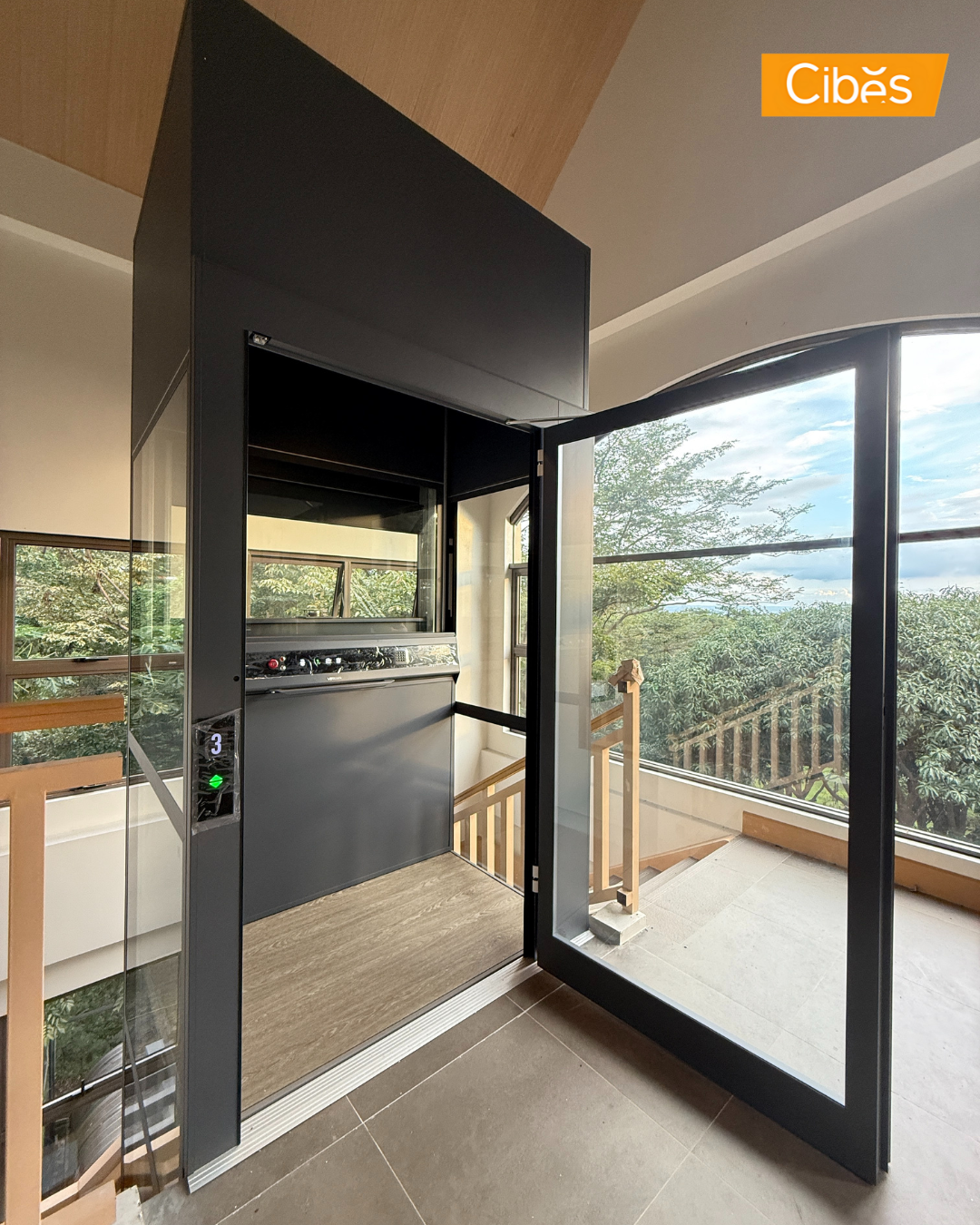
- Cibes home lifts are designed for modern Philippine homes with compact, space-saving technology.
Why Are Home Lifts for OFW Families Different from Typical Family Homes?
Many Filipino families improve their homes gradually over the years. They may renovate one room at a time or add another floor as their needs and budget grow.
For many OFWs, the process is different.
After spending years working overseas, many choose to build a completely new house from the ground up. This gives them the opportunity to carefully plan every part of the home before construction begins.
Instead of focusing only on today’s needs, OFWs often think about how their home will serve their family 10, 20, or even 30 years into the future. That long-term mindset influences many design decisions, including accessibility.
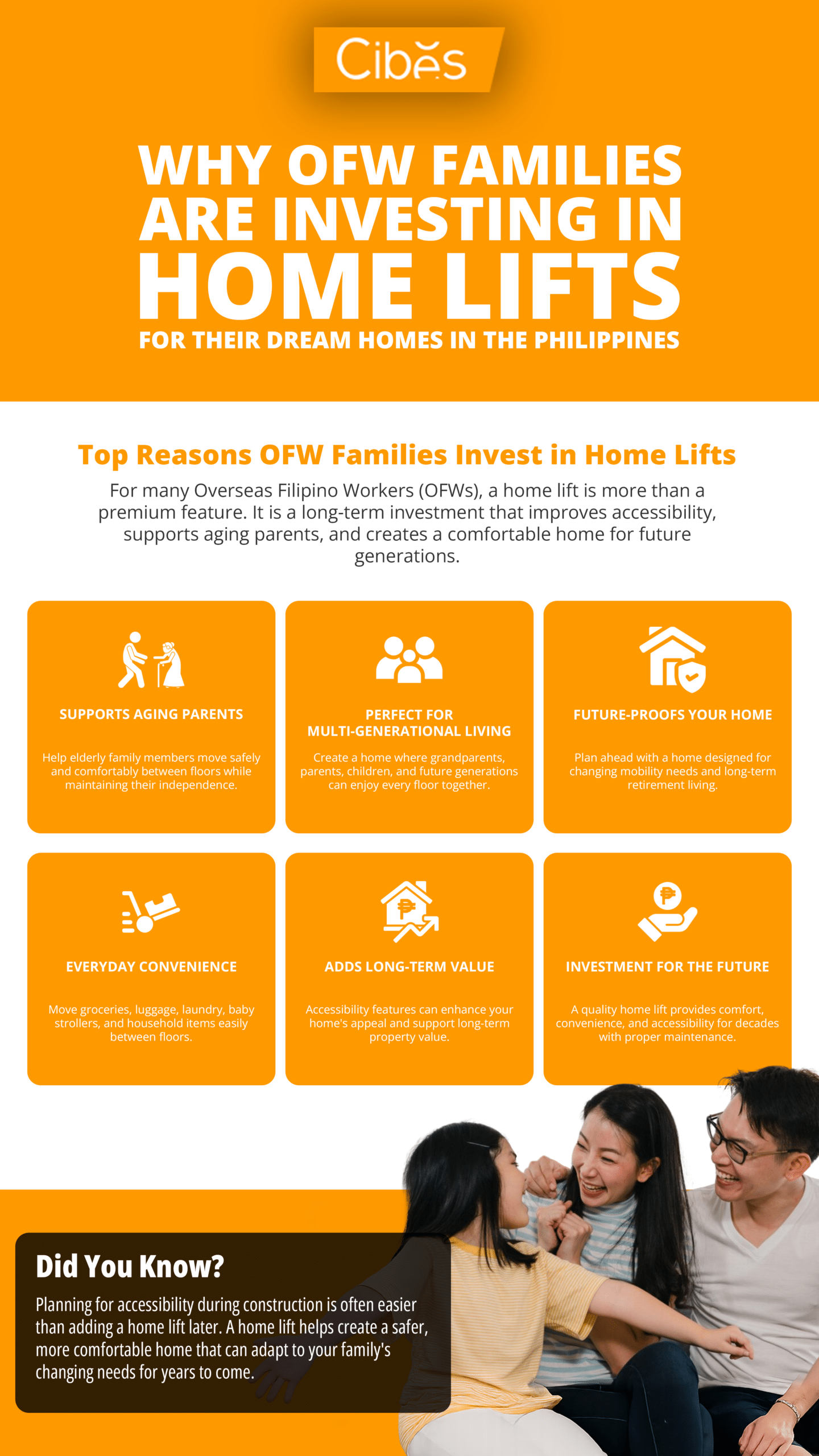
Discover the top reasons why OFW families choose home lifts for their dream homes in the Philippines.
Planning for a home elevator during construction is usually more practical than trying to install one after the house is finished. The lift can be incorporated into the architectural plans, helping reduce future renovation work while creating a cleaner, more integrated design.
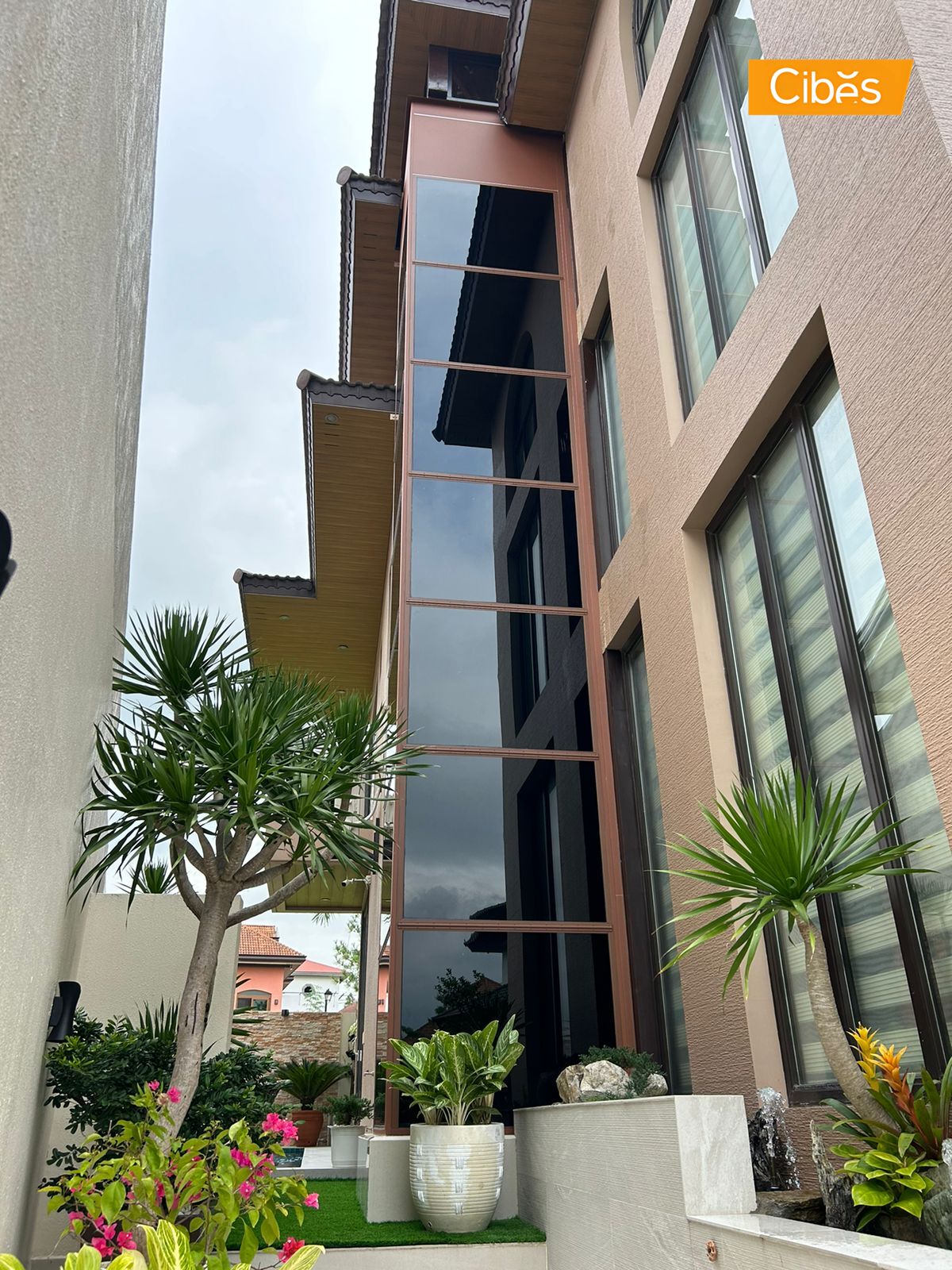
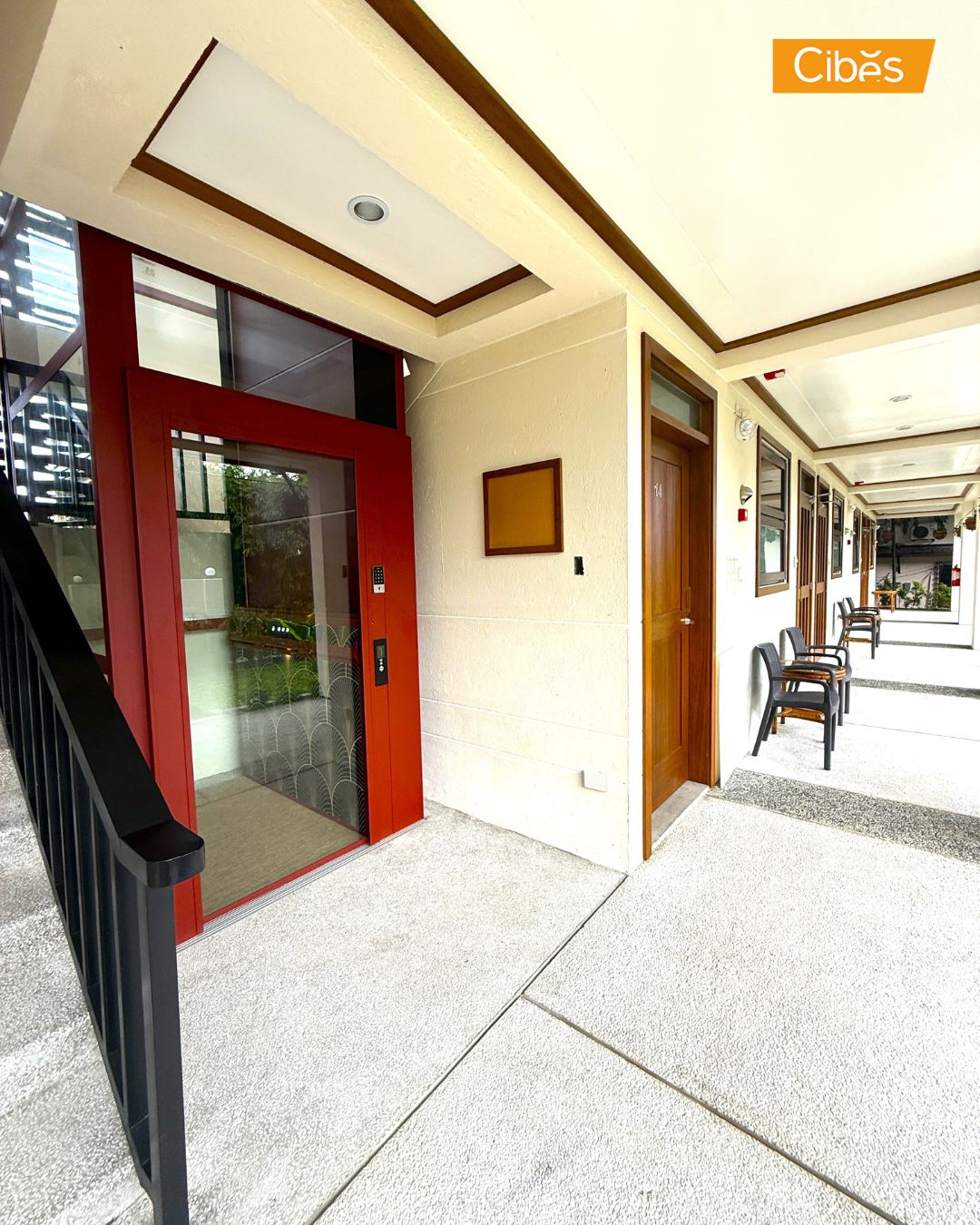
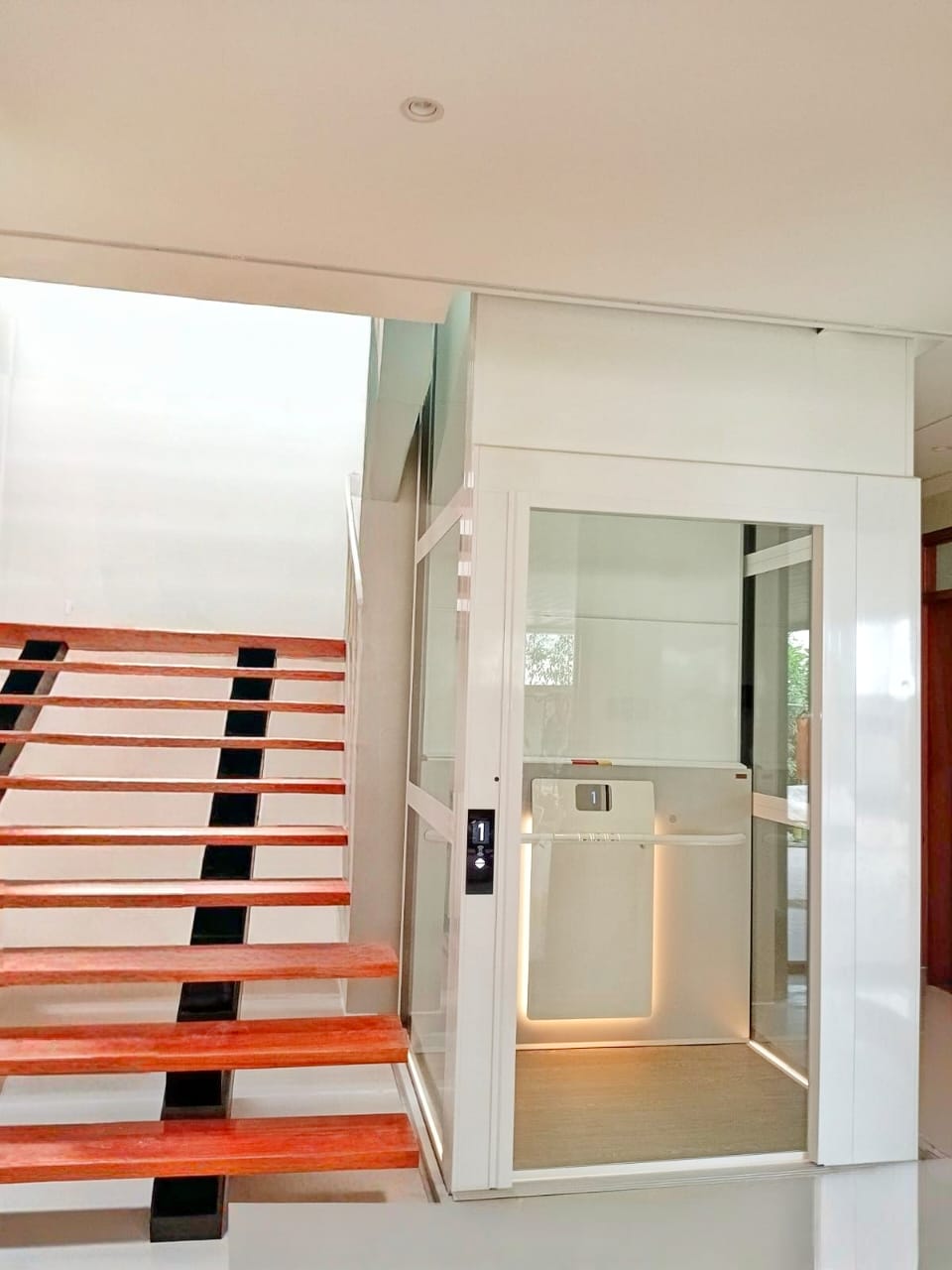
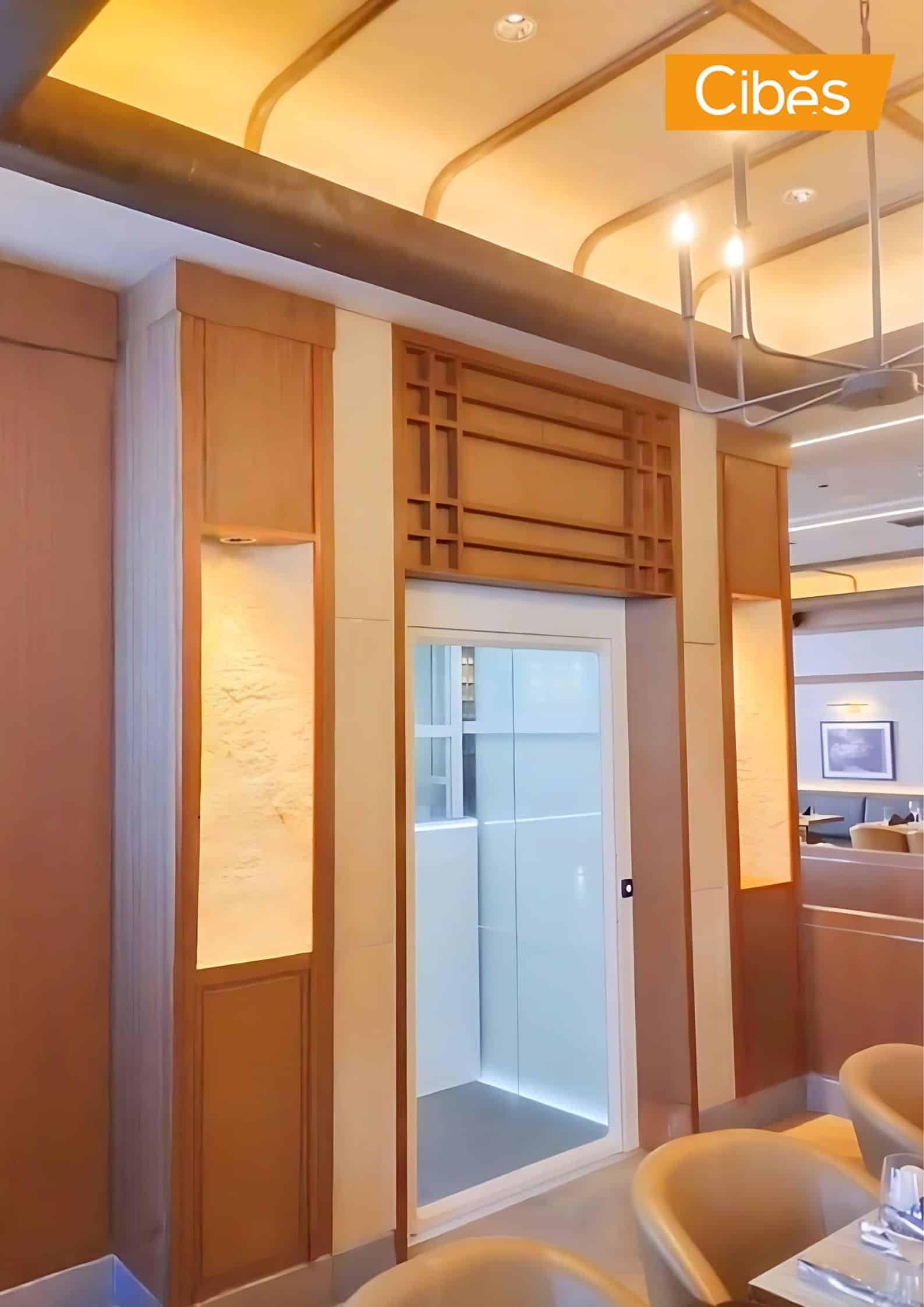
Home lift installation Philippines projects are often more efficient when planned during construction because the lift can be integrated into the home’s original architectural layout.
Home Lift at a Glance
| Feature | Details |
| Best for | OFW dream homes and retirement homes |
| Suitable for | New construction and selected existing homes |
| Supports | Seniors, children, wheelchair users, and multi-generational families |
| Main Benefits | Accessibility, convenience, comfort, and long-term planning |
| Expected Lifespan | 25 to 30 years or more with proper maintenance |
| Best Time to Install | During home construction |
Why Do Home Lifts for OFW Families Support Long-Term Comfort and Future-Proof Homes?
Building a dream home is often the reward for many years of dedication overseas. Every design choice reflects careful planning, financial discipline, and a vision for the future.
Rather than looking only at the initial construction budget, many OFWs focus on creating a home that will remain comfortable, safe, and functional throughout different stages of life.
Many have worked in countries where accessibility features are common in residential buildings. They have experienced how elevators, barrier-free entrances, and universal design improve everyday living. As a result, they often bring these ideas home when designing their own houses in the Philippines.
Home Lifts for OFW Families are one example of a feature that supports this long-term approach.
Instead of waiting until mobility becomes a challenge, many homeowners prefer to include a house lift from the beginning. This allows the entire family to enjoy easier movement between floors while avoiding major renovations later.
Planning ahead also provides greater flexibility for changing family needs. Whether welcoming elderly parents into the household, accommodating young children, or preparing for retirement, a home designed with accessibility offers benefits that continue for many years.
Why Future-Proofing Matters
Future-proofing a home means designing it to remain practical and comfortable regardless of age or changing mobility.
Benefits include:
- Easier movement between floors
- Improved accessibility for seniors
- Greater independence for family members
- Reduced need for future structural renovations
- Better support for long-term retirement living
These benefits are especially important for accessibility for seniors, allowing elderly parents to move safely between floors and remain independent longer.
Why Are Home Lifts for OFW Families Essential for Multi-Generational Homes?
Family is at the heart of many OFW success stories.
While working abroad, many Overseas Filipino Workers continue supporting parents, siblings, and children back home. When they eventually return to the Philippines, they often envision one home where several generations can live together comfortably.
This makes accessibility an important consideration.
In a two-storey or three-storey house, stairs may eventually become difficult for elderly family members. Carrying groceries, luggage, baby strollers, or household items between floors can also become physically demanding over time.
A home lift provides a practical solution by allowing family members to move safely and comfortably throughout the house. Home Lifts for OFW Families support safer, more comfortable living by improving accessibility for every generation.
A house lift Philippines installation helps create a multi-generational home Philippines families can enjoy safely for decades.
For elderly parents, it can mean remaining independent for longer.
For children, it creates easier access throughout the home.
For homeowners returning from overseas, it provides peace of mind knowing every member of the family can continue enjoying every level of the house.
Benefits of a Home Lift for Multi-Generational Families
| Family Member | Benefit |
| Elderly Parents | Safe and comfortable access between floors |
| Parents | Easier transport of groceries, luggage, and household items |
| Young Children | Safer movement throughout the home with supervision |
| Future Grandchildren | Convenient access during family gatherings |
| Homeowners | Greater comfort and long-term accessibility |
Expert Insight
Many accessibility professionals recommend planning for a home lift during construction rather than waiting until mobility needs change. Including the lift in the original design can simplify installation while creating a home that remains functional for decades.
Why Do OFWs Choose Home Lifts for OFW Families as a Premium Home Feature?
A home lift is more than a premium addition.
For many OFWs, it represents thoughtful planning, responsible investing, and genuine care for their family’s future.
After years spent working abroad, homeowners often want every part of their dream home to reflect quality, durability, and long-term value. Rather than selecting features based only on initial cost, many choose solutions that continue providing everyday benefits over many years.
A residential lift supports that goal by making daily life easier while complementing modern home design.
Beyond accessibility, many homeowners appreciate the added convenience of transporting groceries, luggage, laundry, and other household items between floors without using stairs.
Homes with built-in accessibility features may also appeal to future buyers looking for convenience, retirement-friendly living, and multi-generational housing. While property values depend on many factors, accessibility can make a home more attractive within the premium residential market.
Home Lifts for OFW Families also increase the long-term value of a property, making it more attractive to future buyers who want a safe and accessible home.
Why Many OFWs Include a Home Lift
- Supports long-term retirement planning
- Helps aging parents remain independent
- Improves daily convenience
- Complements modern home design
- Reflects thoughtful long-term planning
- Enhances accessibility for every generation
Why Are Home Lifts for OFW Families a Long-Term Investment?
Many OFWs spend years building financial stability before beginning construction on their dream home.
Because the house is intended to serve the family for decades, purchasing decisions are often evaluated based on long-term value rather than immediate cost.
Home Lifts for OFW Families are a good example of a long-term investment that supports accessibility and retirement living.
Although the investment is significant, many homeowners view it as part of the overall cost of creating a comfortable retirement home that can adapt to changing family needs.
When properly maintained, a high-quality home lift can provide reliable service for 25 to 30 years or longer. Spread across its expected lifespan, the investment becomes easier to understand as an annual cost while delivering daily convenience and accessibility.
For many families, a residential elevator Philippines installation is viewed as an OFW home investment that provides daily convenience while preparing the home for retirement and future mobility needs.
Long-Term Investment Perspective
| Investment Factor | Example |
| Typical Lifespan | 25 to 30+ years |
| Daily Value | Accessibility for every family member |
| Long-Term Benefit | Greater independence and convenience |
| Best Installation Stage | During home construction |
| Primary Purpose | Future-proofing the family home |
Rather than focusing only on the purchase price, many OFWs consider the overall value the lift provides throughout its lifetime.
The result is a home that remains practical, welcoming, and comfortable for aging parents, children, future grandchildren, and eventually the homeowners themselves when they return to enjoy retirement in the Philippines.
Why Are Home Lifts for OFW Families Becoming More Popular?
For many Overseas Filipino Workers, building a dream home is more than a financial milestone. It represents years of sacrifice, dedication, and the desire to provide a better future for their families.
As these homes are often designed to become retirement residences, accessibility is no longer considered an optional feature. Instead, it is becoming an important part of the home’s original design.
A home lift helps create a house that can adapt as family needs change. Whether supporting aging parents, making everyday life easier, or preparing for retirement, a home elevator provides convenience that can be appreciated every day.
Many OFW families also understand that planning for accessibility early is often simpler than renovating later. Including a residential lift during construction allows architects and builders to integrate the lift naturally into the home’s layout.
Why More OFWs Are Investing in Home Lifts
| Priority | How a Home Lift Helps |
| Retirement Planning | Supports independent living later in life |
| Aging Parents | Makes every floor easier to access |
| Multi-Generational Living | Creates a home suitable for every generation |
| Everyday Convenience | Reduces the need to carry heavy items on stairs |
| Long-Term Value | Future-proofs the home for changing mobility needs |
Home Lift vs. Traditional Stairs
Although stairs remain practical for many homes, they can become more difficult as family members grow older or mobility needs change.
| Feature | Home Lift | Traditional Stairs |
| Accessible for seniors | ✔ | Limited |
| Suitable for wheelchair users | ✔ (model dependent) | ✖ |
| Easier transport of groceries and luggage | ✔ | ✖ |
| Comfortable for multi-generational homes | ✔ | Moderate |
| Supports retirement living | ✔ | Limited |
Who Should Consider Home Lifts for OFW Families?
A home lift may be a practical solution for homeowners who:
- Are building a new home in the Philippines.
- Plan to retire in their dream home.
- Live with elderly parents.
- Want to support family members with limited mobility.
- Prefer long-term accessibility over future renovations.
- Own a two-storey or three-storey home.
- Value convenience for everyday living.
Are Home Lifts for OFW Families Suitable for Homes in the Philippines?
Yes. Modern home lifts are designed to work in many types of Philippine homes.
Whether building a spacious family residence, a townhouse, or renovating an existing property, homeowners can often find a lift solution that fits their available space and lifestyle.
Many modern home elevators are compact and designed with minimal structural requirements compared to traditional commercial elevators. This makes them suitable for many residential projects across the Philippines.
Home lifts are becoming increasingly popular in cities such as Metro Manila, Quezon City, Makati, Cebu, Davao, Iloilo, Bacolod, Pampanga, and other growing residential communities where homeowners are investing in long-term accessibility.
Why OFW Families Choose Cibes Home Lifts
Choosing a home lift is a long-term decision. Reliability, safety, and after-sales support are just as important as the lift itself.
Cibes designs Home Lifts for OFW Families that combine Scandinavian engineering, safety, and comfort for everyday living.
For nearly 80 years, Cibes has designed home lifts that combine Scandinavian engineering with practical residential solutions. Today, Cibes helps Filipino homeowners create accessible homes that remain comfortable for every generation.
Cibes home lifts are designed to fit modern residential spaces while minimizing structural changes. Their compact design makes them suitable for many new-build projects and selected existing homes.
Why Homeowners Choose Cibes
- Nearly 80 years of lift engineering experience
- Scandinavian-designed home lift technology
- Compact, space-saving solutions
- Suitable for many new and existing homes
- Machine-room-less design on selected models
- Designed for everyday residential use
- Professional installation by trained technicians
- Local after-sales service and maintenance support
- Customizable finishes to complement different home styles
For OFW families returning home after years abroad, choosing a trusted home lift provider provides confidence that their investment will continue serving their family well into the future.
Investing in Home Lifts for OFW Families is a practical way to create a safer, more comfortable, and future-ready home for every generation.
Final Thoughts
For many Overseas Filipino Workers, a dream home is built with the future in mind.
It is a place where parents can age comfortably, children can grow, and future generations can continue making memories together.
Home Lifts for OFW Families support that vision by making every floor easier to access while helping homeowners prepare for changing mobility needs throughout life.
Rather than viewing a residential elevator as a luxury, many OFW families see it as a practical investment that delivers comfort, convenience, and accessibility every day.
By planning ahead and incorporating a home lift during construction, homeowners can create a house that remains welcoming, functional, and future-ready for decades.
If you are planning your dream home in the Philippines, choosing a home elevator Philippines provider early in the design process can help you create a safer, more accessible, and future-ready retirement home Philippines families can enjoy for generations.
Frequently Asked Questions
Q: Why are more OFW families investing in Home Lifts for OFW Families?
A: Many OFW families are building homes designed for retirement and multi-generational living. A home lift improves accessibility, supports aging parents, and helps future-proof the home.
Q: Are Home Lifts for OFW Families a good investment for retirement homes?
A: Yes. A home lift can provide long-term convenience, improve accessibility, and help homeowners continue enjoying every level of their home as mobility needs change.
Q: Are Home Lifts for OFW Families suitable for multi-generational homes?
A: Yes. Home lifts make it easier for elderly parents, children, guests, and other family members to move comfortably between floors.
Q: Can a home lift be installed during new home construction?
A: Yes. Installing a home lift during construction allows it to be incorporated into the home’s original architectural design, making the process more straightforward.
Q: Can a home lift be added to an existing house?
A: Yes. Many home lift models can also be installed in existing homes, although feasibility depends on the property’s layout and available space.
Q: How much space does a home lift require?
A: Space requirements vary depending on the lift model. Many modern residential lifts are designed with compact footprints suitable for many Philippine homes.
Q: How long does installation usually take?
A: Installation time depends on the lift model and project requirements. Your lift provider can provide a more accurate timeline after assessing the property.
Q: How long does a home lift typically last?
A: A well-maintained home lift can often provide reliable service for 25 to 30 years or more.
Q: Does a home lift require regular maintenance?
A: Yes. Regular maintenance helps keep the lift operating safely, efficiently, and reliably throughout its service life.
Q: Can a home lift increase property value?
A: While property values depend on many factors, accessibility and convenience features may improve a home’s appeal to future buyers.
Q: Is a home lift safe for elderly family members?
A: Yes. Modern home lifts are designed with safety features that help seniors travel comfortably between floors.
Q: What is the difference between a home lift and a residential elevator?
A: The terms are often used interchangeably. However, some residential elevator systems have different structural and installation requirements depending on the technology used.
Q: Why do many OFW families choose Cibes home lifts?
A: Many homeowners choose Cibes because of its nearly 80 years of engineering experience, compact residential lift solutions, Scandinavian design, and local installation and after-sales support in the Philippines.
Learn More:
- Home Elevators & Home Lifts in Philippines | Complete Guide
- What to Ask Your Home Lift Supplier Before Signing a Contract
- How Long Does a Home Lift Last Lifespan, Warranties & What to Expect
Thinking about adding a home lift?
Contact Cibes Lift Philippines Inc. to learn more or schedule your installation.
Phone: 0917 555 7054 / (027) 529 1128 | Email: ph@cibeslift.com
Experience Center and Technical Station Address
Makati City | Balintawak – Quezon City | Mandaluyong City | Cebu City | Ilo-Ilo City | Davao City | Cagayan De Oro City






CIBES AUTHOR
Jovelyn Guidaven has been a Sales Account Manager at Cibes Lift Philippines since 2021, helping homeowners, architects, designers, and developers find the right home lift solutions for their projects. She works closely with clients throughout the sales process, providing expert guidance and personalized recommendations based on their accessibility and mobility needs.
Rosalie Adobas-Ruda is the Country Manager of Cibes Lift Philippines. After serving as the company’s Post Sales Manager, she was appointed as Country Manager, where she now leads the company’s growth while maintaining a strong focus on customer satisfaction and operational excellence.



TL;DR Three-story homes are becoming more common across the Philippines, especially in Metro Manila, Cebu, Davao, Iloilo, and Cagayan de Oro, where homeowners want to maximize limited lot sizes. Adding a home lift makes every floor easier to access for elderly parents, children, and future generations. When choosing a residential home elevator, consider the available […]

TL;DR Permits to Install a Home Lift are usually required in the Philippines before a residential lift can be legally installed. Home lifts are legal in the Philippines, but they must comply with local building regulations. Most residential installations require a building permit from your local government and must follow the National Building Code of […]

TL;DR Delaying a home lift can increase long-term costs beyond the initial purchase price. Waiting until mobility declines may lead to higher medical expenses after stair-related falls, emergency home modifications, or reduced independence. Installing a home lift earlier gives homeowners more time to compare models, plan installation, and create a safer, more accessible home that […]

TL;DR Home Lifts for OFW Families are a smart long-term investment because they improve accessibility, support aging parents, and help future-proof homes for retirement and multi-generational living. Installing a home lift during construction is usually easier and more cost-effective than retrofitting later. Many OFW families choose home lifts to create a safer, more convenient, and […]

Home Elevators & Home Lifts in the Philippines: The Complete Guide for Filipino Homeowners Updated: 2026 Reading time: 12 minutes Includes: 6 complete buying guides & 40+ expert resources TL;DR Multi-storey living has become increasingly common across the Philippines. Starting from the three-level townhouse in BGC, to the Cebu duplex, up to the family compound […]