Blog - 06/04/2026
Freight & Service Elevators for Philippine Homes: Complete Guide
What is a freight elevator and when is it used in Philippine homes?

TL;DR
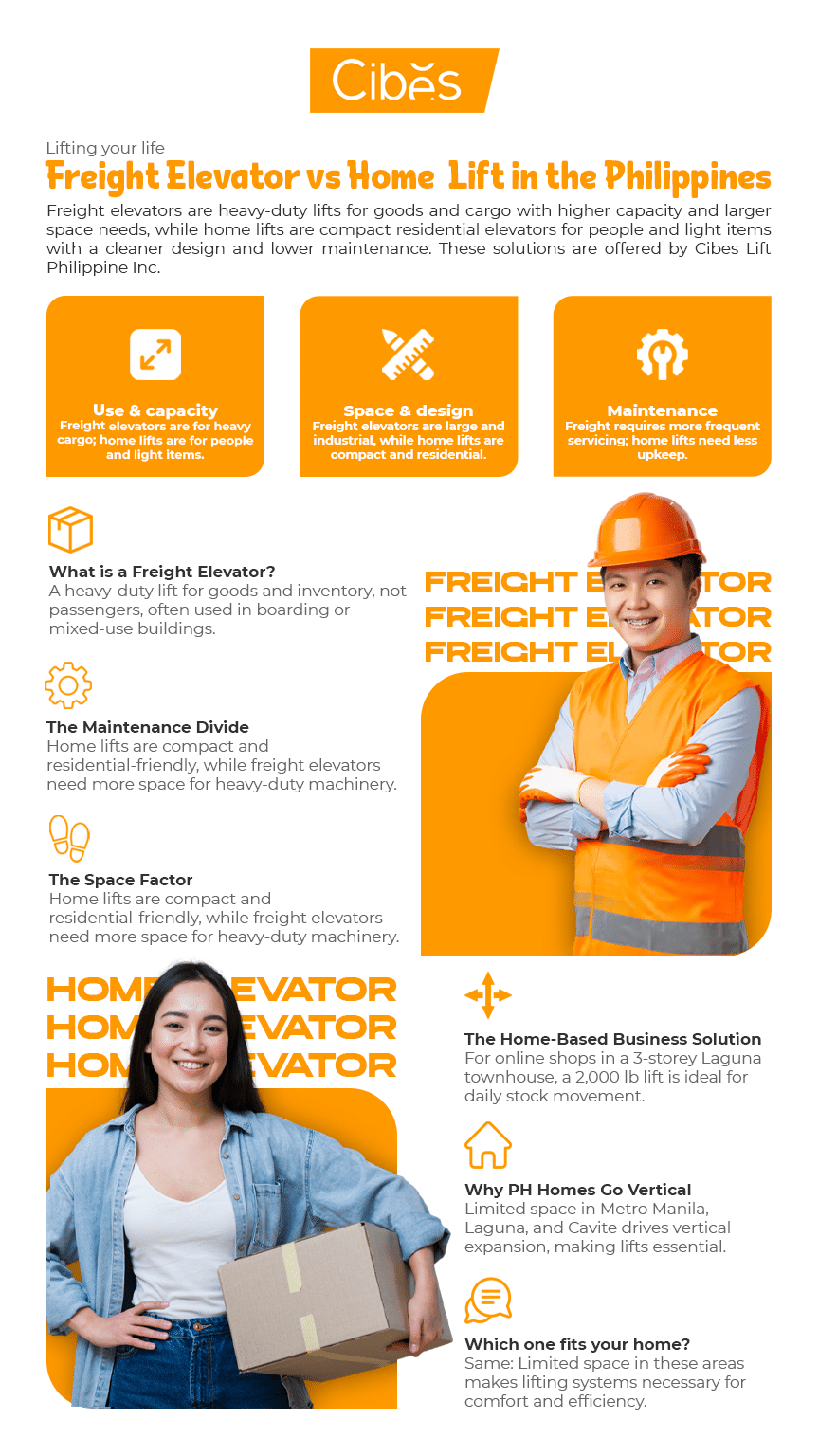
A freight elevator is a heavy-duty lift designed to carry goods instead of people. In the Philippines, it’s commonly used in townhouses, boarding houses, and mixed-use homes where items like appliances, water containers, and business inventory need to move between floors. Most residential freight elevators carry 1,000 to 3,000 lbs (450-1,360 kg), which suits daily home and small business use.
Why do many homes in the Philippines need a better lifting solution?
Across Metro Manila, Laguna, and Cavite, homes are often built vertically. Space is limited, so families go up.
That works well, until daily life involves carrying:
- Water gallons
- Bulk groceries
- Online shop inventory
- Furniture or renovation materials
At first, stairs are manageable. Over time, they become tiring and inefficient.
This is where lift solutions come in. But not all homes need a full freight system.
If you’re comparing different residential lift technologies before choosing a system, our Types of Home Lifts in the Philippines Guide explains the main elevator types, their ideal applications, and how freight elevators compare with other home lift solutions.
What’s the difference between a freight elevator and a home lift?
The difference is simple. It comes down to purpose.
| Feature | Freight Elevator | Home Lift (e.g., Cibes Lift) |
|---|---|---|
| Main Use | Heavy cargo | People + daily items |
| Capacity | 1,000–5,000+ lbs | Light to moderate loads |
| Design | Industrial | Residential-friendly |
| Space Needed | Larger | Compact |
| Best For | Business, heavy use | Everyday home living |
Freight elevators are built for constant heavy lifting.
Home lifts, like Cibes Lift, are designed for daily convenience. They carry people comfortably while still handling groceries, luggage, and light cargo.
How do you choose the right freight elevator capacity?
Choosing the right capacity depends on your real daily load, not just occasional use.
| Capacity Tier | Weight Range | Metric | Common Use in PH Homes |
|---|---|---|---|
| Light | 1,000-2,000 lbs | 450-900 kg | Appliances, water containers, furniture |
| Medium | 2,000-4,000 lbs | 900-1,800 kg | Boarding houses, food prep, stock storage |
| Heavy | 4,000+ lbs | 1,800+ kg | Warehousing, construction use |
For most homes with small businesses, 2,000-3,000 lbs is enough.
But here’s the key point.
If you’re not moving heavy loads every day, a Cibes Lift home lift can already handle your needs without the size and cost of a freight system.
When should you install a freight elevator in your home?
A freight elevator makes sense if your home regularly handles:
- Large volumes of inventory or supplies
- Construction materials across floors
- Frequent heavy lifting as part of business operations
- Storage-heavy setups
This is common in:
- Boarding houses
- Mixed-use properties
- Home-based distribution or online selling
When is a home lift a better option than a freight elevator?
Not every home needs industrial-level lifting.
A home lift, like Cibes Lift, is often the better fit if:
- You mainly move people, groceries, and daily items
- Your space is limited (common in townhouses)
- You want a clean, modern look
- Heavy lifting is only occasional
This is where many Filipino homeowners land. They need convenience, not heavy-duty equipment.
What’s the difference between residential and commercial freight elevators?
| Factor | Residential | Commercial |
|---|---|---|
| Usage | Moderate | Daily heavy use |
| Capacity | Medium | High |
| Compliance | Residential standards | Stricter codes |
| Insurance | Home policy update | Business insurance |
| Maintenance | Regular | More frequent |
If your home generates income, even small-scale, this distinction can affect compliance.
How often do freight elevators need maintenance in the Philippines?
Freight elevators typically require:
- 3 to 4 maintenance visits per year
Compared to:
- 1 to 2 visits per year for home lifts like Cibes Lift
Why more frequent?
- Heavier loads increase wear
- Dust and debris build up faster
- Humidity affects components over time
Consistent maintenance keeps the system safe and reliable.
When is a freight elevator NOT the right choice?
A freight elevator may not be ideal if:
- You mainly transport people
- Your home has limited installation space
- Heavy lifting is not part of your routine
- You want a quieter, more residential solution
In many cases, homeowners realize they don’t need a freight system. They need a smarter home upgrade.
Real example: A typical Philippine townhouse setup
A three-storey townhouse in Laguna uses:
- Ground floor for storage
- Upper floors for living
If the homeowner runs an online business, daily box movement makes a freight elevator practical.
But if the need is mostly groceries, luggage, and occasional items, many choose a Cibes Lift lift instead.
It fits the space better and supports everyday living.
Frequently asked questions about freight elevators in the Philippines
Q: What is the weight capacity of a residential freight elevator?
A: Most residential freight elevators in the Philippines carry 1,000 to 3,000 lbs (450–1,360 kg).
Q: How often does a freight elevator need maintenance?
A: Typically 3 to 4 times per year, depending on usage.
Q: Can a freight elevator carry people?
A: Some can, but they must meet different safety standards.
Q: Are freight elevators common in Philippine homes?
A: Yes, especially in homes with businesses, rentals, or heavy storage needs.
Q: Is a home lift enough instead of a freight elevator?
A: For many homes, yes. A Cibes Lift home lift can handle daily use efficiently.
Final thoughts: Which one fits your home?
If your home handles heavy, daily cargo, a freight elevator is the right tool.
But for most Filipino households, the goal is simple. Make daily movement easier.
That’s where a Cibes Lift home elevator often makes more sense. It fits the space, supports daily life, and keeps things simple.
Read More

Cibes Author
Kevin Der Arslanian is the Vice President of Sales for APAC & MENA at Cibes Lift Group. Since joining in 2017, he has helped grow the company’s presence across key markets, bringing a clear, practical approach to leadership and a strong focus on customer needs.
Kevin Der Arslanian | LinkedIn
Thinking about adding a home lift?
Contact us now to learn more or schedule your installation!









TL;DR Cibes Home Lift Antera is a premium residential lift range designed for homes where safety, comfort, accessibility, and interior design all matter. Available in Z70, Z85, and Z90 configurations, the range uses Generation 5 screw-drive technology and a machine-room-free design. What Is the Cibes Antera Home Elevator? The Cibes Antera is a premium residential […]
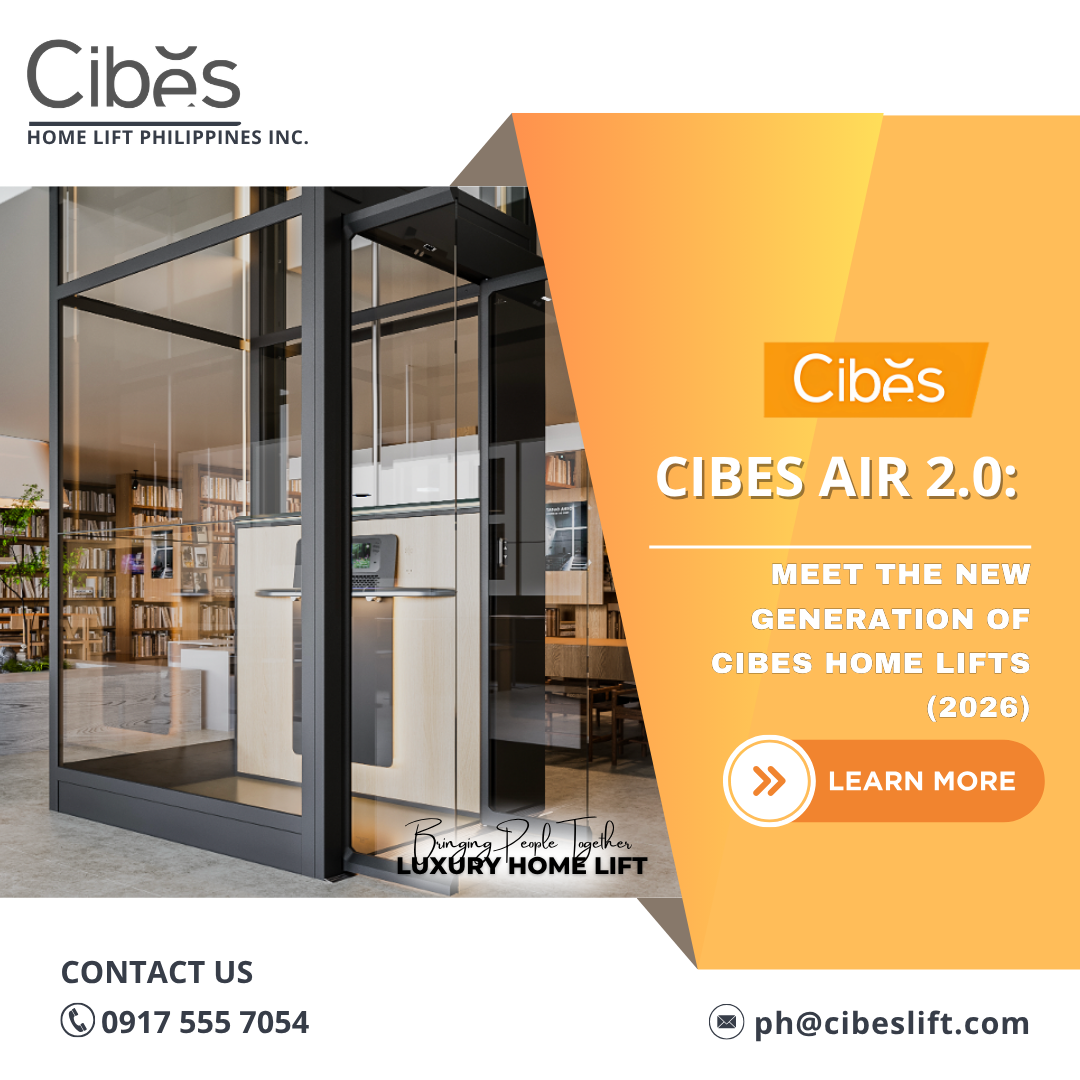
TL;DR The Cibes Air 2.0 is a new-generation home lift that brings modern Scandinavian design into the home. With its frameless panoramic glass shaft, refined cabin, elegant lighting, quiet performance, and flexible installation, it combines everyday comfort with a beautifully designed lift that feels naturally part of your living space. What Makes the New Cibes […]

TL;DR Three-story homes are becoming more common across the Philippines, especially in Metro Manila, Cebu, Davao, Iloilo, and Cagayan de Oro, where homeowners want to maximize limited lot sizes. Adding a home lift makes every floor easier to access for elderly parents, children, and future generations. When choosing a residential home elevator, consider the available […]

TL;DR Permits to Install a Home Lift are usually required in the Philippines before a residential lift can be legally installed. Home lifts are legal in the Philippines, but they must comply with local building regulations. Most residential installations require a building permit from your local government and must follow the National Building Code of […]

TL;DR Delaying a home lift can increase long-term costs beyond the initial purchase price. Waiting until mobility declines may lead to higher medical expenses after stair-related falls, emergency home modifications, or reduced independence. Installing a home lift earlier gives homeowners more time to compare models, plan installation, and create a safer, more accessible home that […]