Blog - 23/04/2025
Types of Home Lifts in the Philippines: Features, Pros & Best Uses
Choosing the Right Home Elevator Type in the Philippines
Not all home elevators are created equal, at least when you look at Filipino homeowners and their specific conditions.
The Philippines is a country with its own particular environment that will impact the choice of home elevator technology to install on the property, from compact houses that may lack space in the home itself, to coastal properties facing the effects of salty winds and typhoons, to expensive electricity that makes energy conservation an important concern.
In addition, the average family in the Philippines is increasingly likely to be multi-generational, meaning that mobility needs are varied.
Finally, Filipinos tend to invest heavily into making improvements to their homes.
The elevator system that is great for a hillside house in Cebu can be terrible in terms of utility for a BGC townhouse, and both of them can be unsuitable for a family-run business that regularly moves large amounts of inventory between floors.
The key to making the choice is knowing how the technology works and where it shines.
If you’re looking for a broader overview before comparing specific lift technologies, our Home Elevators & Home Lifts in the Philippines: The Complete Guide for Filipino Homeowners brings together everything you need to know about residential elevators, including pricing, accessibility, installation planning, and expert buying advice. It serves as the central hub of our Philippine home lift knowledge base.
In This Guide:
- Hydraulic Elevators
- Traction Elevators
- Vacuum & Shaftless Elevators
- Platform Lifts
- Outdoor Elevators
- Compact & 1-Person Lifts
- Freight & Specialty Elevators
What Are the Main Types of Home Elevators?
Home elevators in the Philippines can be grouped into several main categories based on how they operate and what they are designed for. Each type offers different advantages depending on space, budget, and usage.
Are Hydraulic Home Elevators Still a Good Option?
Despite being considered outmoded, hydraulic elevators still offer some compelling advantages.
Based on a well-proven physical mechanism that relies on the movement of fluid into a cylinder to extend the piston and lift the cab, the system has provided efficient service for several decades now, and that is exactly why it should not be disregarded.
Hydraulics shine in terms of high lifting capacities and are thus suited to households that must frequently relocate bulky pieces of furniture, devices, and appliances from floor to floor.
The slow and smooth process might even be preferred by older people or individuals who experience adverse reactions to fast movements.
Moreover, their implementation might become feasible in cases where space constraints do not allow for any other technology due to a lack of sufficient headroom.
If you want to learn more about whether a hydraulic system is the right fit for your home, read the full article below.
Read More About Hydraulic Home Elevators →
What’s the Difference Between Geared and Gearless Traction Elevators?
In terms of residential lifts, traction lifts are considered as the best of the best.
The growing use of traction lifts in luxurious residential buildings in the Philippines can be attributed to their distinct features.
With the use of steel wire ropes with a pulley wheel powered by an electric motor where there is the lift car on one end and the counterweights on the other, contemporary gearless traction lifts provide a ride that is incredibly smooth, silent, and quick.
As such, they have been able to stand out in the Philippines due to their ability to save energy in countries that have very expensive electricity rates; traction lifts use about 40-70% less energy compared to hydraulic lifts, and some users are even able to achieve energy expenses that are similar to those of a refrigerator.
They work excellently in multi-storeyed structures and particularly in luxurious residences, where performance matches the rest of the residence.
If you want to learn more about traction elevator technology and whether it suits your home, read the full article below.
Read More About The Difference Between Geared and Gearless Traction Elevators →
How Do Vacuum and Shaftless Elevators Work in Philippine Homes?
Vacuum elevators or pneumatic elevators are truly fascinating in their simplicity.
Consider a polycarbonate tube without any cables, pulleys, or hydraulic oil; there are only pressure differences that push the cabin smoothly through the tube.
Upstairs turbines make a partial vacuum while the ambient air below pushes the cab upwards due to elegant physical phenomena.
Two to three days are enough to install this equipment, given the minimal construction work, since the tube itself serves as the shaft.
Incredibly, this technology does not require much space, taking up only about 75-100 cm in diameter, less than many closets in Philippine houses.
Troubleshooting becomes easier because the elevator contains fewer moving parts, while its transparency makes all problems visible instantly unlike conventional elevators with their closed shafts.
Vacuum elevators are great for situations when you need to add such equipment into a pre-existing building without major structural changes, for minimalist residences where the elevator becomes part of the interior design, as well as for beach houses where corrosive sea air makes aluminum and polycarbonate more durable compared to the traditional metal structure.
If you want to learn more about vacuum and pneumatic elevator solutions for Philippine homes, read the full article below.
Read More About Vacuum Elevators →
What Are Platform Lifts and How Do They Work in Homes?
The platform lift presents another method of achieving home accessibility, focusing on simplicity and economy rather than having the enclosure of the cabin.
Rather than entering the cabin, you simply step or roll on the platform that is surrounded by barriers, which is lifted and lowered vertically through different floors.
The platform lift was specially designed to address home accessibility needs, and it is very efficient in serving wheelchair-bound persons, elderly individuals, or those with physical disabilities.
It requires little space to install and is one of the least expensive means of providing vertical transport in a Philippine setting.
If you want to learn more about platform lifts and how they compare to standard home elevators, read the full article below.
Read More About Platform Lifts →
Are Outdoor Home Elevators a Practical Option in the Philippines?
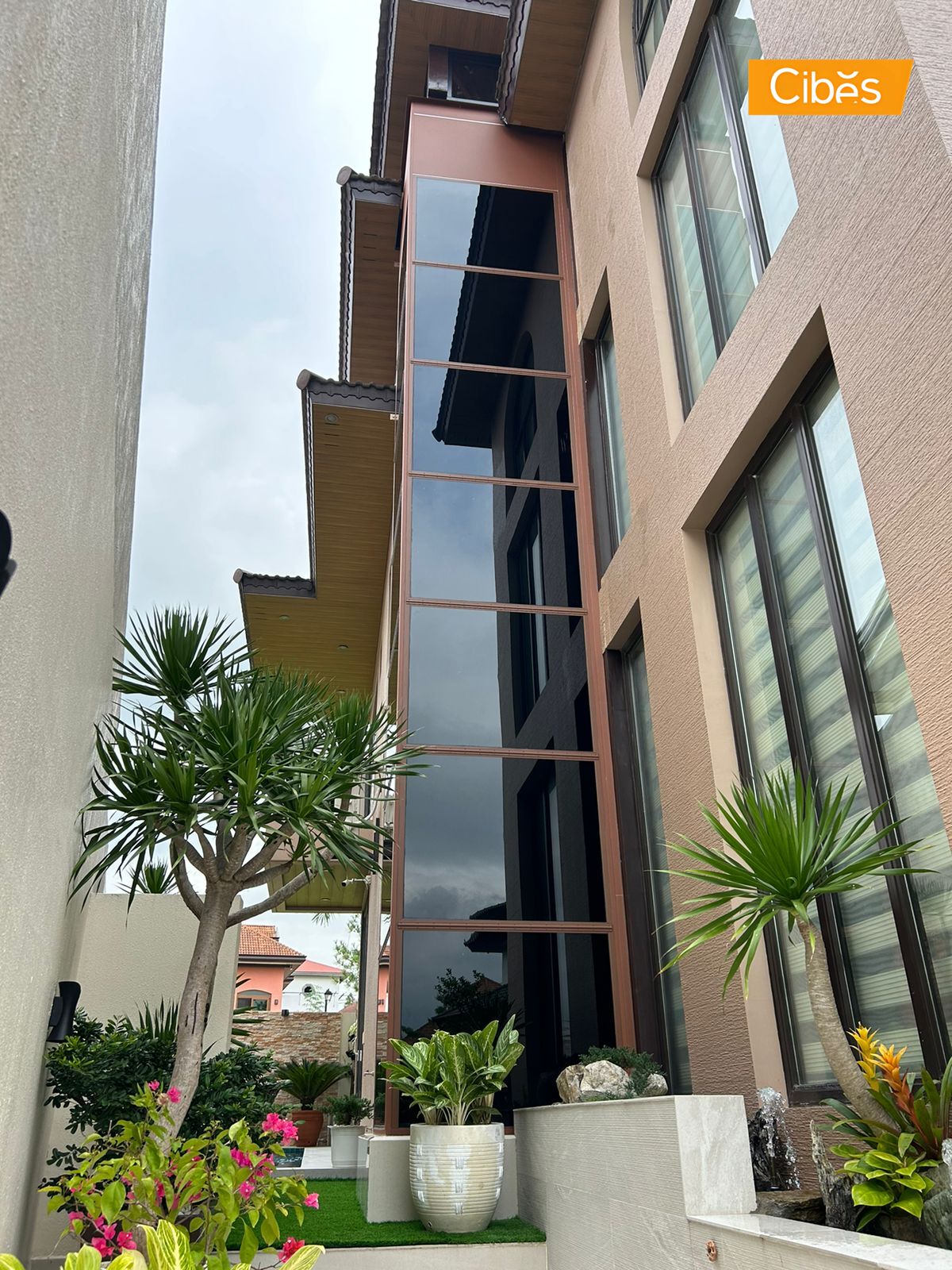
In situations where there isn’t any unused interior floor space left, it might make sense to consider placing your home lift system outside instead of inside your house.
An outdoor lift system is fitted on one of the walls, or erected as a standalone structure, thus offering full vertical transportation between floors without consuming indoor space.
For installation in the Philippines, such systems require careful planning, taking into account factors like proper weather sealing for tropical monsoons, the use of corrosion-resistant materials, UV protection, shaft drainage capabilities, as well as proper wind load design to survive typhoon winds that exceed speeds of 150 kilometers per hour.
Hurricane-resistant glass, auto shut-off function before the storm arrives, battery-operated communication during brownouts, and anti-slip flooring resistant to wet weather are just a few other aspects of proper design of such elevators.
When done right, they can provide reliable vertical transportation from inside your house for many years to come, leaving your interior exactly the way it was before installation.
If you want to learn more about outdoor elevator options and what proper Philippine-climate specification looks like, read the full article below.
Read More About Outdoor Home Elevators →
Are 1-Person Elevators a Smart Solution for Small Homes?
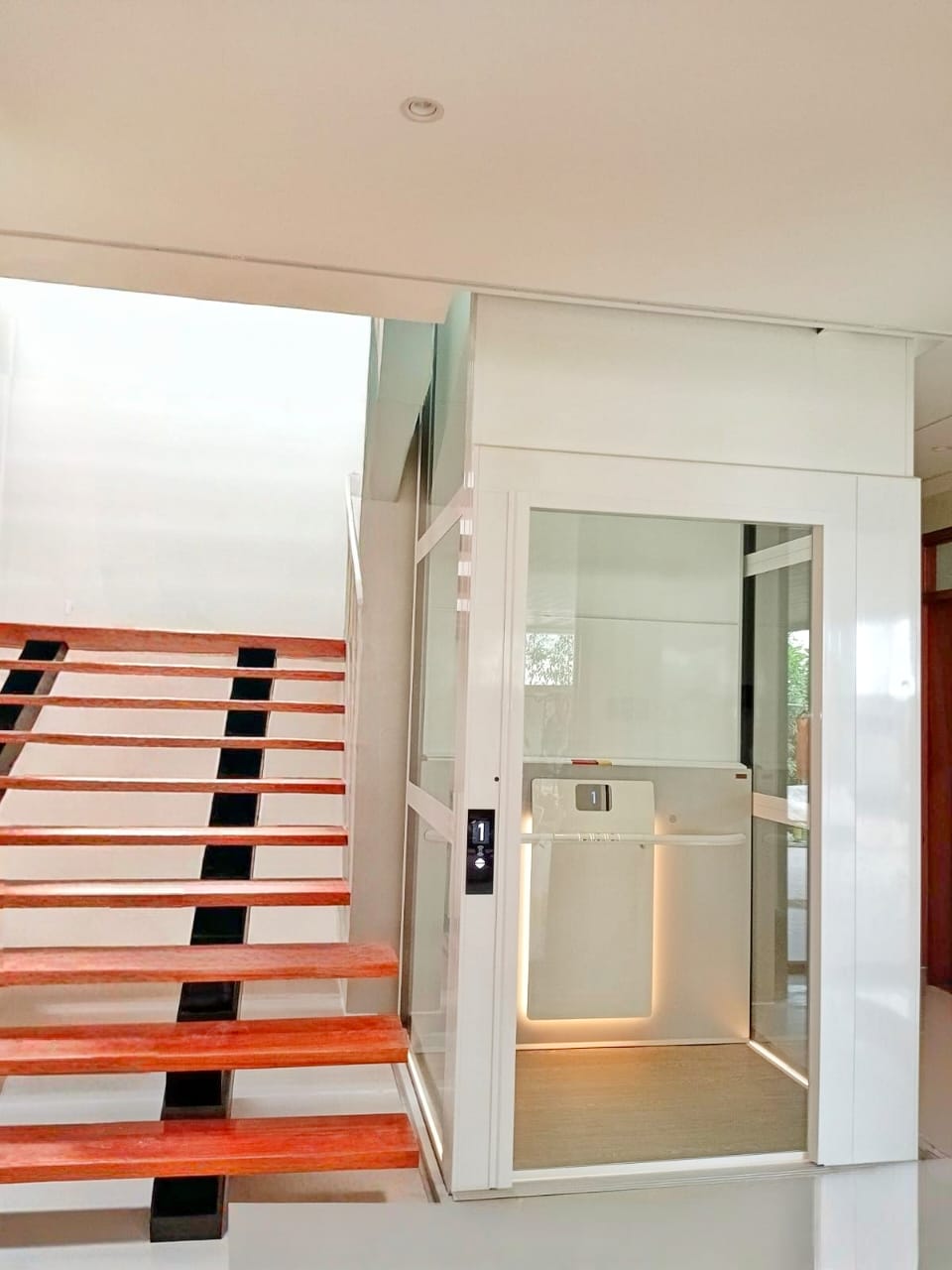
Not all homes need to require an elevator capable of holding multiple people, and for those who do not need such a system, then perhaps a single-person lift might be the way to go for both functionality and price savings.
This type of lift requires only 8-12 sq. ft. of space per floor and comes at around 2.5-3 feet in width and 3-4 feet in depth, making it lighter and smaller than most bathroom vanities at about 300-500 lbs capacity.
It can even be installed in areas where no other equipment could fit, from being tucked between two rooms, to the corner of an unused garage, and even the inside of a repurposed closet.
It costs less by as much as 20-30% compared to regular home lifts.
Moreover, they offer the same customization features as the standard versions like glass walls, wooden finishes, touch screens, and others to make it blend well with your home decor.
What they lack, however, is capability when it comes to moving wheelchairs and bulky furniture.
If you want to learn more about single-person and mini elevator options for compact Philippine homes, read the full article below.
Read More Compact Solutions for Small Homes →
When Should You Consider a Freight Elevator for Your Home?
Some homes need an elevator that doesn’t move people, it moves things.
Freight and specialty elevators are engineered for exactly that: heavy loads, frequent use, and the kind of wear that would quickly damage a standard passenger system.
Built with steel or aluminum walls, industrial-strength flooring, and lifting capacities from 450 kg to well over 2,000 kg, freight elevators are fundamentally different from residential lifts in their construction, their maintenance requirements, typically three to four service visits per year rather than one to two, and their intended use.
For large Filipino families managing bulk purchases and seasonal items, for home-based businesses moving inventory between floors, for properties undergoing renovation, or for any household that regularly needs to transport heavy appliances or furniture vertically, a specialty freight system pays for itself in efficiency, safety, and the simple relief of not hauling heavy loads up the stairs.
For most residential applications in the Philippines, a medium-capacity system in the 900-1,800 kg range strikes the right balance between capability and cost.
If you want to learn more about freight and specialty elevator solutions for Philippine homes and properties, read the full article below.
Read More About Freight Elevators →
Frequently Asked Questions
Q: What type of home elevator is best for a house in the Philippines?
A: The best type depends on your space, budget, and usage. Compact and vacuum elevators are ideal for small homes, while traction systems suit larger multi-story houses.
Q: What is the difference between hydraulic and traction elevators?
A: Hydraulic elevators use fluid pressure and are better for heavy loads, while traction elevators use cables and are more energy-efficient, faster, and better suited for residential use.
Q: Are vacuum elevators suitable for Philippine homes?
A: Yes, vacuum elevators are well-suited for compact homes and retrofit projects, especially where space is limited and minimal construction is preferred.
Q: Which home elevator is best for small spaces?
A: Compact, shaftless, and 1-person elevators are the best options for small homes, as they require minimal floor space and structural changes.
Q: Do different elevator types have different installation requirements?
A: Yes, each type has specific requirements. Some need shafts and pits, while others can be installed with minimal structural work depending on the technology.
How to Choose the Best Elevator Type for Your Home
Seven types of vertical mobility systems, each fitting your house in different ways.
The right elevator type is not just about technology, but about how it fits your home, your lifestyle, and your long-term needs. Also, the best type to purchase is dependent on many factors, such as your area and budget in the Philippines.
The best decision is not only based on pricing. Instead, take into account the quality that lasts for 20-30 years, brownout management, typhoons in summer, integration into your architectural design, and functionality in other respects.
Cibes Lift Philippines has been serving the Filipino community for seven years, with more than 75 years of experience in Sweden and nationwide coverage. If you’re unsure which system fits your home, speaking with an expert can help clarify the best option for your specific needs.
Related Guides
To better understand your options, you may also explore:
- Home Elevators Philippines: Complete Guide, Costs & Best Options
- Elevator Pricing in the Philippines: Everything You Need to Know Before You Buy
- Home Accessibility Solutions in the Philippines: A Complete Guide to Mobility Options
- Home Elevator Installation & Dimensions in the Philippines: Complete Planning Guide
- Cibes Home Elevators Philippines: Products, Technology & Expert Guide


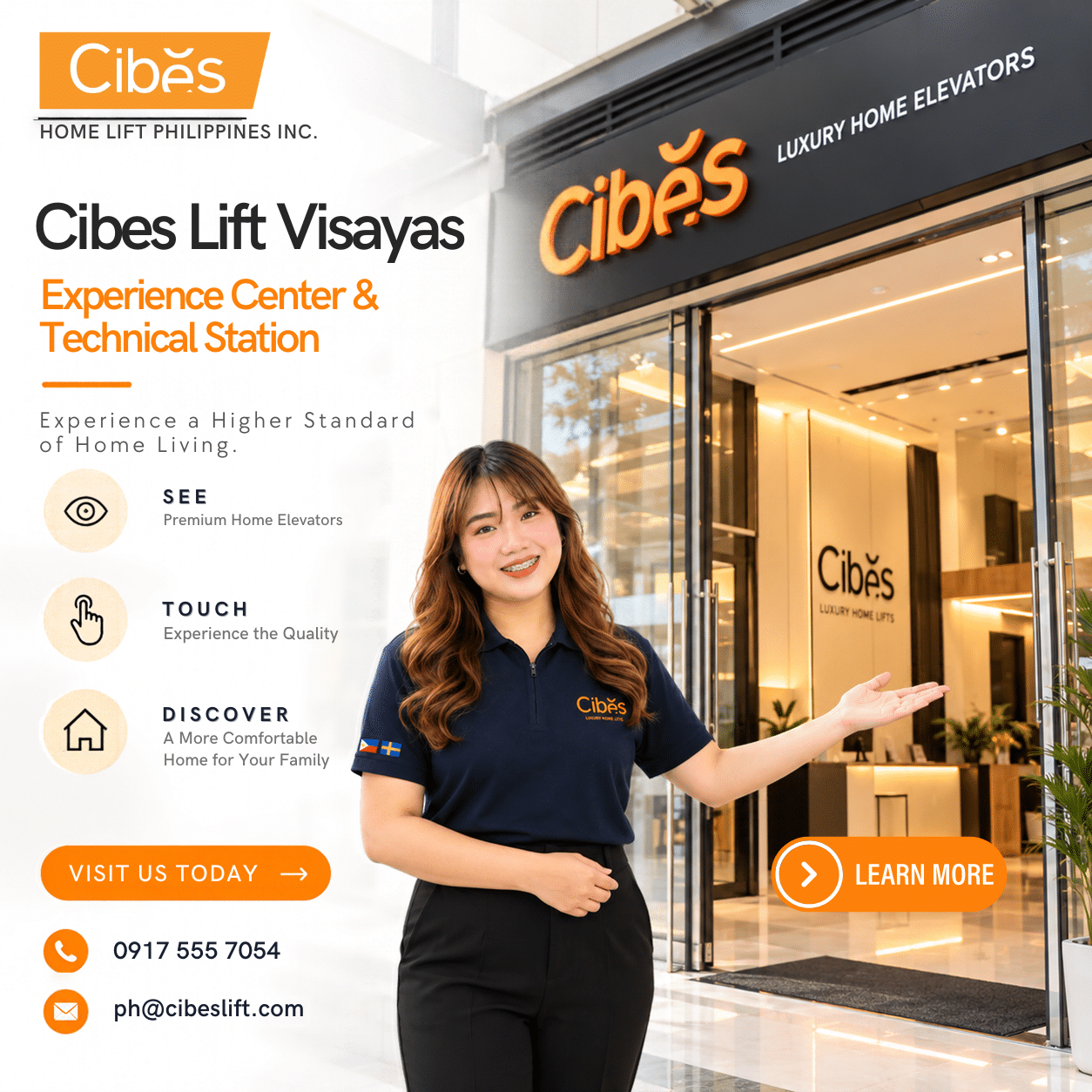
TL;DR The Cibes Experience Center Visayas in Cebu City lets homeowners, architects, designers, contractors, and developers see Cibes home lifts in person. Visitors can experience the lift cabin, review available designs and features, and discuss installation requirements with the Cibes team. The Cebu Experience Center currently lists V90 Elegance, Z85 Antera, and Ascenda among its […]
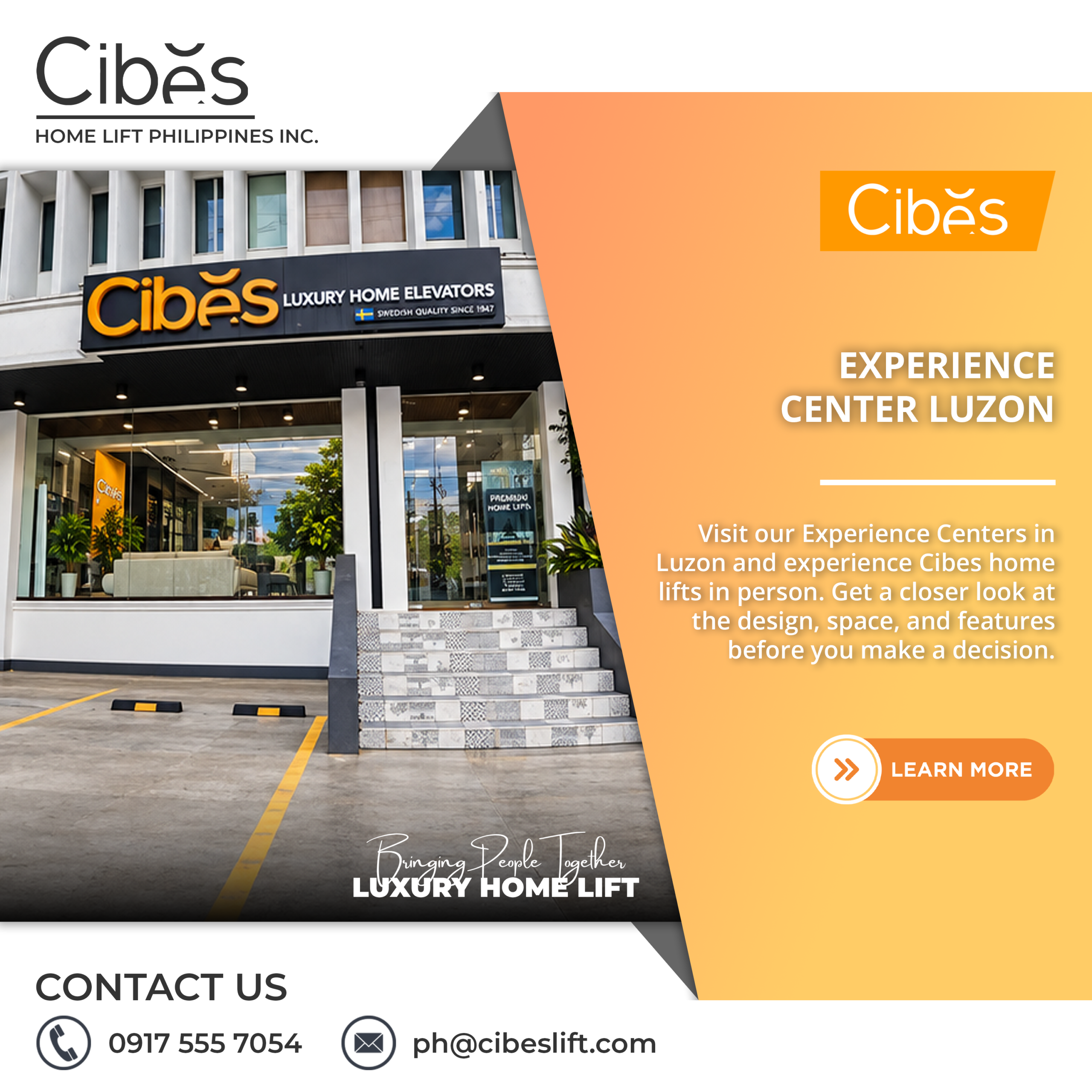
TL;DR Cibes Experience Center Luzon lets homeowners and property professionals experience Cibes home lifts in person before making a decision. Cibes Lift Philippines has 13 demo lifts across three Luzon Experience Centers: Makati (8), Mandaluyong (2), and Balintawak, Quezon City (3). Visitors can ride the lifts, check cabin space, test the controls, explore designs, and […]

TL;DR Sustainable home elevators in the Philippines are becoming an important consideration for homeowners who want to improve accessibility without overlooking environmental responsibility. Modern home elevators can support energy-efficient living through efficient drive systems, durable materials, renewable energy integration, and reduced structural changes compared with major home renovations. The Environmental Case for Sustainable Home Elevators […]

TL;DR Home Elevator Performance plays an important role in the safety, comfort, efficiency, and long-term reliability of a residential lift. While regular maintenance keeps your elevator operating reliably, proper usage, environmental control, component monitoring, electrical optimization, and timely upgrades can further improve its performance. In this guide, discover 8 expert tips to help maximize home […]
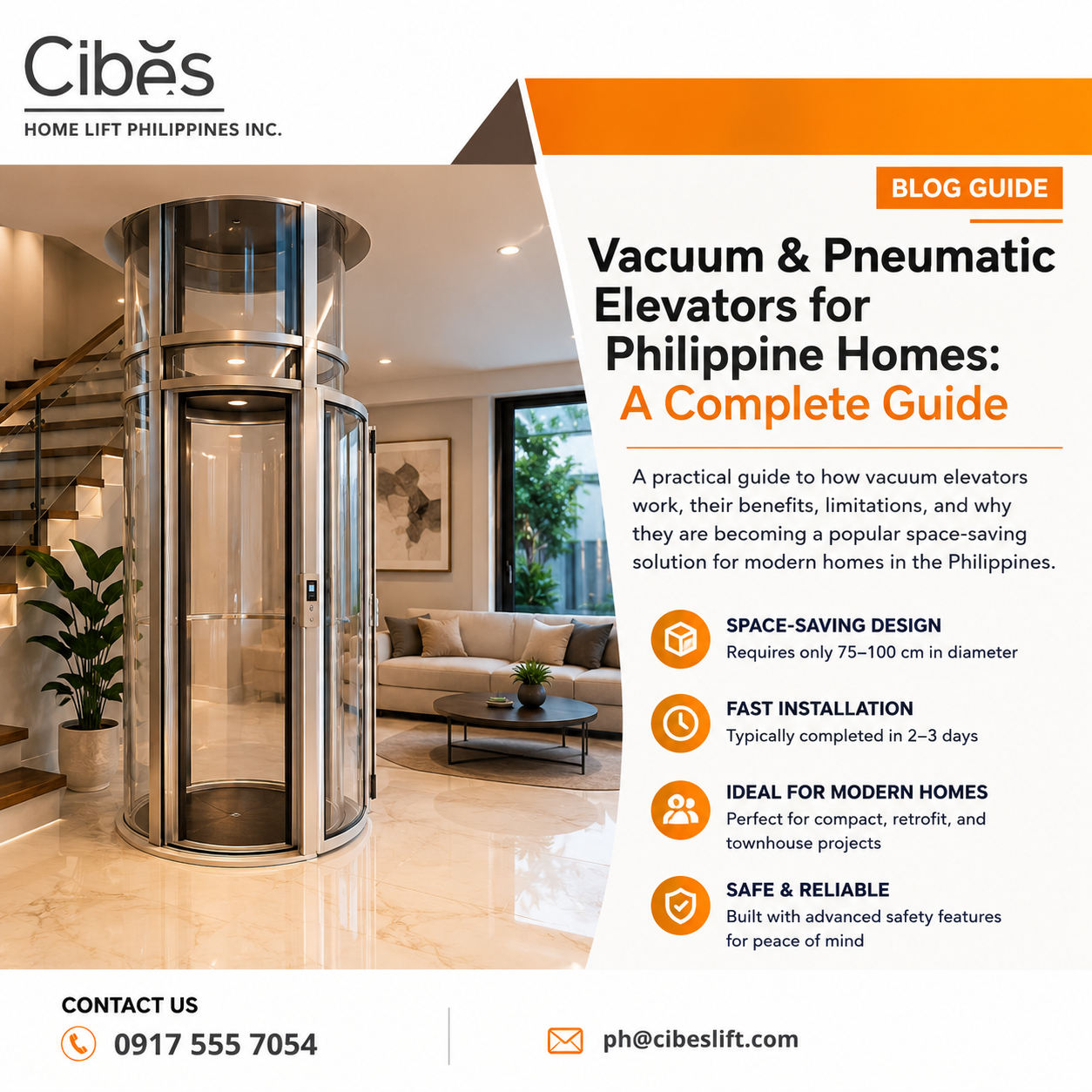
TL;DR Vacuum elevators use air pressure instead of cables or hydraulic systems to move a cabin inside a transparent tube. Most residential models require only 75 to 100 cm of space, serve 2 to 4 floors, carry 205 to 238 kg, and can often be installed in 2 to 3 days with minimal structural work. […]