




TL;DR Home elevator cost Philippines usually starts at around ₱1.8 million for a basic 2-storey home. For a typical 3-storey house, the cost can range from ₱2.4 million to ₱4.2 million, while larger 4-storey homes may cost ₱6 million or more. Final pricing depends on the elevator system, number of floors, installation requirements, and structural […]

TL;DR A single-person home elevator is a compact residential lift designed for one adult. It typically measures 2.5 to 3 feet wide and 3 to 4 feet deep, with an 8 to 12 square foot footprint per floor and a weight capacity of 300 to 500 pounds. These lifts are commonly installed in Philippine townhouses […]
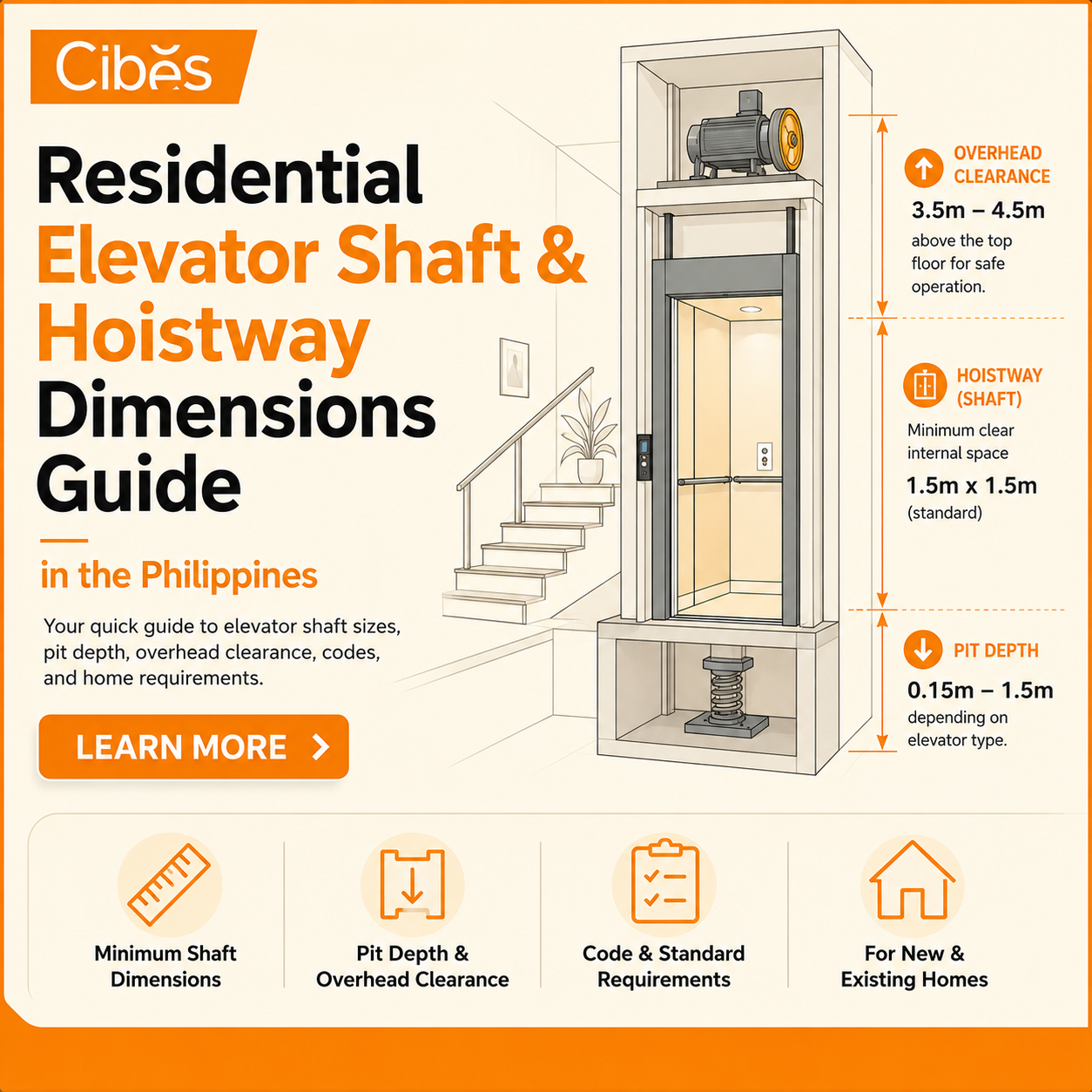
TL;DR Elevator shaft and hoistway dimensions are only one part of a successful residential elevator project. Before determining shaft size, pit depth, or overhead clearance, homeowners should first understand the broader planning considerations that influence installation requirements, accessibility, and long-term usability. Our Home Elevator Installation & Dimensions in the Philippines: Complete Planning Guide explains the […]

TL;DR Outside elevators are usually installed as external towers or shafts, which helps save indoor space. They use corrosion-resistant materials, built-in drainage, and storm safety features like automatic shutdown. Because of this, they suit compact homes, coastal areas, and dense cities. If you’re comparing different residential lift technologies before choosing a system, our Types of […]

TL;DR Residential elevator dimensions in the Philippines depend on the cabin size, door width, shaft requirements, and intended use. Before finalizing dimensions, homeowners should understand how elevator sizing affects installation space, accessibility, and long-term usability. Our Home Elevator Installation & Dimensions in the Philippines: Complete Planning Guide provides a broader overview of residential elevator planning, […]

TL;DR Permits to Install a Home Lift are usually required in the Philippines before a residential lift can be legally installed. Home lifts are legal in the Philippines, but they must comply with local building regulations. Most residential installations require a building permit from your local government and must follow the National Building Code of […]
TL;DR Lift vs elevator Tagalog is a common question for Filipinos looking for the right term for a vertical transport system. There is no technical difference between a lift and an elevator. Both refer to the same type of system used to move people between floors. “Elevator” is the common term in the Philippines, while […]

TL;DR: Cibes Glass home elevators use tempered or laminated safety glass walls to move people between floors while maintaining visibility and natural light. In the Philippines, they are commonly installed to support aging in place, improve daily accessibility, and add modern design value to multi-storey homes, especially townhouses and hillside residences. If you’re exploring residential […]

TL;DR Stair lifts in the Philippines typically cost between ₱250,000 and ₱900,000+, depending on the type of staircase, rail design, installation requirements, and customization options. They are designed to transport a seated user along an existing staircase and are commonly used by elder and individuals with limited mobility. While stair lifts offer a practical solution […]

Why More Filipino Homeowners Are Installing Home Lifts During Renovations TL;DR Filipino homeowners are increasingly installing home lifts during renovation projects because renovations provide easier structural access, lower installation disruption, improved accessibility, and long-term property value benefits. For many two-storey and three-storey homes, renovating is often the most practical and cost-effective time to add a […]
