Blog - 06/08/2026
What to Ask Your Home Lift Supplier Before Signing a Contract
TL;DR
Before signing a contract with a home lift supplier in the Philippines, confirm the lift model, technical specifications, installation requirements, warranty, complete project cost, payment terms, installation timeline, maintenance, and after-sales support. A reliable home lift supplier should provide clear written answers, an itemized quotation, and explain every responsibility before you sign the agreement.
Why Asking the Right Questions Matters
Choosing a home lift is a long-term investment. While price is important, understanding exactly what you are buying is even more important. A contract should clearly explain what is included, what is excluded, and what happens after installation. Asking the right questions before signing can help you avoid unexpected costs, delays, warranty issues, and misunderstandings.
What Technical Questions Should You Ask Before Buying a Home Lift?
Ask your supplier to explain the proposed lift model, capacity, dimensions, travel height, safety features, power requirements, and installation requirements. Request official product specifications instead of general marketing information.
| Specification | Confirm Before Signing |
| Lift model | ✔ |
| Capacity | ✔ |
| Platform/Cabin size | ✔ |
| Travel height | ✔ |
| Power supply | ✔ |
| Safety features | ✔ |
| Emergency battery | ✔ |
| Noise level | ✔ |
| Pit requirement | ✔ |
| Headroom requirement | ✔ |
Will the Home Lift Work Well in Philippine Conditions?
Modern home lifts should be suitable for the Philippines’ tropical climate, including high humidity, heat, and seasonal rainfall. Ask about corrosion protection, operating temperature, and recommendations for coastal or humid locations.
Does a Home Lift Need a Pit?
Pit requirements vary by model. Some modern home lifts require only a shallow pit or minimal structural work, making them suitable for many existing Philippine homes. Confirm the exact requirement for your chosen model before construction begins.
What Happens During a Power Outage?
Most modern home lifts include an emergency battery system that safely moves the lift to the nearest floor so passengers can exit. Ask how the emergency system works, battery lifespan, and maintenance requirements.
How Quiet Is a Modern Home Lift?
Residential home lifts are designed for quiet operation. Ask your supplier to provide the official noise specification for the proposed model and explain how it compares with everyday household noise.
What Should a Home Lift Warranty Include?
A warranty should clearly state the coverage period, included components, exclusions, maintenance requirements, and service response process.
| Warranty Item | Verify |
| Coverage period | ✔ |
| Parts | ✔ |
| Labour | ✔ |
| Battery | ✔ |
| Maintenance conditions | ✔ |
| Exclusions | ✔ |
| Response time | ✔ |
What Should Be Included in the Quotation?
| Project Item | Included? |
| Home lift | Confirm |
| Delivery | Confirm |
| Installation | Confirm |
| Electrical work | Confirm |
| Structural work | Confirm |
| Permits | Confirm |
| Testing | Confirm |
| Training | Confirm |
| Warranty | Confirm |
How Long Does Home Lift Installation Take in the Philippines?
Installation timelines depend on site readiness, permits, and the chosen lift model. Ask for a written project schedule covering site inspection, construction, installation, testing, and handover.
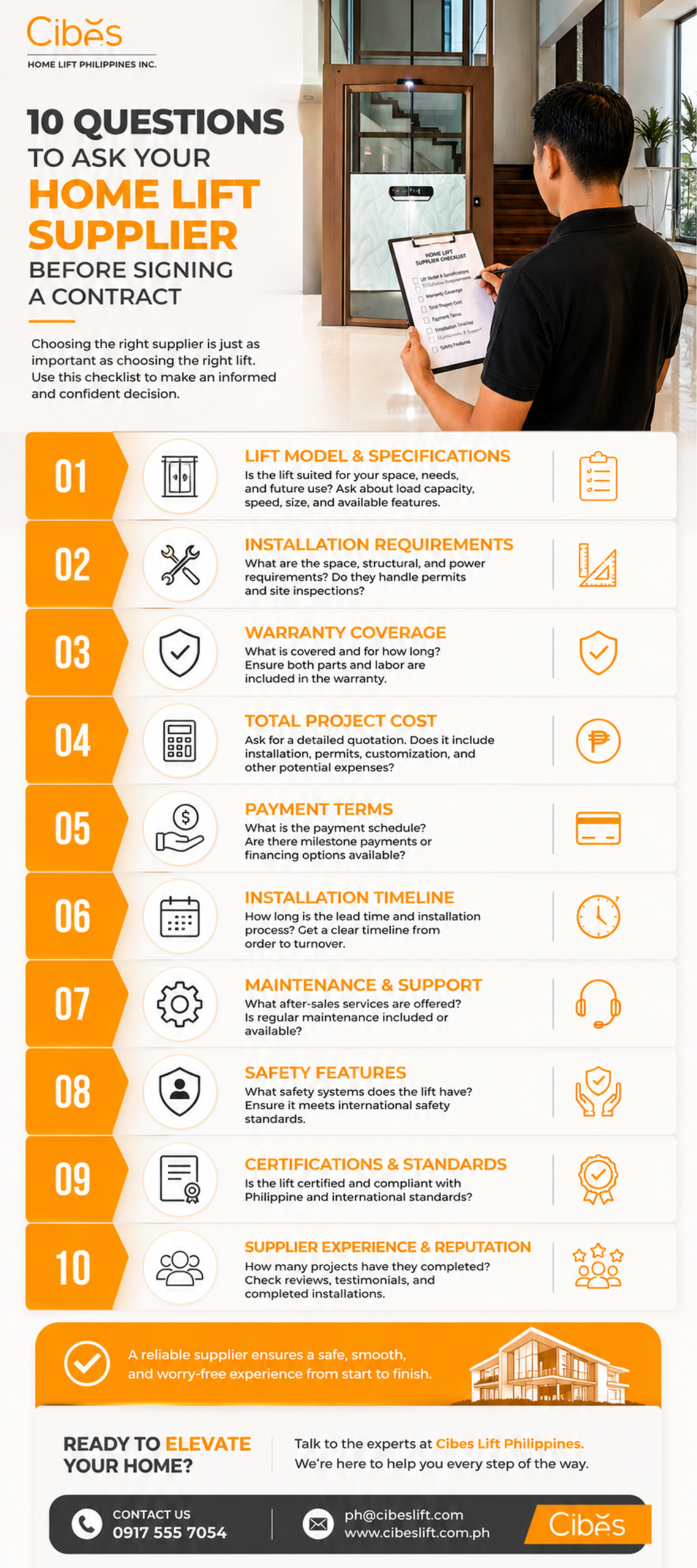
Choosing a home lift supplier? Use this checklist to compare specifications, installation requirements, warranty, maintenance, safety features, and after-sales support before signing a contract.
What After-Sales Support Should You Expect?
Reliable suppliers should provide user training, preventive maintenance, replacement parts, technical support, and emergency service after installation.
Why Choose Cibes Lift Philippines?
Cibes Lift Philippines is the factory-owned subsidiary of Cibes Lift Group in the Philippines. Homeowners benefit from genuine Cibes products, factory-trained technicians, nationwide service coverage, and long-term access to genuine spare parts and technical support.
Frequently Asked Questions
Q: Can a home lift be installed in an existing house?
A: Yes. Many home lifts can be installed in existing homes, although structural requirements depend on the model and available space.
Q: Do I need building permits?
A: Permit requirements vary by project and local regulations. Your supplier should explain what approvals are required.
Q: How often should a home lift be maintained?
A: Follow the manufacturer’s maintenance schedule to ensure safety, reliability, and warranty compliance.
Q: What additional costs should I expect?
A: Possible costs include electrical upgrades, structural modifications, permits, and finishing works if these are not included in the quotation.
Conclusion
Before signing any home lift contract, take time to understand exactly what you are purchasing. A trustworthy supplier should answer your questions clearly, provide complete documentation, explain long-term ownership costs, and help you make an informed decision. Careful planning today can help ensure your home lift remains safe, reliable, and valuable for many years.
Thinking about adding a home lift?
Contact Cibes Lift Philippines Inc. to learn more or schedule your installation.
Phone: 0917 555 7054 / (027) 529 1128 | Email: ph@cibeslift.com
Address: Makati City | Balintawak – Quezon City | Mandaluyong City | Cebu City | Ilo-Ilo City | Davao City | Cagayan De Oro City
Contact Us






Know more about Cibes Author – Bruno Radegonde



TL;DR Outdoor home elevators can improve accessibility while preserving valuable indoor space. In the Philippines, proper weather protection, structural engineering, drainage, and installation planning are essential. This guide explores installation considerations, safety requirements, potential costs, and what homeowners should know before choosing an outdoor home lift. Outdoor elevator installations can help homeowners in the Philippines […]

TL;DR The Cibes Experience Center Mindanao locations in Davao City and Cagayan de Oro City let homeowners, architects, contractors, and property developers explore home lift solutions in person. Compare available designs, check finishes, and discuss your property requirements with the Cibes team. Contact your preferred showroom before visiting to confirm operating hours and available demo […]

TL;DR The Cibes Experience Center Visayas in Cebu City lets homeowners, architects, designers, contractors, and developers see Cibes home lifts in person. Visitors can experience the lift cabin, review available designs and features, and discuss installation requirements with the Cibes team. The Cebu Experience Center currently lists V90 Elegance, Z85 Antera, and Ascenda among its […]
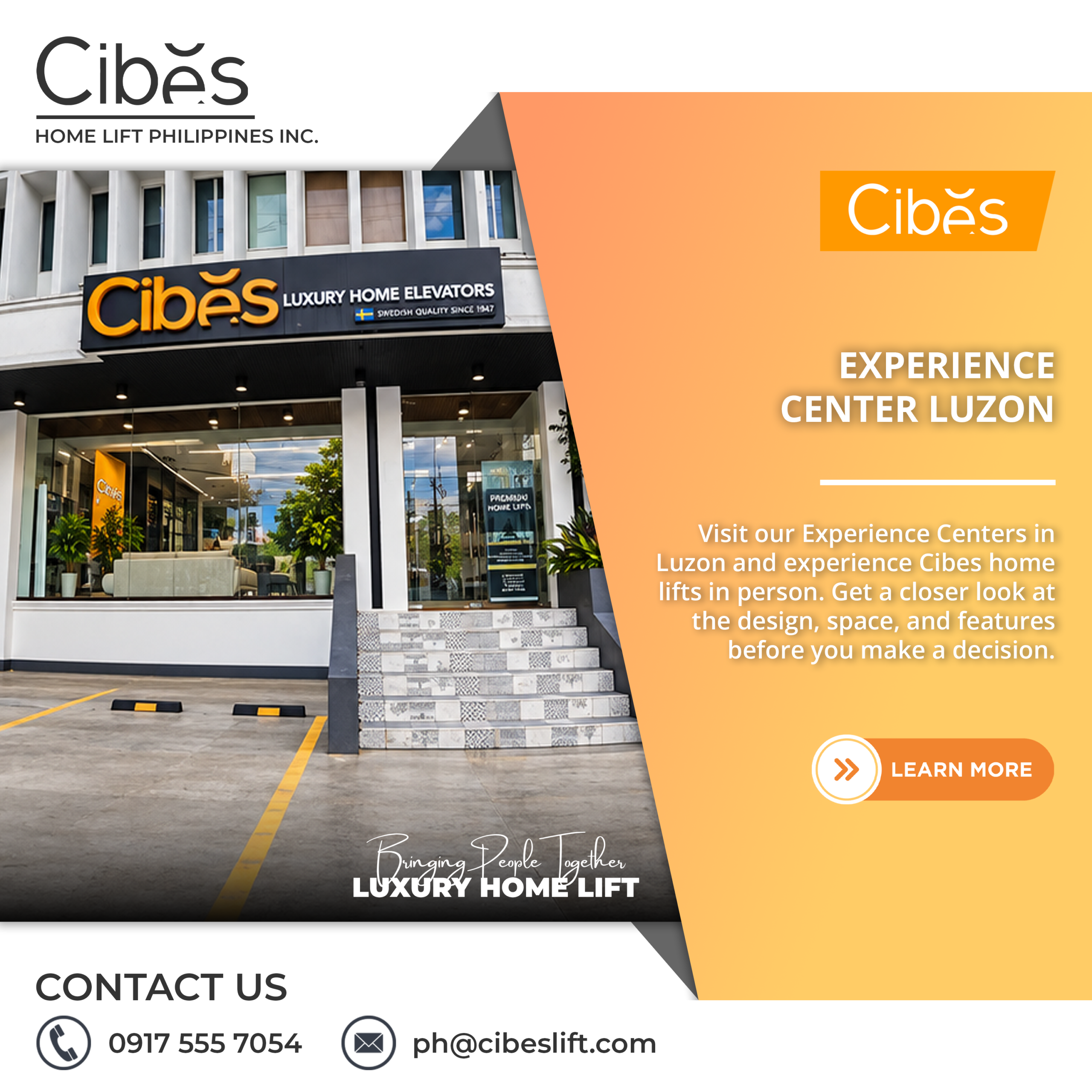
TL;DR Cibes Experience Center Luzon lets homeowners and property professionals experience Cibes home lifts in person before making a decision. Cibes Lift Philippines has 13 demo lifts across three Luzon Experience Centers: Makati (8), Mandaluyong (2), and Balintawak, Quezon City (3). Visitors can ride the lifts, check cabin space, test the controls, explore designs, and […]

TL;DR Sustainable home elevators in the Philippines are becoming an important consideration for homeowners who want to improve accessibility without overlooking environmental responsibility. Modern home elevators can support energy-efficient living through efficient drive systems, durable materials, renewable energy integration, and reduced structural changes compared with major home renovations. The Environmental Case for Sustainable Home Elevators […]