Blog - 22/08/2026
Top Elevator Companies and Brands in the Philippines
TL;DR
The top elevator companies in the Philippines include global brands like Otis, Schindler, KONE, TK Elevator, and Mitsubishi Electric, commonly used in commercial buildings across Metro Manila, Cebu, and Davao. For residential homes, brands like Cibes Lift Group specialize in space-saving home elevators. Prices typically range from ₱1.5M to ₱6M+.
Buying a home elevator in the Philippines is not as simple as picking an appliance.
Most homeowners only go through this once, and the choices can feel unfamiliar at first.
But this decision has long-term impact. You’re investing in equipment that will run daily in your home for the next 20 to 30 years. And in the Philippine setting, factors like space limits, climate, and power conditions make the choice even more important.
So, which elevator brands are actually available here?
Beyond comparing brands, it’s important to understand the technologies, installation requirements, safety standards, and design options behind residential elevators. Our complete guide to Cibes home elevators in the Philippines explains the key differences homeowners should evaluate before choosing a lift.
Which Top Elevator Companies Are Available in the Philippines?
The local market includes a mix of global companies and residential-focused brands. Each one serves a different type of building.
What Are the Top Elevator Companies in the Philippines?
The top elevator companies in the Philippines include global manufacturers widely used in commercial projects across Metro Manila, Cebu, and Davao.
These include:
- Otis
- Schindler
- KONE
- TK Elevator
- Mitsubishi Electric
You’ll often see them in:
- Office buildings in Makati and BGC
- Hotels and resorts
- Hospitals
- Shopping malls
Why homeowners consider them:
- Established global reputation
- Strong engineering background
- Long service history
What to watch out for:
- Higher cost, usually ₱3M to ₱6M+
- Systems are mainly designed for commercial use
- Some installations may feel oversized for typical Filipino homes
In many cases, these systems are adapted for residential use rather than built specifically for it.
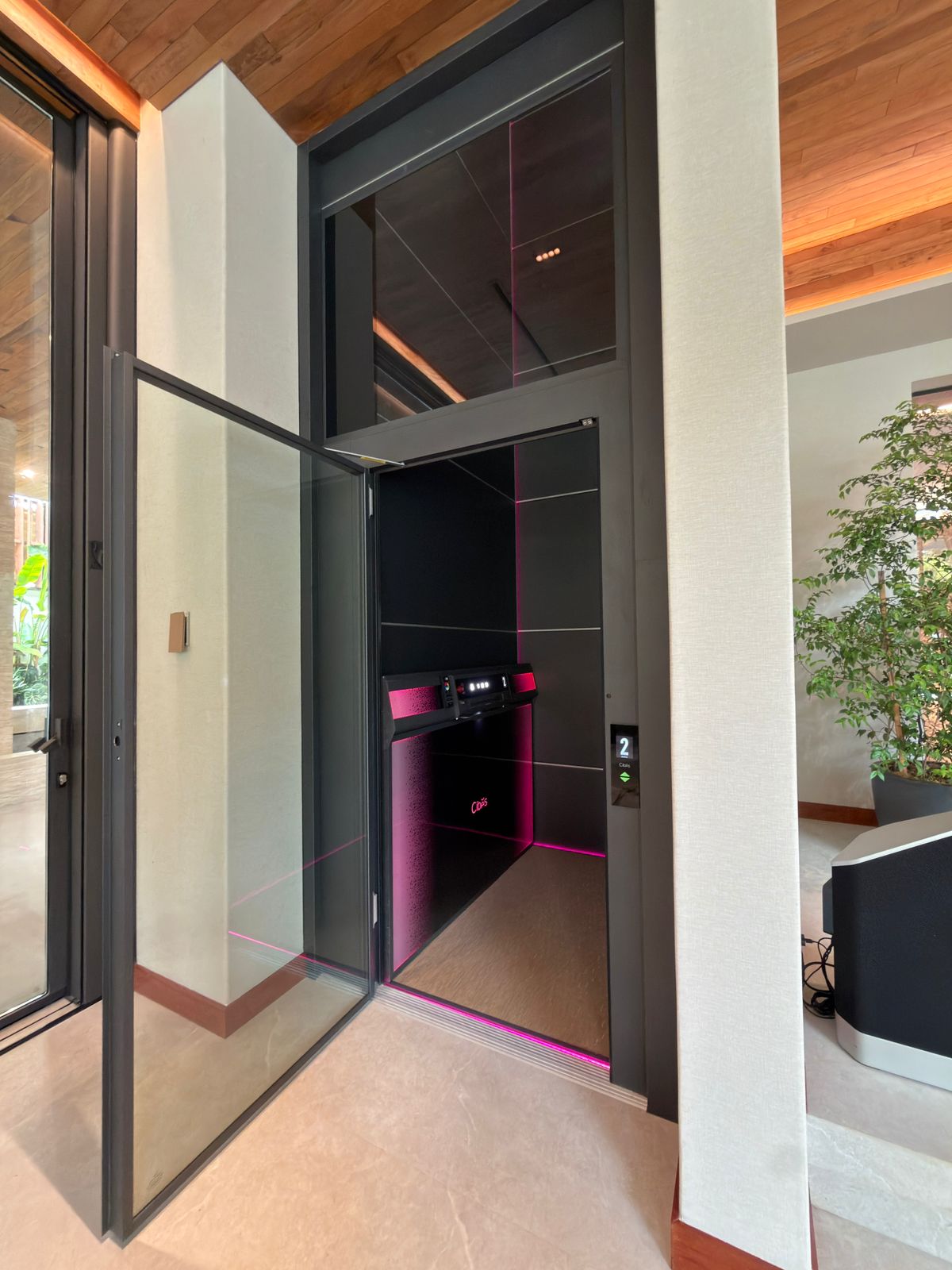
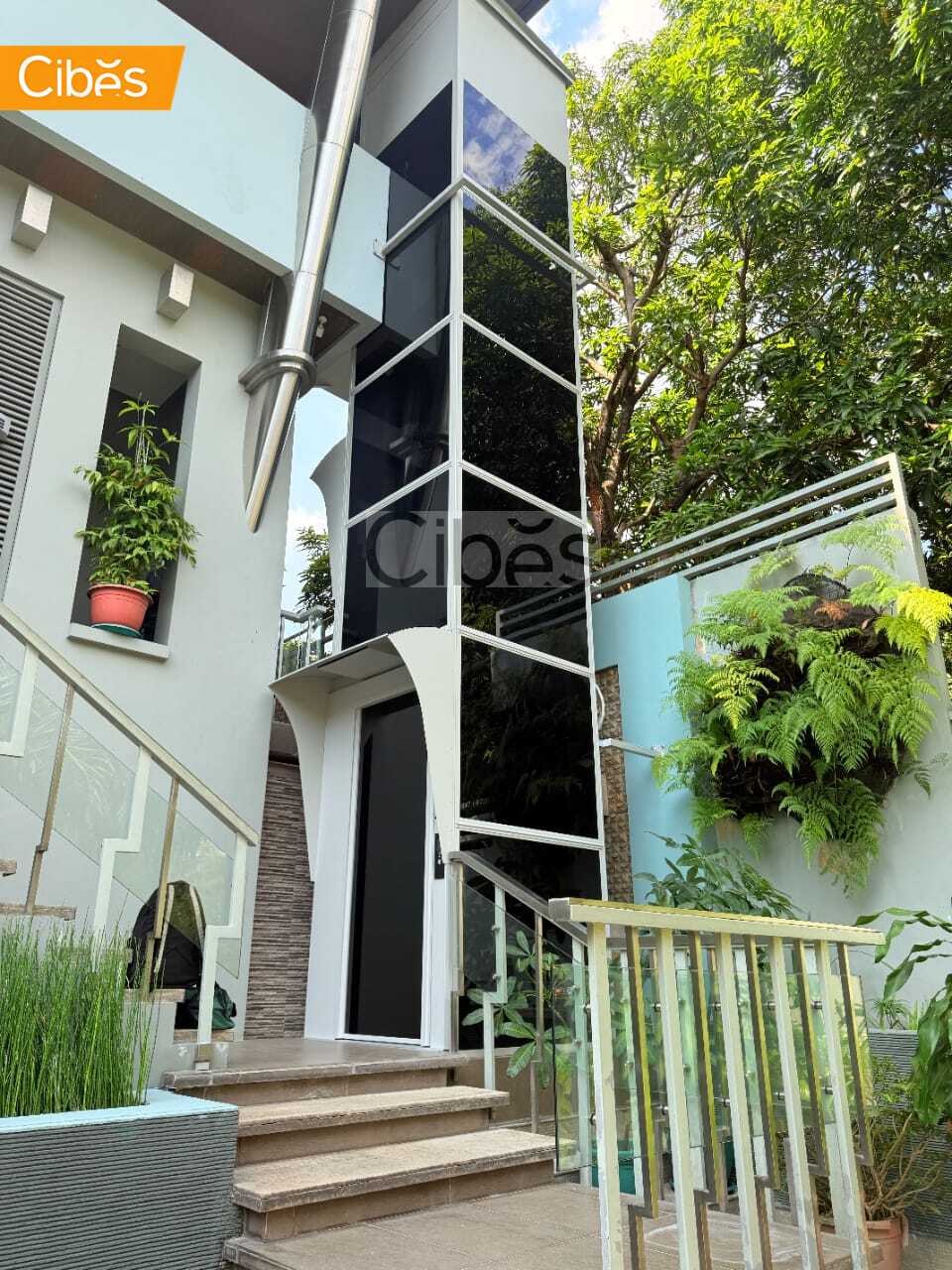
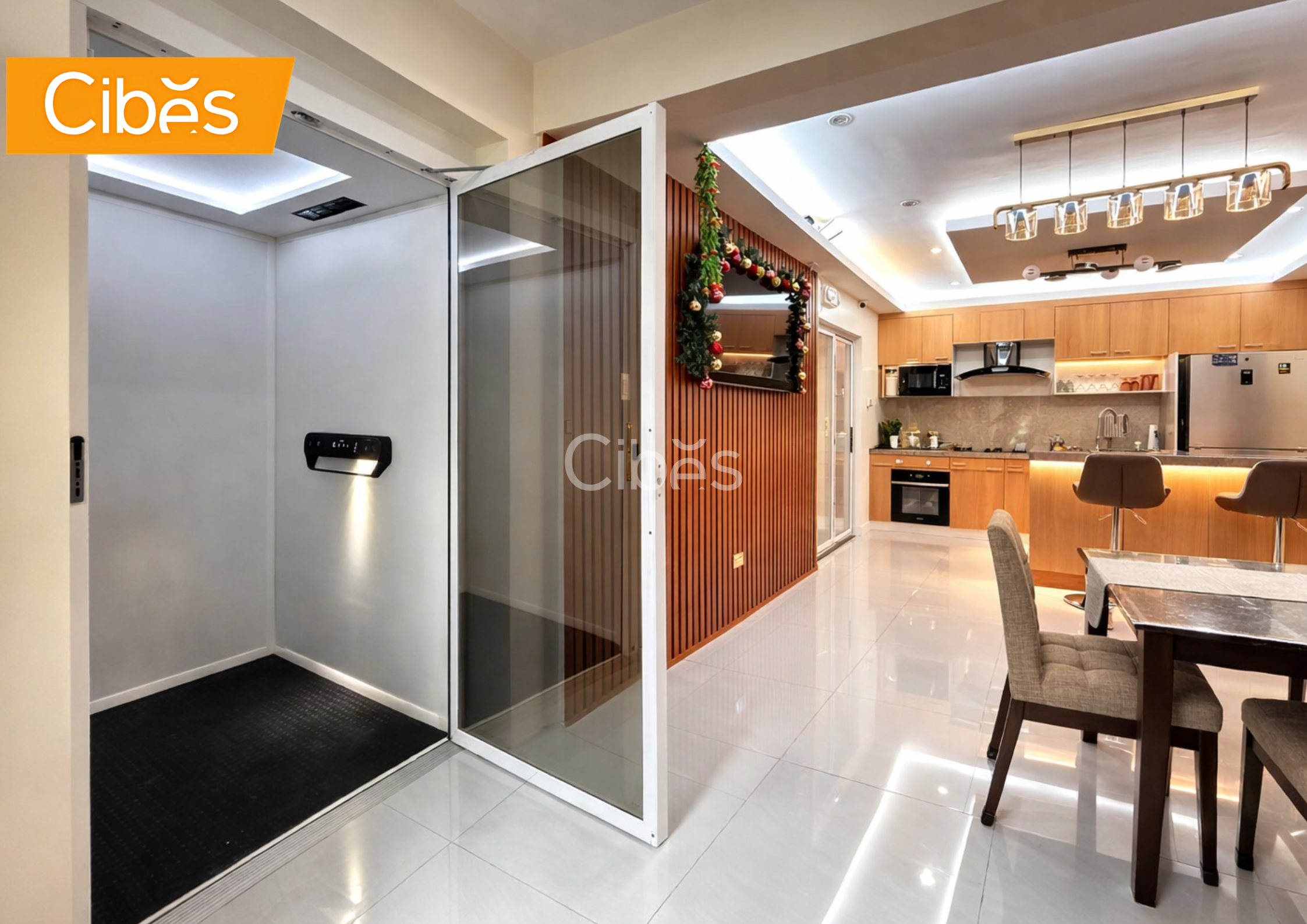
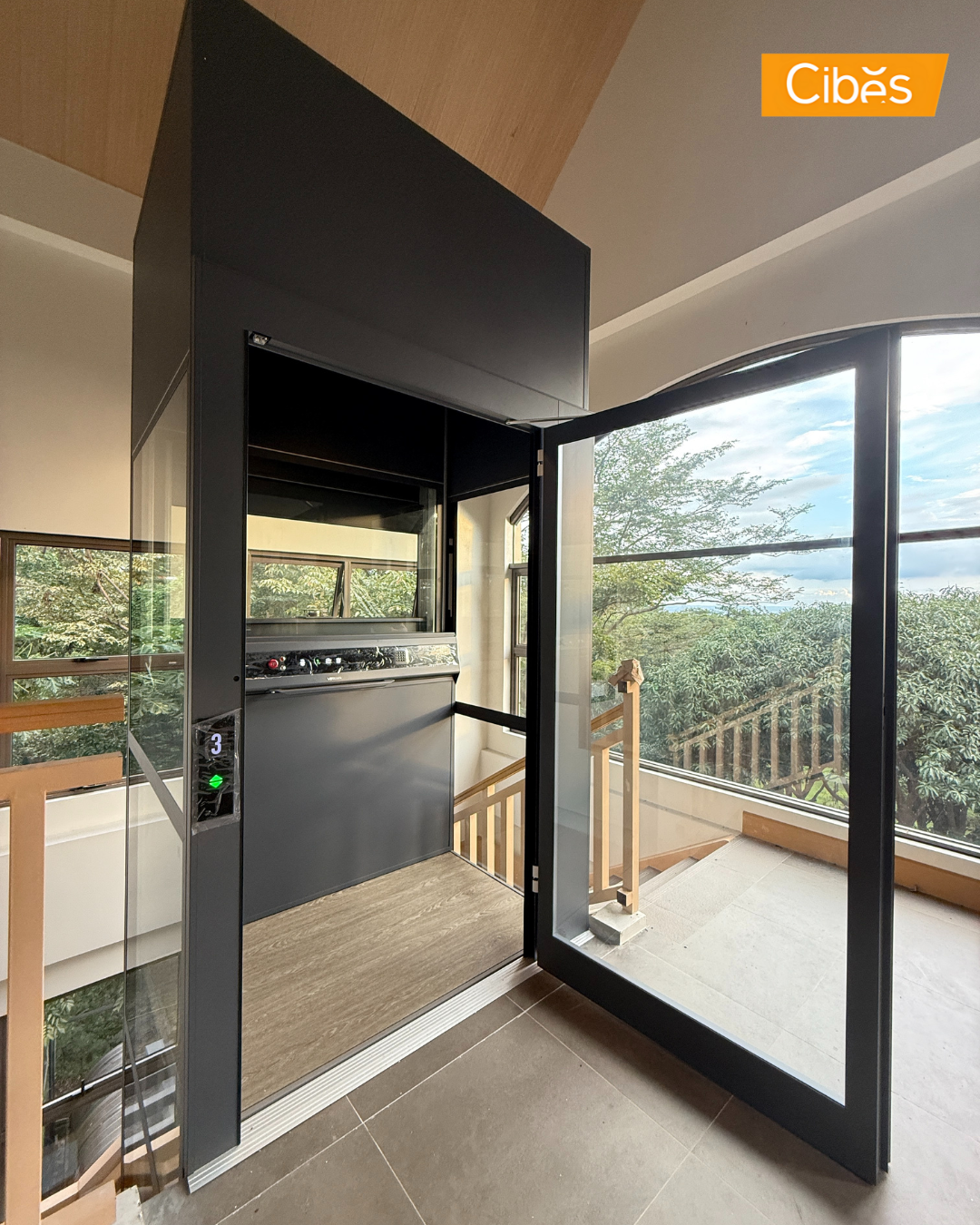
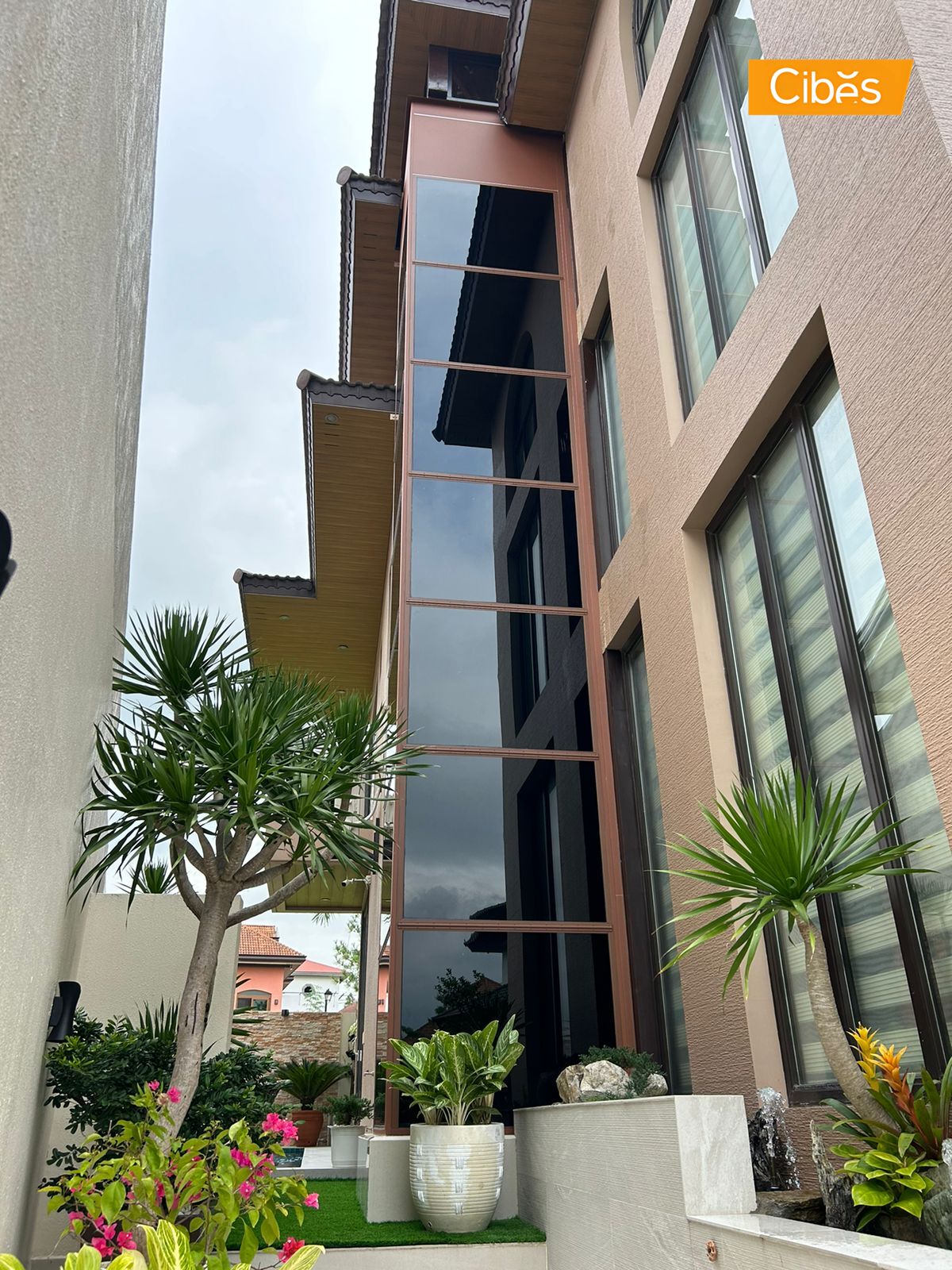
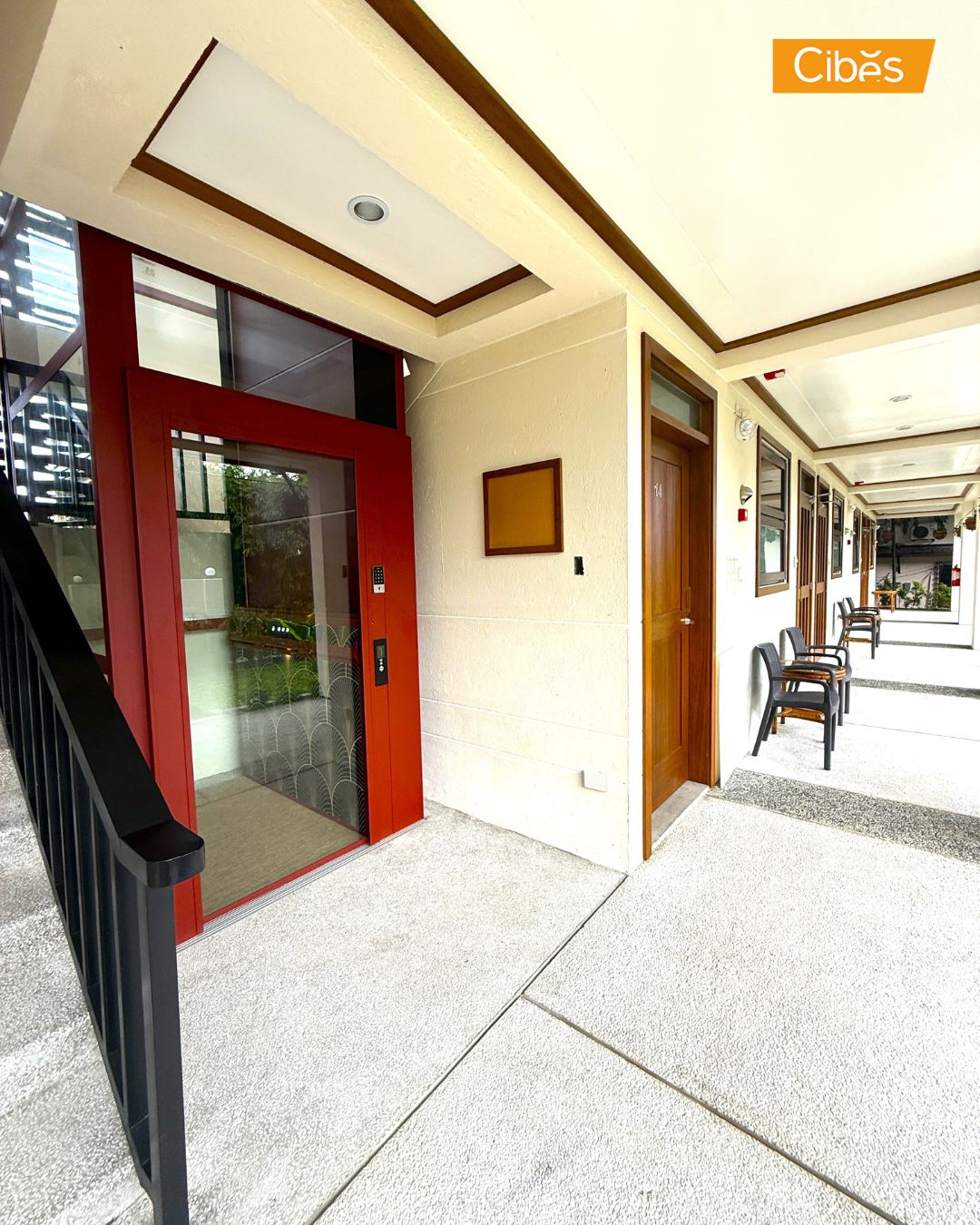
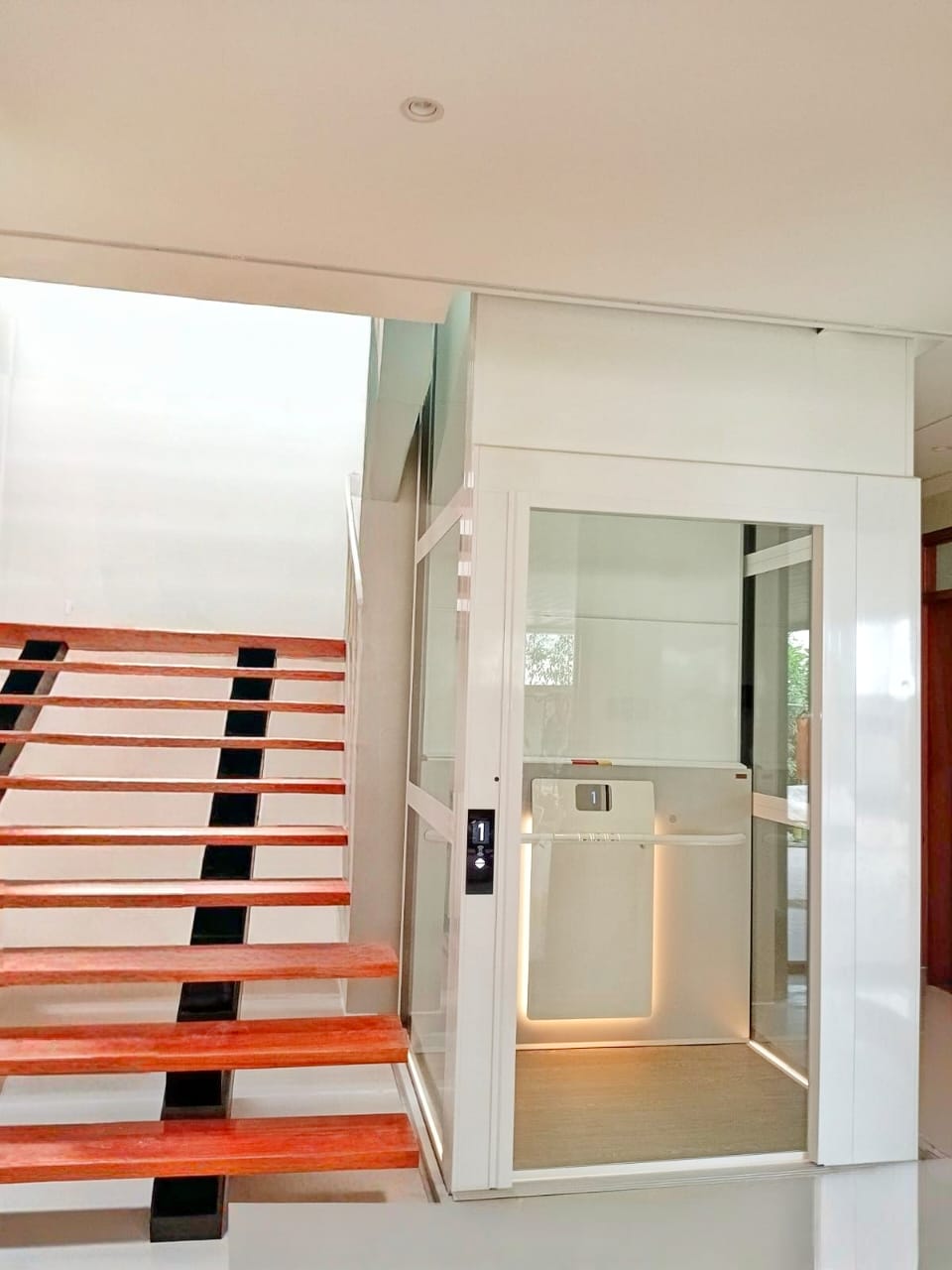
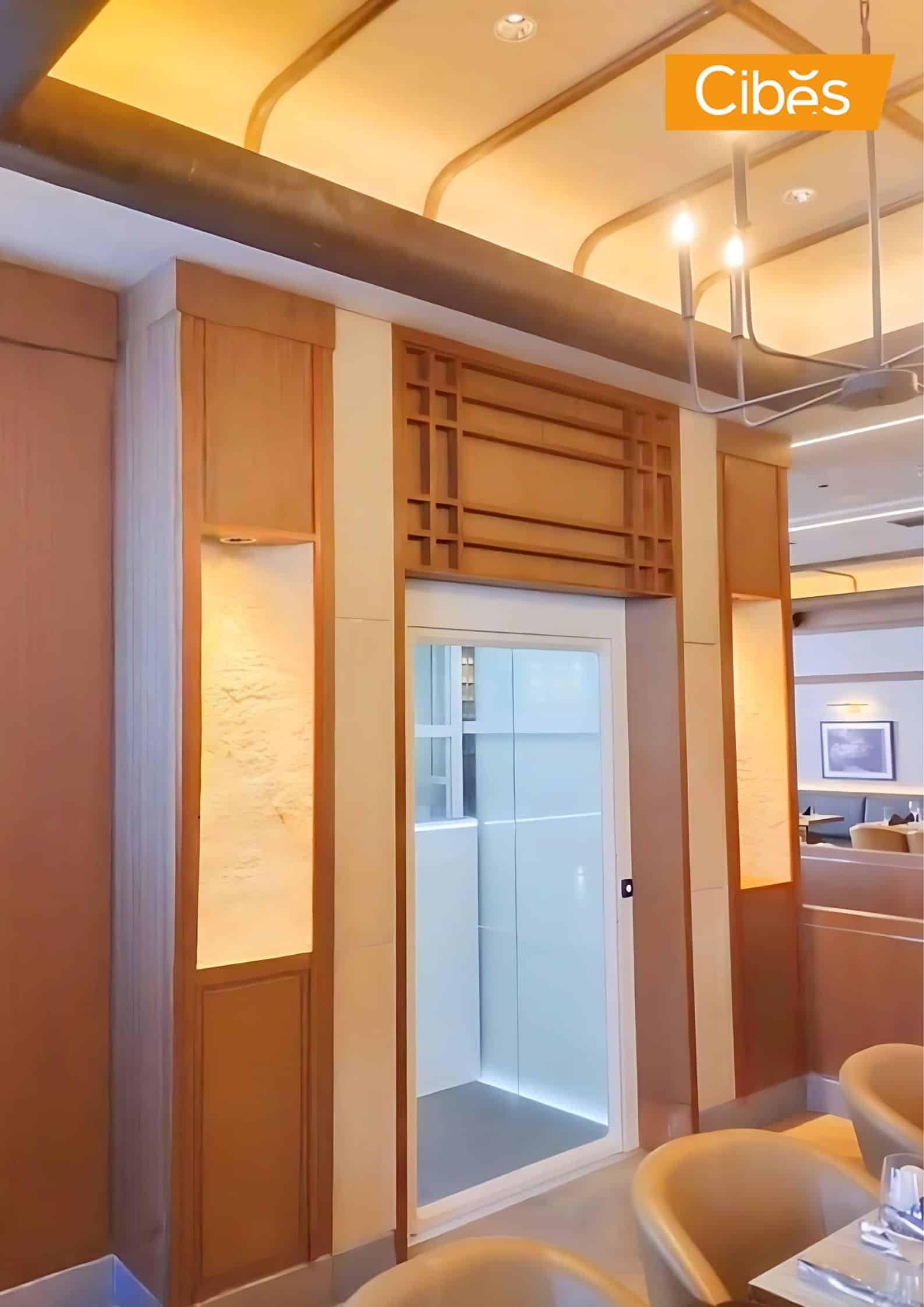
A guide to the top elevator companies and brands available in the Philippines.
Which elevator brands are better for Philippine homes?
Residential specialists focus on home setups, which makes a big difference in local conditions.
Why do Filipino homeowners choose Cibes for home elevators?
Cibes Lift Group is a residential elevator manufacturer founded in Sweden in 1947, with over 80,000 installations across 60+ countries.
In the Philippine context, the design approach stands out.
- Fits compact homes, starting around 15-20 sq ft per floor
- Ideal for townhouses, duplex units, and narrow lots
- Works well in vertical homes common in cities like Quezon City and Pasig
- Uses screw-driven technology for smooth, quiet travel
- Machine room-less setup, no need for extra construction space
This matters because many Filipino homes don’t have room for a traditional elevator shaft.
Cibes elevators are installed locally through Philippine partners, so homeowners get both imported quality and local support.
How Do the Top Elevator Companies Compare in Service and Reliability?
Service quality is just as important as the elevator itself.
In the Philippines, equipment is exposed to:
- High humidity
- Heat and dust
- Occasional brownouts
That’s why after-sales support is not optional. It’s essential.
What’s the difference in service experience?
Global brands:
- Strong systems and global standards
- Service depends on the local distributor
- Some teams focus more on commercial projects
Residential specialists:
- Teams trained for home environments
- More familiar with space limits and family use
- More consistent homeowner experience
Local suppliers:
- Lower upfront cost in some cases
- Service quality can vary
- Risk of delays in parts or long-term support
Typical residential installations in the Philippines take around 6 to 10 weeks, depending on site readiness and permits.
| Brand | Best For | Key Feature | Price Range | Notes |
|---|---|---|---|---|
| Cibes | Home elevators | Shaftless, compact | Premium | Space-saving design |
| Otis | Commercial | High-rise systems | High | Global brand |
| KONE | Smart buildings | Energy-efficient tech | High | Modern systems |
| Schindler | Mixed use | Escalators + elevators | High | Reliable |
| Mitsubishi | Heavy-duty | Strong performance | High | Durable |
How should Filipino homeowners choose the right elevator?
There’s no one-size-fits-all answer. The right choice depends on your home and how you plan to use it.
1. How much space do you really have?
Many homes in the Philippines are built on limited lot areas. Townhouses and narrow lots need compact solutions.
If space is tight, a residential elevator is usually the better fit.
2. What will the elevator be used for?
- Daily family use → residential elevator
- High traffic or heavy loads → commercial system
3. Can the provider support you long-term?
Check:
- Local service team availability
- Maintenance plans
- Spare parts access in the Philippines
4. How long will installation take?
Most home elevators are installed within 6-10 weeks, but this can change based on:
- Building permits
- Structural preparation
- Custom design requests
When is a residential elevator not ideal?
It’s not always the right solution.
A residential elevator may not be suitable if:
- The property is for commercial or mixed use
- High passenger traffic is expected
- The design requires a large or heavy-duty system
In these cases, a commercial elevator brand may be more appropriate.
How much does a home elevator cost in the Philippines?
Prices vary depending on size, design, and installation requirements.
Typical range:
- Basic residential elevators: ₱1.5M-₱2.5M
- Mid-range systems: ₱2.5M-₱4M
- Premium or custom units: ₱4M-₱6M+
Other factors that affect cost:
- Structural work
- Location (Metro Manila vs provincial areas)
- Delivery and installation access
Frequently Asked Questions About Elevator Companies in the Philippines
Q: What are the major elevator companies in the Philippines?
A: Major brands include Otis, Schindler, KONE, Mitsubishi Electric, and TK Elevator, commonly used in commercial buildings nationwide.
Q: Are there home elevator options in the Philippines?
A: Yes. Some brands specialize in residential elevators designed for houses, especially for space-saving installations.
Q: How much does a home elevator cost?
A: Most systems range from ₱1.5M to ₱6M+, depending on features and customization.
Q: Are international brands available locally?
A: Yes. Many operate through Philippine distributors and partners, especially in major cities.
Q: Do elevator companies provide maintenance?
A: Yes. Maintenance contracts are usually offered and are important for long-term safety and performance.
Final thoughts: What matters for Philippine homes?
Choosing an elevator in the Philippines comes down to real conditions.
- Limited space
- Warm, humid climate
- Power interruptions
- Long-term maintenance needs
Some homeowners prefer the top elevator companies for their track record. Others go for residential specialists that fit better in local homes.
The key is simple. Choose what fits your space, your usage, and your long-term plans.
Read More
- Home Elevator Repair Philippines: Common Problems & Fixes
- Elevated House Design for Flood-Prone Philippines
Experience Center’s and Technical Station Address
Makati City | Balintawak – Quezon City | Mandaluyong City | Cebu City | Ilo-Ilo City | Davao City | Cagayan De Oro City






CIBES AUTHOR
Jovelyn Guidaven has been a Sales Manager at Cibes Lift Philippines since 2021, helping homeowners, architects, designers, and developers find the right home lift solutions for their projects. She works closely with clients throughout the sales process, providing expert guidance and personalized recommendations based on their accessibility and mobility needs.


TL;DR The Cibes Experience Center Visayas in Cebu City lets homeowners, architects, designers, contractors, and developers see Cibes home lifts in person. Visitors can experience the lift cabin, review available designs and features, and discuss installation requirements with the Cibes team. The Cebu Experience Center currently lists V90 Elegance, Z85 Antera, and Ascenda among its […]
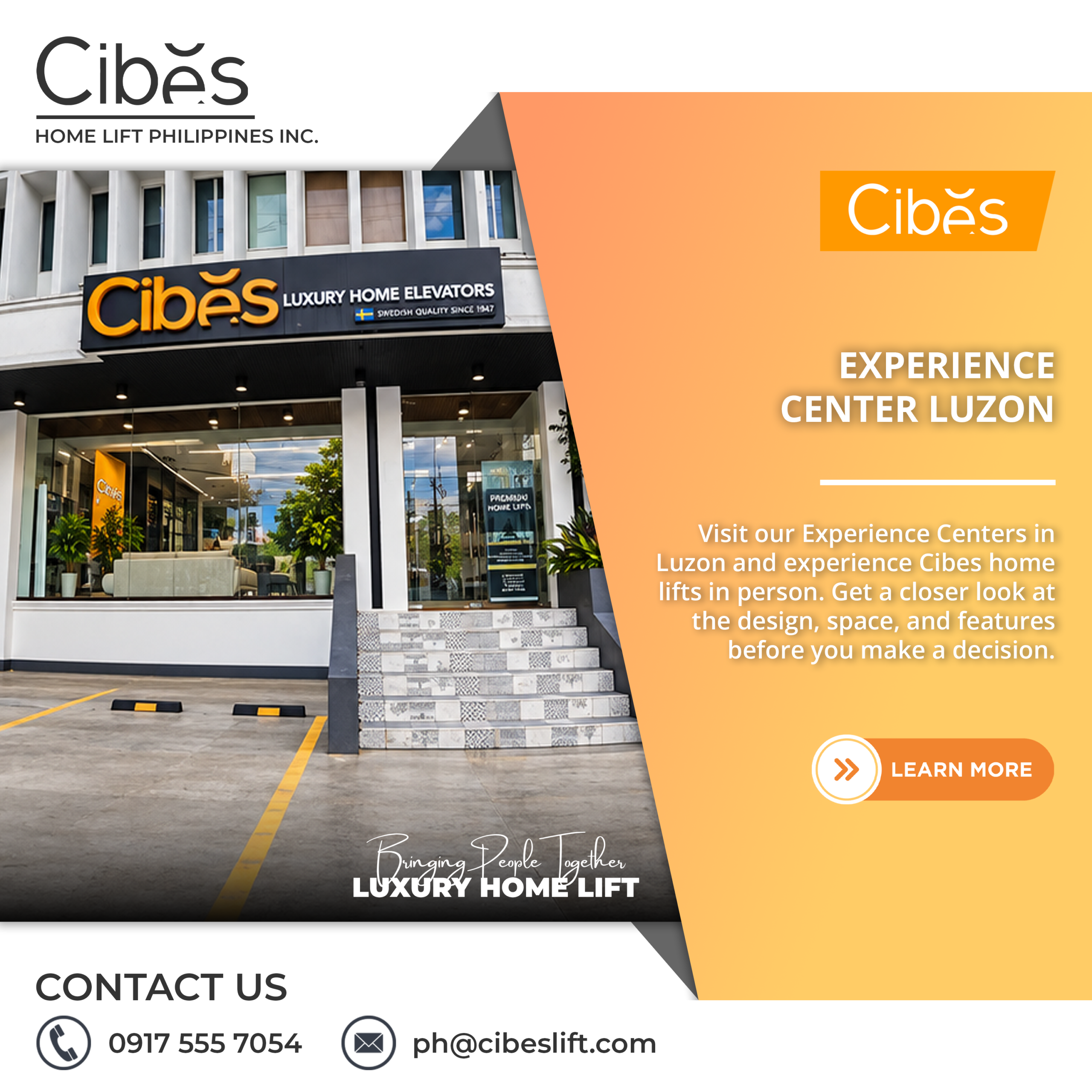
TL;DR Cibes Experience Center Luzon lets homeowners and property professionals experience Cibes home lifts in person before making a decision. Cibes Lift Philippines has 13 demo lifts across three Luzon Experience Centers: Makati (8), Mandaluyong (2), and Balintawak, Quezon City (3). Visitors can ride the lifts, check cabin space, test the controls, explore designs, and […]

TL;DR Sustainable home elevators in the Philippines are becoming an important consideration for homeowners who want to improve accessibility without overlooking environmental responsibility. Modern home elevators can support energy-efficient living through efficient drive systems, durable materials, renewable energy integration, and reduced structural changes compared with major home renovations. The Environmental Case for Sustainable Home Elevators […]

TL;DR Home Elevator Performance plays an important role in the safety, comfort, efficiency, and long-term reliability of a residential lift. While regular maintenance keeps your elevator operating reliably, proper usage, environmental control, component monitoring, electrical optimization, and timely upgrades can further improve its performance. In this guide, discover 8 expert tips to help maximize home […]
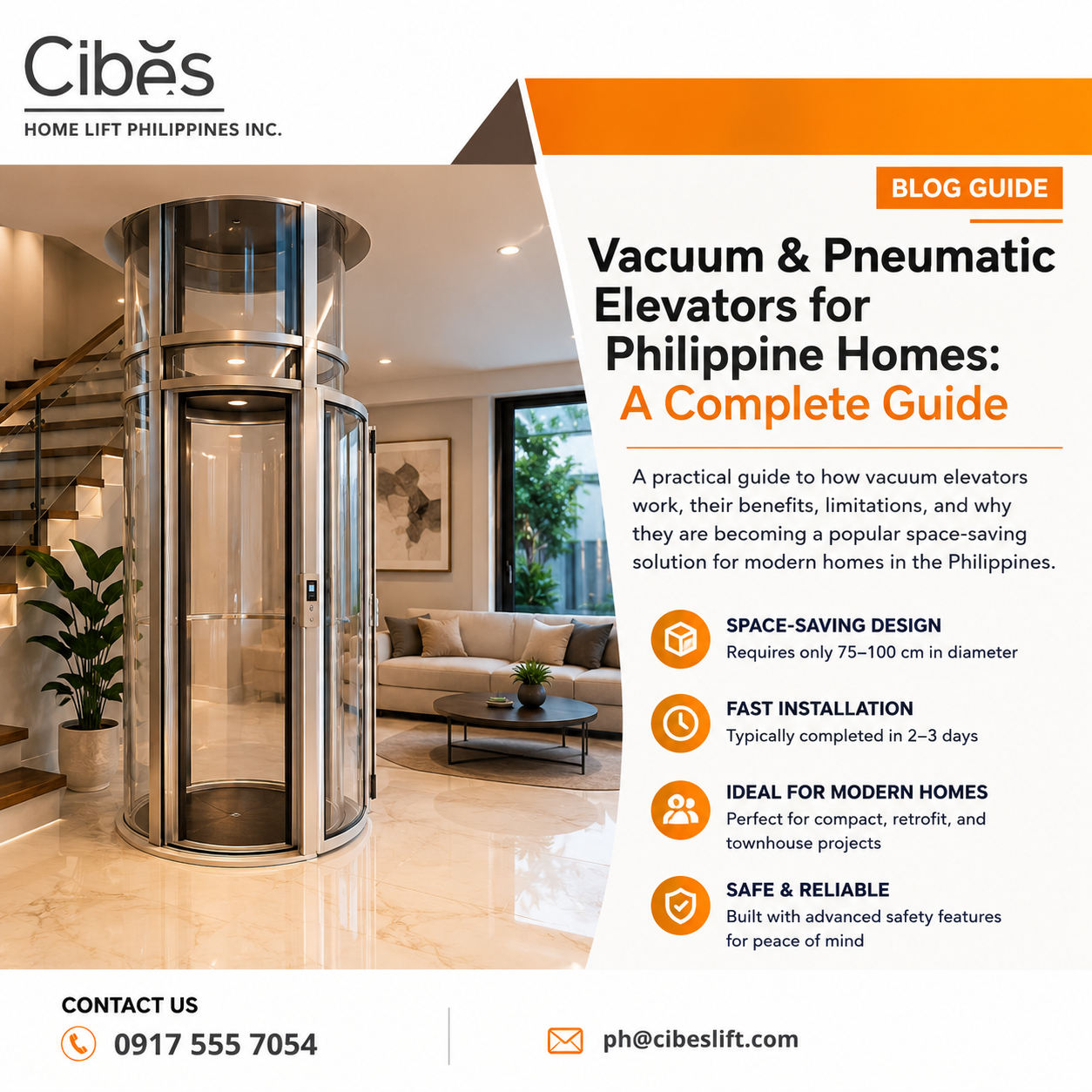
TL;DR Vacuum elevators use air pressure instead of cables or hydraulic systems to move a cabin inside a transparent tube. Most residential models require only 75 to 100 cm of space, serve 2 to 4 floors, carry 205 to 238 kg, and can often be installed in 2 to 3 days with minimal structural work. […]