Blog - 31/08/2026
How Much Space Is Needed for a Home Lift?
TL;DR
The space needed for a home lift may be much smaller than you think. If you’ve been researching home lifts, you may keep hitting the same mental roadblock: “There’s no way one of those things will fit in my house.” How much space do you really need for a home lift? Modern compact designs can require surprisingly little room.
In the Philippines, where many families live in compact multi-story townhouses and urban homes in Metro Manila, Cebu, or Davao, Cibes home lifts are designed for tight spaces with innovative screw-driven technology that requires minimal footprint.
Now, let’s put an end to confusion with specific examples and honest information about space needs. Chances are that your home has much greater elevator space than you realize.

Space Needed for a Home Lift: What You Should Know
Let’s start with the number that shocks most people: modern compact home lifts can operate in as little as 12 to 15 square feet per floor.
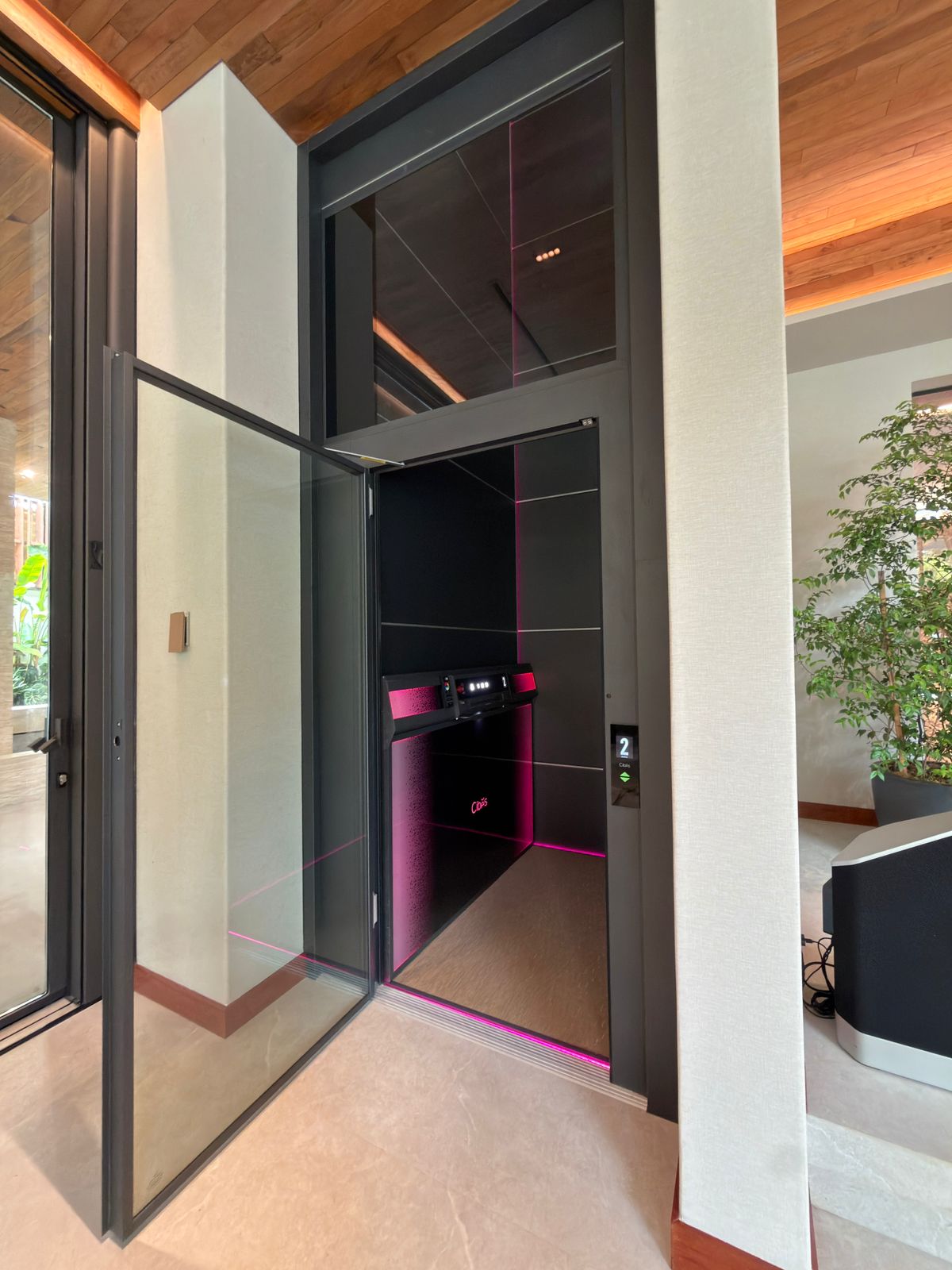
Cibes screw-driven lifts, popular in Philippine homes, often fit in a minimum of 1 square meter (e.g., 1040x940mm cut-out for some models), with no machine room, no deep pit (or none at all), and low headroom requirements, perfect for space-limited townhouses.
Pause and think about that for a second. Twelve to fifteen square feet. That’s roughly:
- A small coat closet (about 3 feet by 4 feet)
- A tiny powder room
- The space taken up by a refrigerator plus a couple feet
- Smaller than most walk-in pantries
We are not talking about a commitment to an entire room. The space that is being referred to is closet-sized and multi-story.
For a slightly larger, wheelchair-friendly elevator, the minimum area that must be provided is about 15 to 20 square feet, and this remains surprisingly small, with an approximate size of 4 feet by 5 feet.
A standard, comfortable residential elevator that can accommodate several people or a large wheelchair requires an area of about 20 to 25 square feet per floor.
Compared to the general belief of a large shaft requiring a large floor space area of 50 or 60 square feet, the required area is much more manageable.
Cibes lifts maximize standing space (up to 70% usable area) without a counterweight, making them far more efficient than traditional designs for Philippine family homes.
Where Does This Space Come From?
Okay, so the footprint is manageable.
But where does it actually go in a normal home?
Stacking closets vertically is a classic approach. Take an inventory of your dwelling to determine which closets are stacked vertically. Perhaps a closet on the first floor with a bedroom closet stacked on top of it, or a storage closet on a third floor, the closets form an elevator shaft.
Of course, you give up storage space. But look at the trade-off in terms of the balance between gains and losses. These types of closets usually store things such as holiday decorations and outdated clothes that are rarely needed.
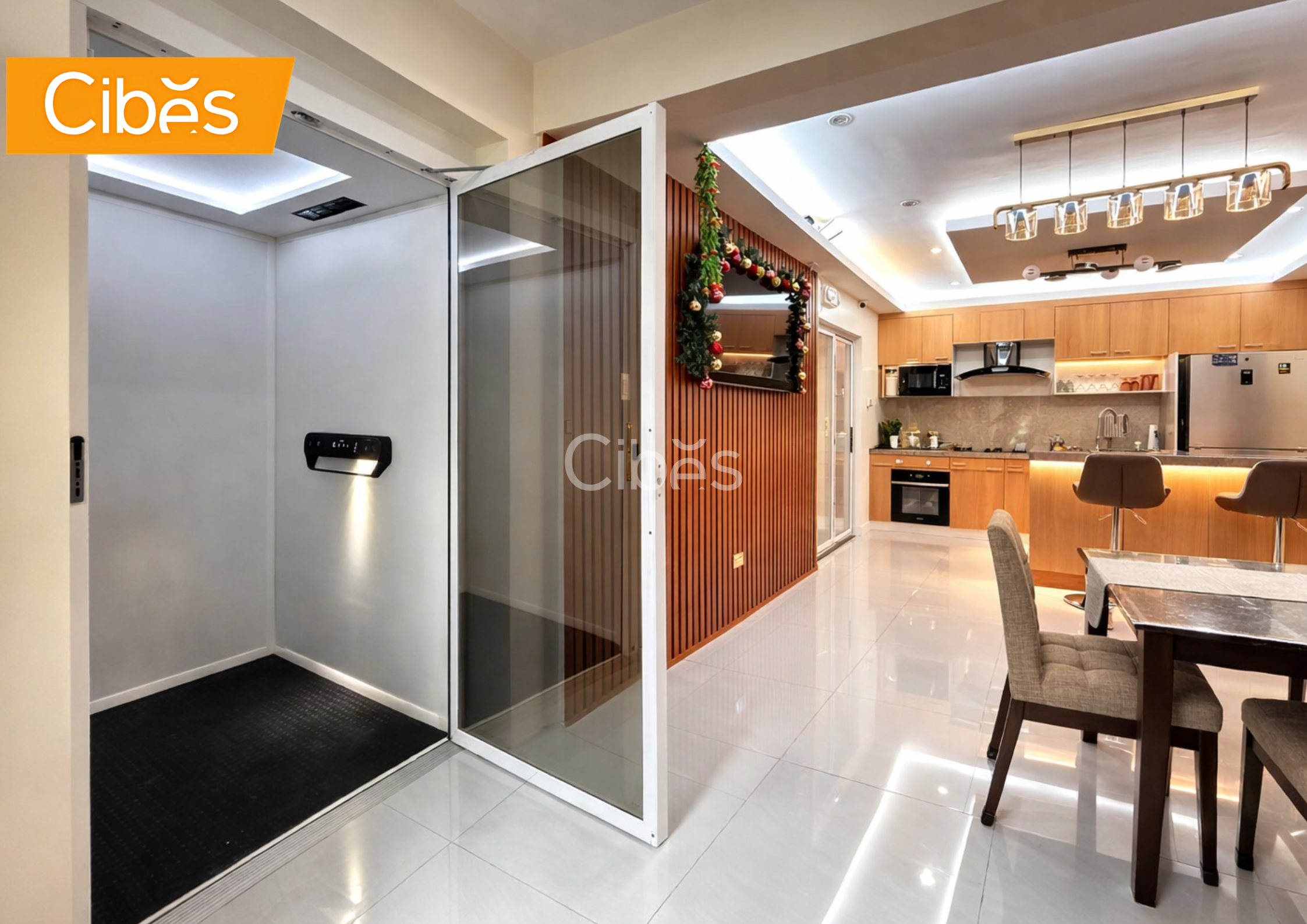
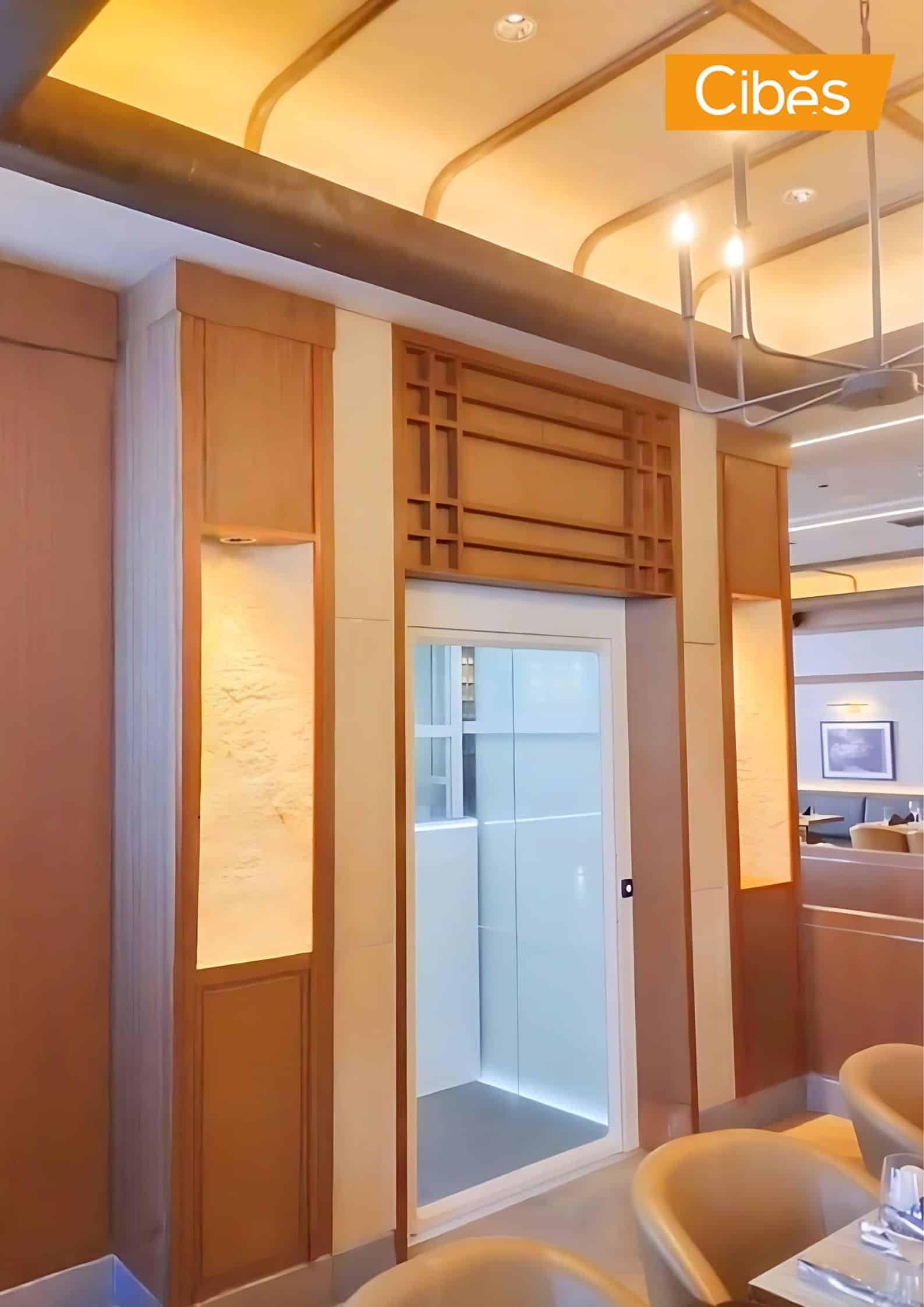
A corner where the living room and dining room meet or where two hallways meet, and if it stretches several levels high, then that’s a potential area.
Narrow sections of wide corridors can easily be made to accommodate compact lifts without making the corridor congested.
Corner areas of the garage that border the house, particularly where living space exists above the garage, afford opportunities for installations that do not impact living areas.
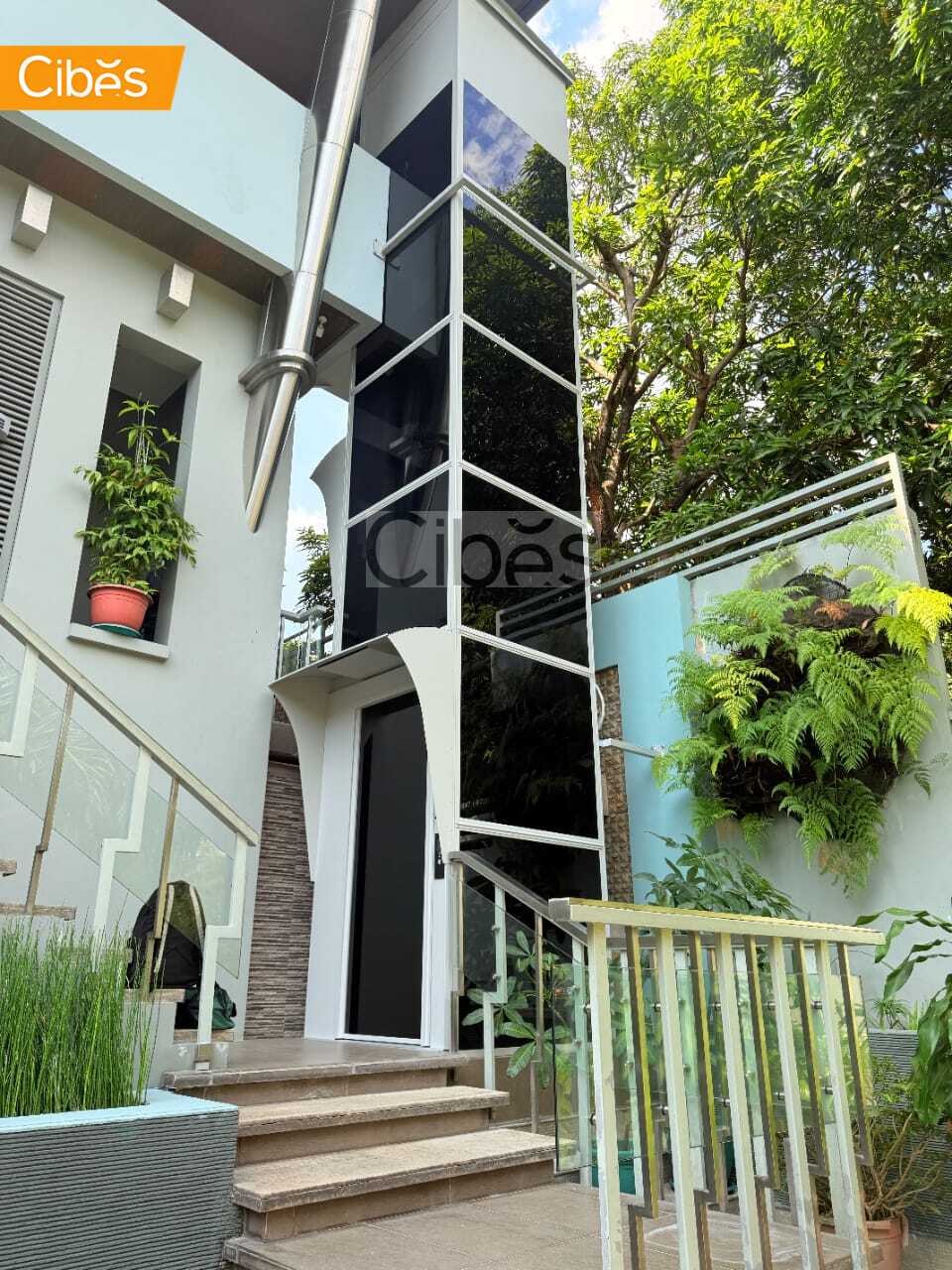
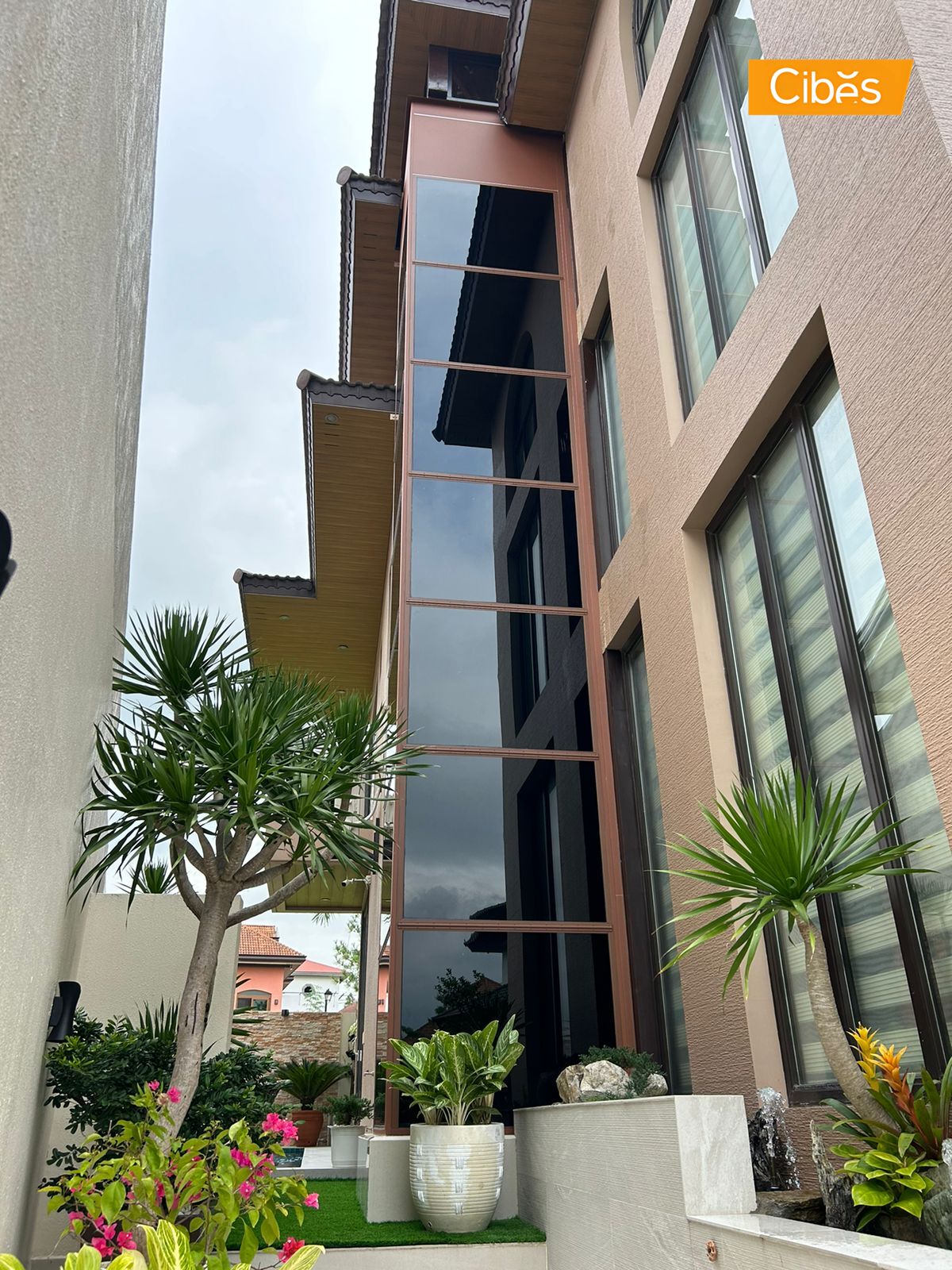
Outdoor installations are definitely possible. Install a small tower or bump-out against an exterior wall. In this way, you will not use any square footage inside. Based upon your home’s style and your local regulations, this solution may offer a pleasing look as if it were a purposeful design element rather than an add-on.
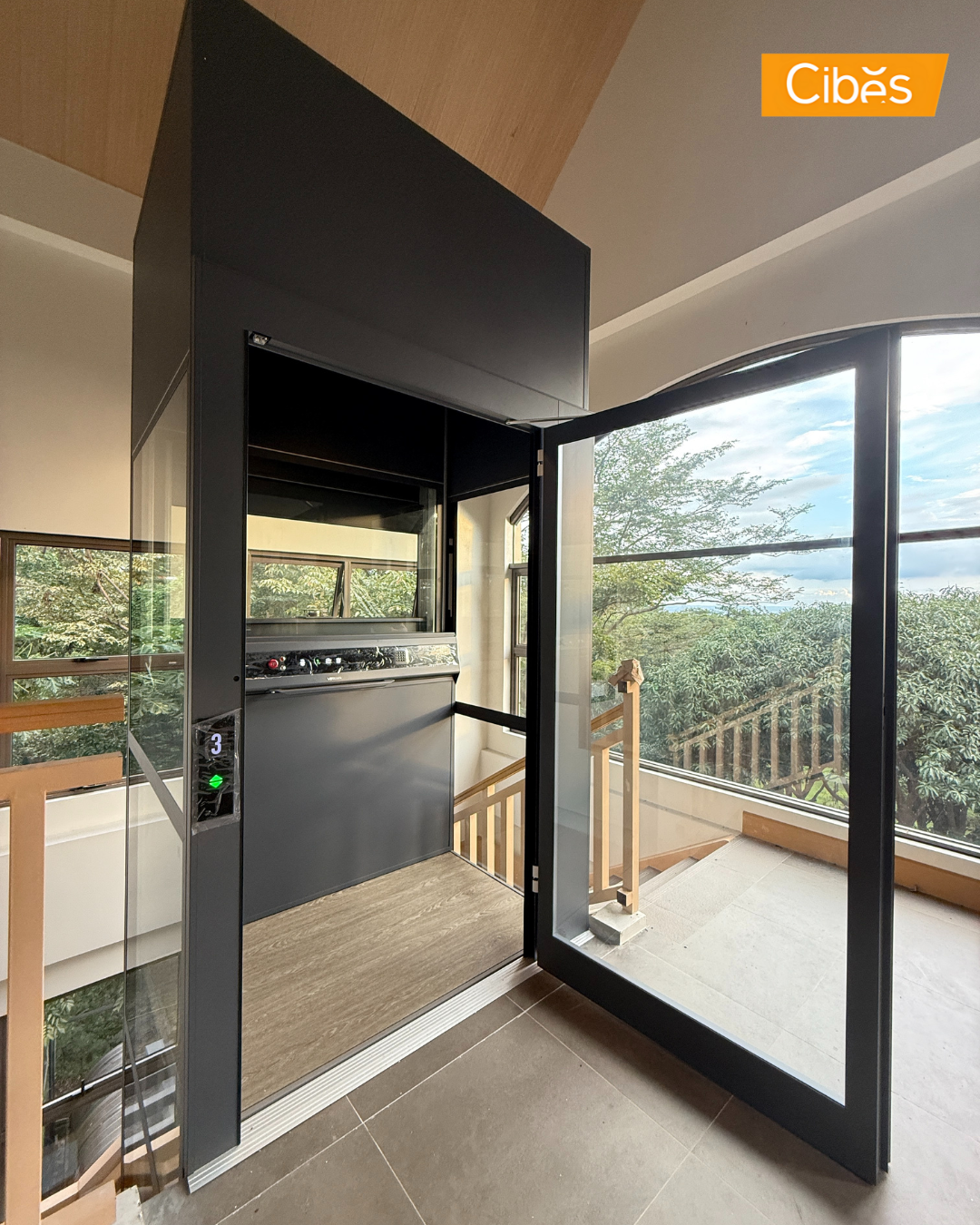
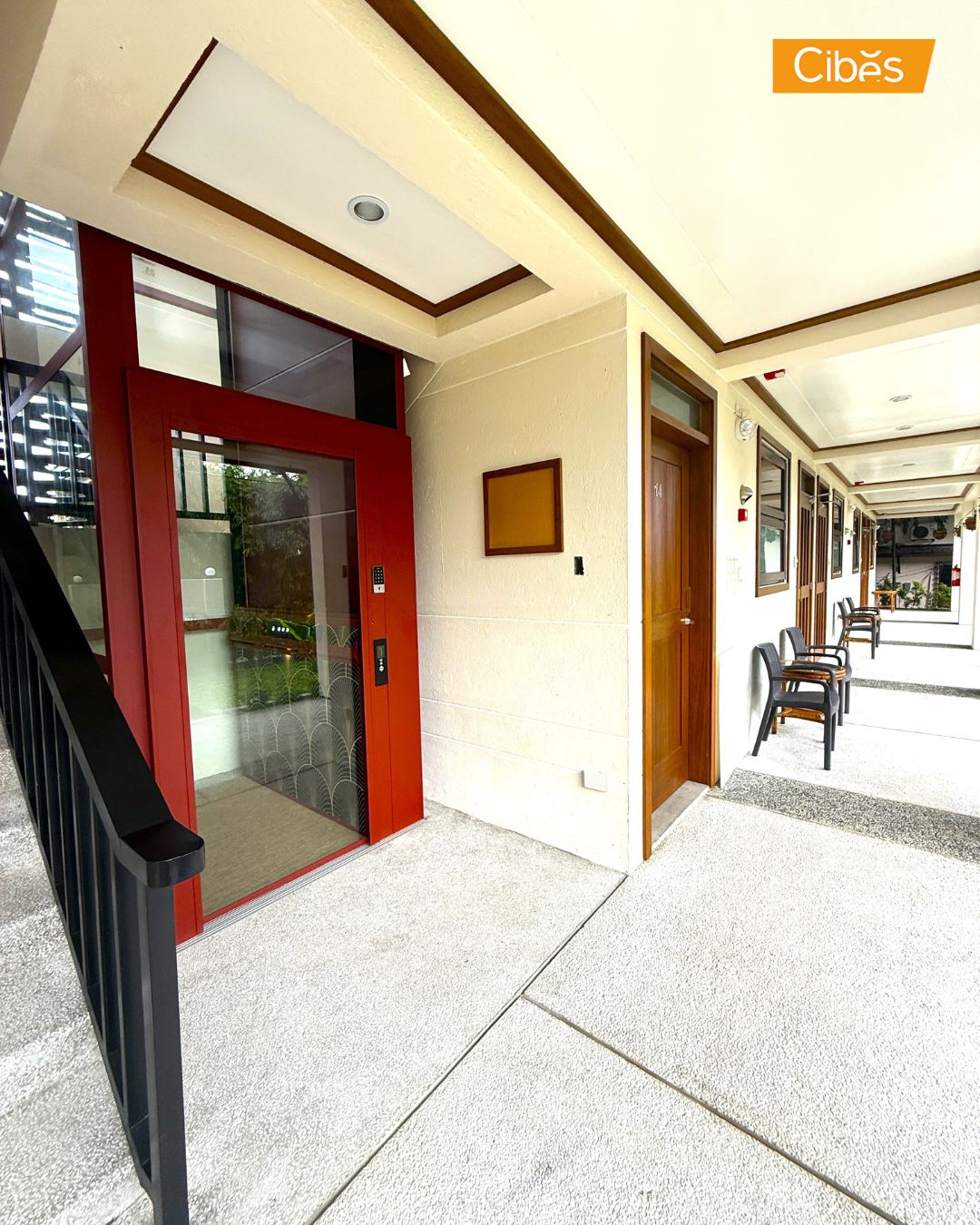
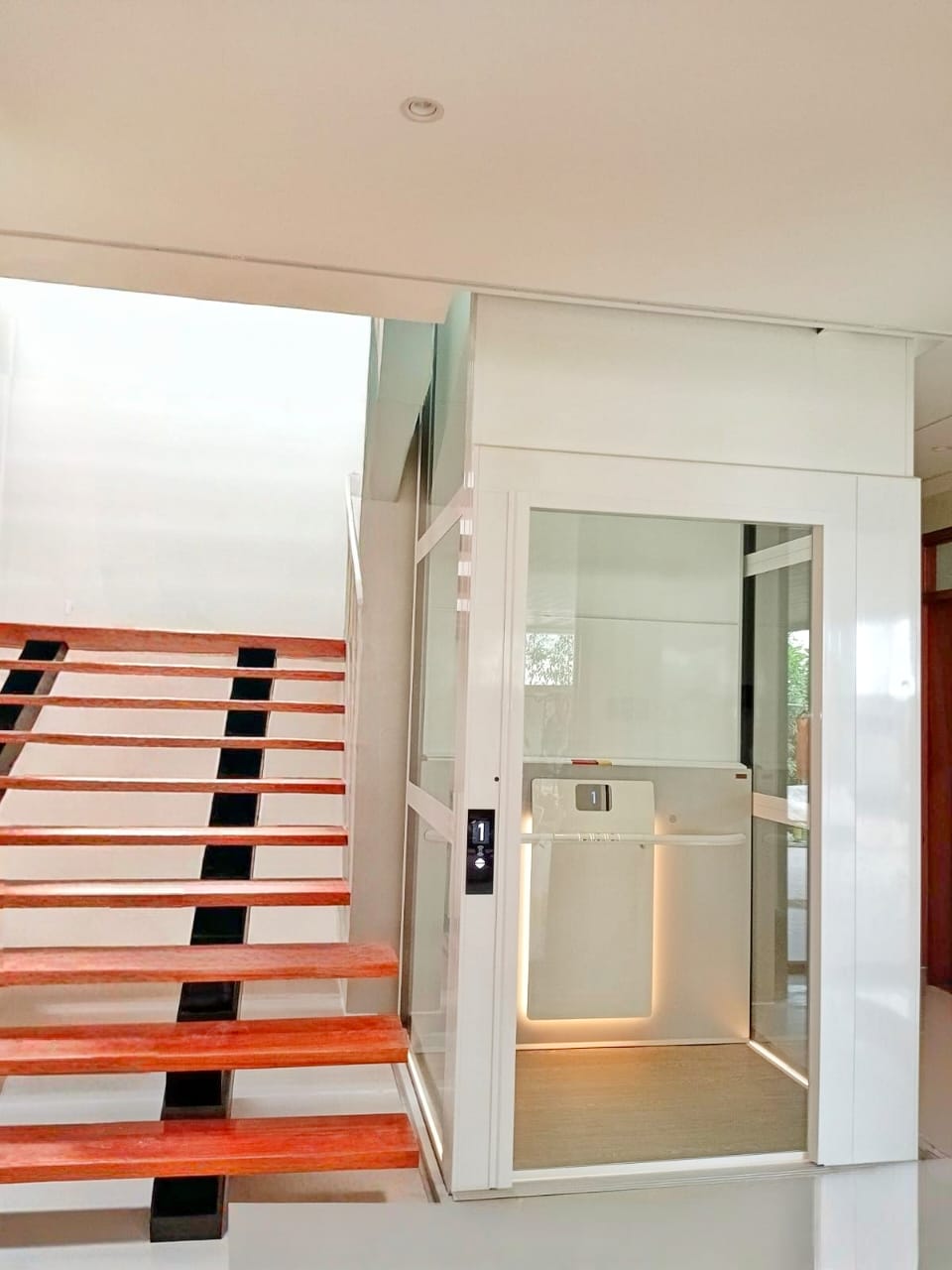
In Philippine homes, Cibes lifts often fit into hallway corners, stacked wardrobes, or unused spaces near staircases with minimal structural changes.
What If Your Spaces Don’t Stack Perfectly?
Most people hit this issue: “My closets don’t line up floor-to-floor. Does that mean I’m out of luck?”
Not at all. It just means slightly more creative solutions.
At times, space is borrowed from other areas located on different floors. This could be a closet on floor one, a corner of a bedroom on floor two, and a part of the attic on floor three. So long as the spaces are stacked vertically, a shaft can be created even if the spaces aren’t the same.
On the other hand, space can also be created through minor remodeling work.
This can be achieved by converting a corner of a large bathroom, a small storage room, or a large bedroom that can be reduced slightly.
Professional installers are master problem solvers. Don’t try to do everything by yourself, let a problem solver solve your problem.
Cibes experts in the Philippines specialize in retrofits for non-aligned layouts, often completing installations with little disruption in just days.
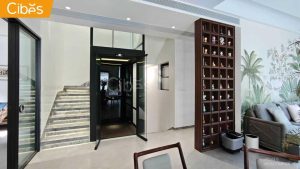
The Real Question Isn’t About Square Footage
Here is what it all comes down to: The question is not, in fact, “Do I have enough space?” The question is, instead, “Am I willing to use some of my existing space in a way that will give my house a huge functionality boost?”
In most houses, even those that are small, there are about 15 to 20 square feet of space per floor that could be utilized if functionality and accessibility are of importance.
Perhaps it’s a closet that you do not particularly want to give up, or a corner space where furniture is placed.
The space is there. The question is: Is what you get, a key to all doors, increased security, increased freedom, and the reassurance of aging in place, is it worth what you give up?
For most individuals who seriously consider this issue, the answer to this question would be yes. The compromise works, and this space does not turn out to be the problem they thought it would be.
And if your question still is, “Do I have enough space for a home lift?” As we mentioned earlier in this article, don’t try to solve this for yourself, home lift installers are problem solvers and they will always find a solution.
Contact Cibes Lift Philippines for a free site survey, they’ll show you exactly how a compact home lift fits your space and lifestyle.
Frequently Asked Questions: How Much Space Do You Really Need for a Home Lift in the Philippines?
Q: How much space does a home lift actually require in a Philippine home?
A: Modern compact Cibes home lifts can need as little as one square meter per floor for basic models, roughly the size of a small wardrobe or closet. Wheelchair-accessible versions usually require around 1.5 to 2 square meters, while standard family models fit comfortably within two to 2.5 square meters. This is far smaller than most homeowners expect.
Q: Is one square meter really enough for a home lift?
A: Yes. Cibes screw-driven lifts are designed without a machine room, without a counterweight, and with little to no pit. This allows a full lift cabin within a minimal footprint, making them suitable for Philippine townhouses and multi-story family homes.
Q: Where can I place a home lift in my Philippine house?
A: Common locations include stacked wardrobes or closets across floors, hallway corners, unused spaces near staircases, living room transitions, or external bump-outs along an exterior wall. With proper planning, Cibes lifts can fit into tight or awkward spaces.
Q: What if my closets or spaces don’t line up perfectly between floors?
A: This is common and usually not a problem. Professional installers can borrow small areas from adjacent rooms or make minor layout adjustments. Many Philippine retrofits are completed without major structural changes, even with non-aligned floor plans.
Q: Will installing a home lift take up too much living space?
A: Not significantly. Most installations use underutilized areas such as storage corners or closets. Many homeowners find that the added safety, accessibility, and daily convenience outweigh the small space trade-off.
Q: Do home lifts require a pit, machine room, or high ceiling clearance?
A: Cibes home lifts typically require no separate machine room, only a very shallow pit or a ramp option, and lower headroom than traditional elevators. This makes them well suited to standard Philippine home construction.
Q: Can a home lift fit in a small urban townhouse in Metro Manila or Cebu?
A: Yes. Compact home lifts are designed specifically for space-limited homes. Many installations in Metro Manila and Cebu use hallway corners, wardrobe stacks, or garage-adjacent spaces and are completed with minimal disruption.
Q: How do I know if my home has enough space for a lift?
A: A professional site assessment is the best way to know. Specialists can measure your home, suggest possible locations, and confirm what configurations will work best for your layout.
Q: Is the space sacrifice worth it for aging in place or family convenience?
A: For most families, yes. A small amount of space provides stair-free access, safer mobility, greater independence for elder, and easier movement of daily items, helping future-proof a multi-story home.
Q: How do I get started to check space in my Philippine home?
A: You can begin by scheduling a site survey with Cibes Lift Philippines. Their team evaluates your space, proposes layout options, and provides clear recommendations based on your home and family needs.
Experience Center and Technical Station Address
Makati City | Balintawak – Quezon City | Mandaluyong City | Cebu City | Ilo-Ilo City | Davao City | Cagayan De Oro City






CIBES AUTHOR
Mylen Posas is the Aftersales Manager at Cibes Lift Philippines. She oversees aftersales operations, ensuring every customer receives reliable support from installation through long-term maintenance. With a strong focus on service quality and customer satisfaction, she works closely with the technical team to deliver prompt assistance and help maintain the long-term performance and safety of every Cibes home lift.



TL;DR Outdoor home elevators can improve accessibility while preserving valuable indoor space. In the Philippines, proper weather protection, structural engineering, drainage, and installation planning are essential. This guide explores installation considerations, safety requirements, potential costs, and what homeowners should know before choosing an outdoor home lift. Outdoor elevator installations can help homeowners in the Philippines […]

TL;DR The Cibes Experience Center Mindanao locations in Davao City and Cagayan de Oro City let homeowners, architects, contractors, and property developers explore home lift solutions in person. Compare available designs, check finishes, and discuss your property requirements with the Cibes team. Contact your preferred showroom before visiting to confirm operating hours and available demo […]

TL;DR The Cibes Experience Center Visayas in Cebu City lets homeowners, architects, designers, contractors, and developers see Cibes home lifts in person. Visitors can experience the lift cabin, review available designs and features, and discuss installation requirements with the Cibes team. The Cebu Experience Center currently lists V90 Elegance, Z85 Antera, and Ascenda among its […]

TL;DR Cibes Experience Center Luzon lets homeowners and property professionals experience Cibes home lifts in person before making a decision. Cibes Lift Philippines has 13 demo lifts across three Luzon Experience Centers: Makati (8), Mandaluyong (2), and Balintawak, Quezon City (3). Visitors can ride the lifts, check cabin space, test the controls, explore designs, and […]

TL;DR Sustainable home elevators in the Philippines are becoming an important consideration for homeowners who want to improve accessibility without overlooking environmental responsibility. Modern home elevators can support energy-efficient living through efficient drive systems, durable materials, renewable energy integration, and reduced structural changes compared with major home renovations. The Environmental Case for Sustainable Home Elevators […]