
Blog - 04/05/2026
Home Elevator Price Philippines Full Breakdown & Comparisons
How Much Does a Home Elevator Cost in the Philippines? Full Price Breakdown
TL;DR
Home elevator prices in the Philippines range from ₱1.5M to ₱6M+. Most homeowners spend ₱2.5M to ₱3.5M for a reliable, mid-range system in a two- to three-storey home. That price depends on floors, brand, customization, and installation complexity. If you’re planning a realistic budget, this guide breaks it down clearly.
If you’re looking for a broader overview of residential elevator costs, installation expenses, accessibility-related pricing, and the key factors that influence home lift budgets, our Elevator Pricing in the Philippines Guide explains everything Filipino homeowners should know before making a purchase decision.
Quick Price Breakdown by Category
| Category | Price Range | Best For | Typical System |
| Entry-level | ₱1.5M – ₱2.5M | Basic 2-floor use, tight budget | Hydraulic or basic screw-drive |
| Mid-range | ₱2.5M – ₱3.5M | Most homes, long-term use | Screw-drive or traction |
| Premium | ₱3.5M – ₱6.0M+ | Luxury homes, 3+ floors | Traction, smart-home integration |
How Do Home Elevator Prices Compare by System and Quality?
Entry-Level Systems (₱1.5M – ₱2.5M)
Entry-level systems cover basic two-floor installations with limited customization and short warranties of one to two years. Service networks are typically smaller. These systems suit straightforward homes but long-term reliability varies, check parts availability and service response times before committing.
Mid-Range Systems (₱2.5M – ₱3.5M)
Mid-range systems use proven screw-drive or traction technology with better finishes, smoother operation, and warranties of two to five years. Local service support is established across major Philippine cities. This is where most homeowners land, it balances cost, comfort, and long-term reliability. Brands like Cibes Lift Philippines sit in this range, serving Metro Manila, Cebu, and Davao.
Premium Systems (₱3.5M – ₱6.0M+)
Premium systems are designed for three or more floors, larger cabins, high-end glass or custom interiors, and smart building integration. Full-service contracts are standard. Global brands such as Otis, Schindler, and KONE operate in this tier. Note: global premium brands often carry longer lead times for parts compared to locally-stocked alternatives.
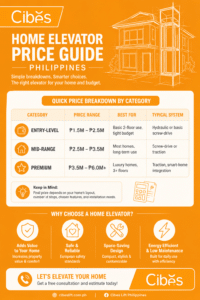
Thinking about installing a home elevator in the Philippines? Here’s a quick and easy pricing guide from Cibes. Compare entry-level, mid-range, and premium home lift options to find the right fit for your home, lifestyle, and budget
How to Choose the Right Budget Tier for Your Home
Choosing the right budget tier depends on three variables: your home’s floor count, your timeline (new build vs. retrofit), and your tolerance for ongoing service costs. Mid-range systems (₱2.5M–₱3.5M) deliver the best cost-per-year-of-service ratio for most Filipino homes because their screw-drive or traction technology requires fewer oil changes than hydraulic alternatives and their local service networks are established in Metro Manila, Cebu, and Davao. If you are retrofitting into an existing staircase, factor in ₱100,000–₱300,000 in structural work that most online quotes exclude. Premium systems are worth the extra investment only when you need three or more floors, large cabins, or smart-home integration.
How Much Does a Home Elevator Cost by Number of Floors?
| Floors | Entry-Level | Mid-Range | Premium |
| 2 floors | ₱1.5M – ₱2.5M | ₱2.5M – ₱3.2M | ₱3.5M – ₱4.5M |
| 3 floors | ₱2.5M+ | ₱3M | ₱4.5M – ₱6M+ |
| 4+ floors | ₱3.0M+ | ₱3.5M+ | ₱6M+ |
More floors mean higher costs due to structure, travel height, and installation time.
How Do Prices Vary by Brand in the Philippines?
Cibes Lift Philippines
2-storey: ₱2.5M – ₱3.5M | 3-storey: ₱2.5M – ₱4.2M
Screw-drive, shaftless designs require no machine room, with local service teams in Metro Manila. Documented project installs across Quezon City, Cavite, Batangas, and Davao.
Global Premium Brands (Otis, Schindler, KONE)
Typical range: ₱3M – ₱6M+. Best for large homes or luxury builds where full-service contracts and smart integration are required.
Entry-Level Manufacturers
Often Asian-origin brands at ₱1.5M – ₱2.5M. Lower upfront cost, but verify service coverage, parts availability, and warranty terms carefully.
What’s Included in the Price?
Most home elevator packages include the elevator unit, installation labor, standard cabin finishes, and mandatory safety features (overload sensor, emergency stop, door safety edges).
Costs typically excluded from quotes:
- Structural shaft or pit construction (₱100,000–₱300,000)+-
- Electrical panel upgrades
- Permit and inspection fees (varies by LGU)
- Custom finish upgrades
Always request an itemized quote that separates equipment cost from civil works.
How Much Does It Cost to Run a Home Elevator?
Electricity costs for residential elevators in the Philippines typically range from ₱500+- to ₱1,500+- per month based on daily trip frequency and system type. Screw-drive systems generally consume less power per trip than hydraulic systems because they do not run a continuous pump motor.
Annual maintenance contracts typically cost ₱15,000+- – ₱40,000+- depending on brand and coverage tier.
How Can You Reduce Home Elevator Costs?
- Install during new construction rather than retrofit (saves ₱80,000 +- – ₱200,000+- in civil works)
- Choose standard cabin sizes (around 1.0m x 1.2m works for most homes)
- Limit custom finishes at first install; upgrade later
- Compare multiple suppliers with itemized quotes
- Ask about financing or staged upgrades
Cutting price too much upfront can lead to higher maintenance costs and limited service support later.
How Much Should You Budget?
Recommended Budget for Most Filipino Homes
₱2.5M to ₱3.5M covers a dependable system with good comfort, safety, and long-term value.
Is a Home Elevator Worth It?
For multi-storey Filipino homes, a home elevator improves daily comfort, supports aging family members and PWD household members, and adds measurable resale value. It is a long-term infrastructure investment, not a luxury convenience.
Watch: Home Elevator Installation in the Philippines
Frequently Asked Questions
Q: How much does a home elevator cost in the Philippines?
A: ₱1.5 to ₱6M+, depending on system type, floors, brand and features.
Q: What is the average price for a home elevator in the Philippines?
A: Most installs fall between ₱2.5M and ₱3.5M.
Q: Why do home elevator prices vary so much?
A: The main factors are number of floors, customization level, brand, and installation complexity. Retrofit installs also add civil works costs (₱100,000+- – ₱300,000+-) that quotes often exclude.
Q: Which home elevator brand offers good value in the Philippines?
A: Mid-range brands like Cibes Lift Philippines are often chosen for their balance of technology, local service, and documented project track record.
Q:Can I install a home elevator on a tight budget?
A: Yes, but prioritize safety features, warranty length, and local service coverage. A lower upfront price can result in higher long-term maintenance costs.
Q: What is included in a home elevator quote?
A: A complete quote should include the elevator unit, installation labor, standard finishes, and safety systems. Structural work, permits, and electrical upgrades are usually quoted separately.
Q: How long does home elevator installation take in the Philippines?
A: Typical is more or less 10-15 days for the lift unit, plus civil works lead time.
Learn more
- How Much Does a Home Elevator Cost in The Philippines? Comparison of 5 Kinds of Home Lifts and Price
- Explore Small & Affordable Elevator Options

Cibes Author
Kevin Der Arslanian is the Vice President of Sales for APAC & MENA at Cibes Lift Group. Since joining in 2017, he has helped grow the company’s presence across key markets, bringing a clear, practical approach to leadership and a strong focus on customer needs.
Kevin Der Arslanian | LinkedIn
LinkedIn: https://www.linkedin.com/in/kevinderarslanian/
Thinking about adding a home lift?
Contact Cibes Lift Philippines Inc. to learn more or schedule your installation.
Phone: 0917 555 7054 / (027) 529 1128 | Email: ph@cibeslift.com | Address: Patio 2257, Chino Roces Ave Extension, Makati, Metro Manila.



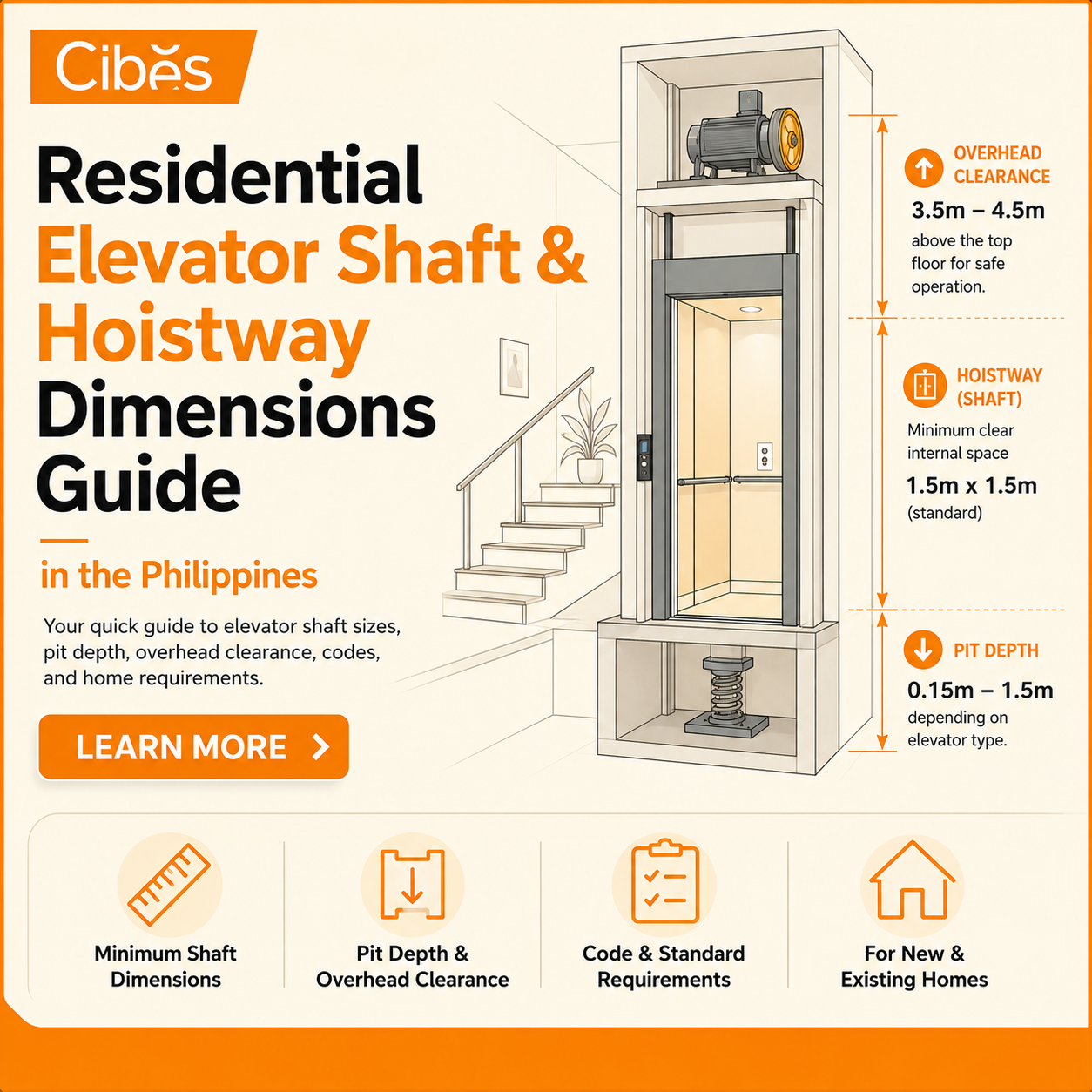
Residential Elevator Shaft & Hoistway Dimensions Guide in the Philippines TL;DR A residential elevator in the Philippines typically requires a minimum hoistway size of 1.5m × 1.5m (5 ft × 5 ft). Wheelchair-accessible elevators generally require at least 1.7m × 1.8m (5.5 ft × 6 ft). Pit depth can range from 0.15m to 1.5m, while […]
Why More Filipino Homeowners Are Installing Home Lifts During Renovations TL;DR Filipino homeowners are increasingly installing home lifts during renovation projects because renovations provide easier structural access, lower installation disruption, improved accessibility, and long-term property value benefits. For many two-storey and three-storey homes, renovating is often the most practical and cost-effective time to add a […]

Essential Home Lift Features for Tropical Philippine Homes TL;DR Home lifts in the Philippines should be designed to withstand high humidity, year-round heat, monsoon rains, and occasional power interruptions. Key features include corrosion-resistant materials, proper ventilation, heat-resistant components, battery backup systems, and regular maintenance support. Choosing a lift engineered for tropical conditions helps ensure reliable […]

Vacuum & Pneumatic Elevators for Philippine Homes: A Complete Guide TL;DR Vacuum elevators use air pressure instead of cables or hydraulic systems to move a cabin inside a transparent tube. Most residential models require only 75 to 100 cm of space, serve 2 to 4 floors, carry 205 to 238 kg, and can often be […]

How Much Does a Home Elevator Cost in the Philippines? Full Price Breakdown TL;DR Home elevator prices in the Philippines range from ₱1.5M to ₱6M+. Most homeowners spend ₱2.5M to ₱3.5M for a reliable, mid-range system in a two- to three-storey home. That price depends on floors, brand, customization, and installation complexity. If you’re planning […]