Blog - 17/01/2026
Top Myths About Home Lifts Elevators-Debunked!
Are you under the impression that home elevators are only for millionaires and their mansions?
Maybe you’ve heard otherwise that they’re unsafe, take up half of your home, or break down all the time. If you’ve considered putting in a home elevator but weren’t sure because of “information” you’ve “heard,” don’t worry – and chances are you’re working with some pretty outdated information.
Here’s the thing: much of what everyone thinks they know about home elevators comes from the movies, old homes, or that one friend’s anecdote about their cousin’s friend’s elevator mishap in 1987. Meanwhile, the technology has completely evolved, costs have become much more reasonable, and installation has become so much simpler.
Myth #1: Home Elevators Are Only for Rich People
This one’s probably the biggest myth there is, and believe it or not, it gets more wrong every year.
Home elevators were actually luxury items that only affluent families could afford to have in the past. That was when they required massive building projects, custom engineering, and basically rebuilding parts of your home. Home elevators these days are a whole different breed.
Add to that, think about this: how much would it actually cost to move to a one-level house that has the same square footage and the same neighborhood as your current multi-level home? In most markets, a home elevator is often more cost-effective than relocating.
What’s actually revolutionized the game is: prefabricated systems, easier installation, and manufacturing competition. Manufacturers have become adept at building elevators affordably, resulting in lower prices for everyone.

Myth #2: They Take Way Too Much Space
Picture a massive elevator shaft filling a massive slab of your first floor, and you’re probably picturing office building commercial elevators. Residential elevators work in very different ways.
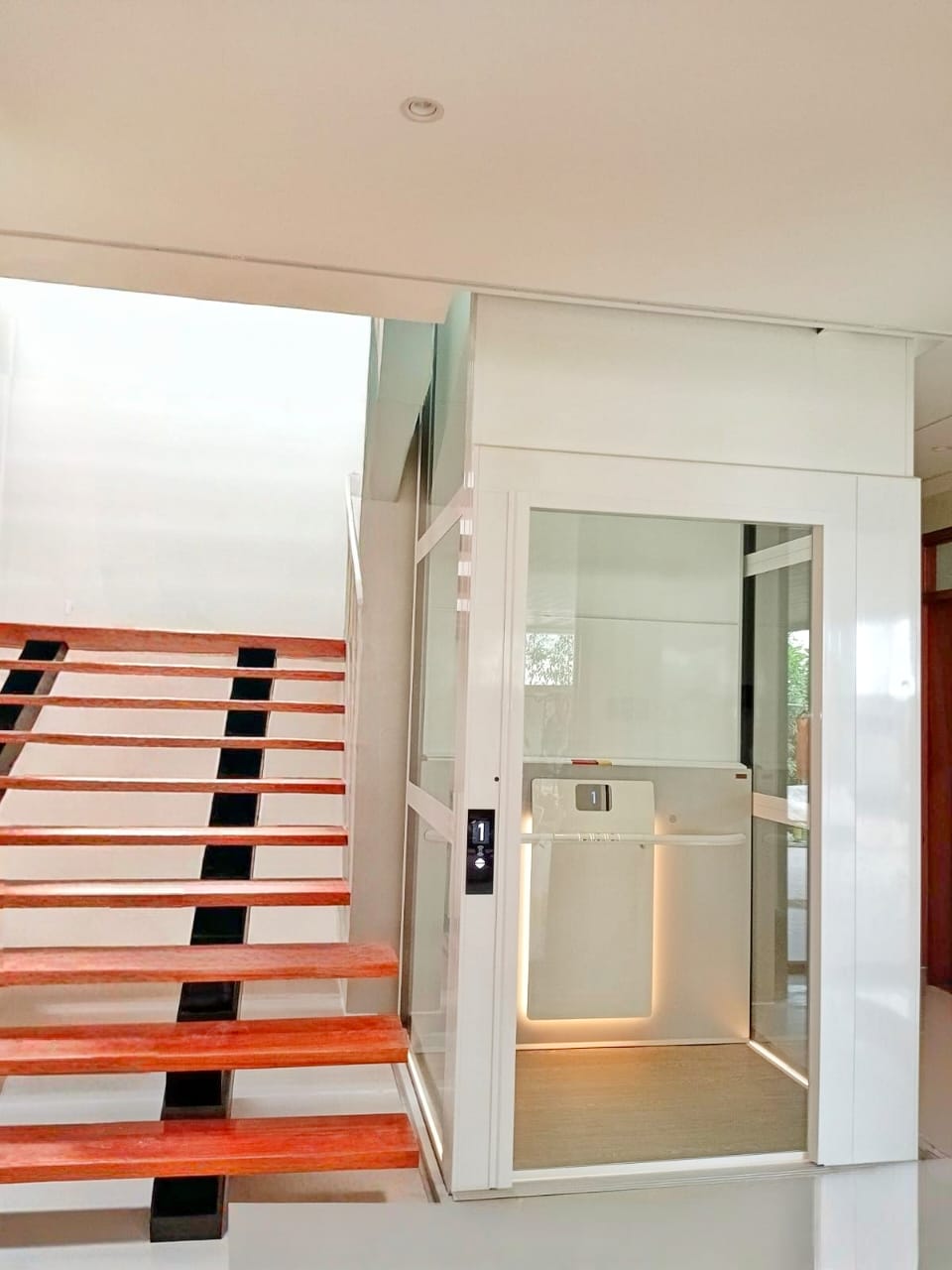
The shaft will likely be installed in dead space that you already have: that odd area under your stairs, the dead space where you stuffed an orphan bookcase, or even a massive closet. Clever installation businesses are actually quite skilled at discovering spaces in your house you didn’t even know you had.
Here’s a real-life anecdote (hypothetical but totally realistic): the Johnsons couldn’t fit an elevator into their two-story colonial. Fortunately, there was a handy spot where their front hall closet overlapped with an empty corner of their living room. The elevator slipped in like a glove, and they even gained extra storage by reorganizing around it.
Vertical space requirements are accommodative too. New elevators share space with the normal ceiling heights, and the majority can be integrated into homes that have unusual floor plans or special architectural elements.
Space myth probably occurs because people see those enormous business elevator installations and think residential systems are the same. They’re not – residential elevators are made to fit the space restrictions that most families experience.
Myth #3: Installation Is a Nightmare That Takes Forever
This one did once have some truth to it, and perhaps that’s why the myth has persisted. Old-fashioned elevator installations were gigantic construction jobs that could take weeks or months and turn your home into a disaster zone.
Installation now is quite different. Residential elevators are installed in days, not weeks. The modules are pre-fabricated and ready to go, and the installation experts have a clear idea of what they need to do.
This is what an average installation nowadays looks like: Prep and minimal structural changes on day one. Days two and three with elevator parts in and installed. Day four potentially final adjustments and testing. We’re talking less than a week for the majority of installations.
The mess factor has changed dramatically too. Professional installation teams protect your floors, clean up after themselves daily, and try to minimize disruption to your normal routine. You’re not living in a construction zone for months.
Myth #4: They Break Down All the Time
It probably resulted from people’s experiences with old commercial elevators in old buildings you know, the ones that are “out of order” more often than not.
New home elevators are built completely differently. They’re residential-grade, so fewer trips per day, lighter loads, and less wear and tear than commercial. A home elevator might make 10-20 trips a day versus hundreds of trips for a commercial elevator.
The technology is also much more trustworthy these days. Better materials, smart control systems, and decades of refinement through engineering have resulted in today’s home elevators being very reliable. Most homeowners have their elevators running smoothly for years with no more than routine maintenance.
Maintenance is simpler than you’d think, as well. Most equipment needs professional servicing every few months, similar to your air conditioner. Routine maintenance prevents most problems from occurring in the first place.
Myth #5: They’re Loud and Disruptive
If your idea of home elevators is clanking, grinding, and mechanical noise disrupting the entire house, you’re recalling technology from days gone by.
Residential elevators today are nearly silent. Oftentimes, they’re even quieter than your dishwasher or air conditioner. The motors are more compact and efficient, the mechanisms smoother, and there’s more sound dampening built into the systems.
You’ll hear a light hum when the elevator’s operating, but it’s not obtrusive to everyday life. People have normal conversations, watch TV, or sleep in spaces adjacent to elevator shafts without problem.
Installation has also been quieter. While there is definitely some noise of construction during the process of installation, it’s nowhere close to the jackhammering and heavy machinery that people imagine. Much of the installation is actual precision assembly rather than demolition.
Don’t let old myths keep you from exploring something that could really improve your family’s daily life. The reality about home elevators today is a great deal more positive than the myths portray.
FAQ’s:
Q: Are home elevators only for wealthy homeowners?
A: No. While home elevators used to be luxury items, modern systems are far more affordable due to prefabrication, simpler installation, and wider availability. In many cases, installing a home elevator is more cost-effective than moving to a single-level house.
Q: Do home elevators take up too much space?
A: No. Residential elevators are designed for compact spaces and are often installed in areas like closets, under staircases, or unused corners. They are very different from large commercial elevator systems.
Q: Is installing a home elevator a long and messy process?
A: Not anymore. Most modern home elevators are installed in just a few days. Installation involves minimal structural work, and professional teams manage dust, noise, and daily cleanup.
Q: Do home elevators break down frequently?
A: No. Home elevators are built for residential use, meaning fewer daily trips and less wear than commercial elevators. With routine maintenance, they are highly reliable and operate smoothly for years.
Q: Are home elevators noisy during operation?
A: No. Modern home elevators are designed to be very quiet, often producing less noise than common household appliances like dishwashers or air conditioners.
Q: Are today’s home elevators safer than older models?
A: Yes. Advances in materials, engineering, and control systems have significantly improved safety and reliability compared to older elevator technologies.
Q: Are common beliefs about home elevators outdated?
A: Yes. Many myths come from old movies, outdated installations, or rare anecdotes. Today’s home elevators are compact, reliable, quiet, and much easier to install than most people expect.



What is a single-person home elevator in the Philippines? TL;DR A single-person home elevator is a compact residential lift designed for one adult. It typically measures 2.5 to 3 feet wide and 3 to 4 feet deep, with an 8 to 12 square foot footprint per floor and a weight capacity of 300 to 500 […]

Are Traction Elevators Good for Homes in the Philippines? TL;DR Traction elevators are a practical home lift solution for many Philippine houses, especially those with three or more floors. They use about 40-70% less electricity than hydraulic elevators, which helps reduce operating costs in a country where power prices are relatively high. Modern traction systems […]

What are the requirements for a PWD elevator in the Philippines? TL;DR A PWD elevator in the Philippines must support wheelchair access and follow accessibility standards. The minimum cabin size is 1.1 m × 1.4 m, door opening must be at least 900 mm, and elevator controls must be placed 900-1,200 mm above the floor with Braille […]

What is a simple elevated house design in the Philippines? TL;DR A simple elevated house is a home built on a raised foundation, stilts, or a platform to reduce flood risk, improve airflow, and adapt to tropical weather conditions common across the Philippines. In areas like Metro Manila, Bulacan, Pampanga, Laguna, and many coastal towns, […]

Understanding Glass and Scenic Home Elevators in the Philippines TL;DR: What Is a Glass Home Elevator and Why Do Filipino Homeowners Install One? Cibes Glass home elevators use tempered or laminated safety glass walls to move people between floors while maintaining visibility and natural light. In the Philippines, they are commonly installed to support aging […]