Blog - 24/04/2025
Home Elevator Installation & Dimensions in the Philippines: Complete Planning Guide
Planning Your Home Elevator Installation in the Philippines: Getting It Right from the Start
The decision to install a home elevator is one thing.
Actually getting it right, including understanding the process, the costs, the exact space, and the code compliance obligations, is an entirely different conversation.
It’s all too easy to begin by considering how much money a lift will cost, but the reality is that you need to ask yourself, “What do I really need?” before any other question.
This often leads to budgets that overlook structural requirements, shafts that are too small for proper installation, lift cabins that cannot accommodate wheelchairs when needed, and permitting processes delayed by unexpected issues.
If you’re looking for a broader overview before planning your installation, our Home Elevators & Home Lifts in the Philippines: The Complete Guide for Filipino Homeowners brings together everything you need to know about residential elevators, including pricing, lift technologies, accessibility, installation planning, and expert buying advice. It serves as the central hub of our Philippine home lift knowledge base.
This guide focuses specifically on planning a home elevator installation in the Philippines, covering space requirements, shaft dimensions, installation timelines, accessibility standards, and the key design decisions that help ensure a safe, efficient, and future-ready installation.
In This Guide:
- Installation Process
- Cost Breakdown
- Elevator Dimensions
- Cabin & Door Specs
- Hoistway Requirements
- PWD Compliance
Before starting the installation process, it’s important to understand how each step fits into the overall planning of your home elevator.
What the Step-by-Step Installation Process Actually Looks Like
For most Filipino homeowners, concerns about elevators have less to do with cost and more to do with uncertainty.
How long does it take?
How does it affect my house?
What is involved in going from the declaration that I want an elevator to getting an elevator installed in my home?
This article takes you through each and every step in this process of installation. It will discuss the steps involved in the preliminary survey and permit application (done for you by Cibes), with an average period of four to six weeks in Metro Manila; then, it will talk about the installation itself.
On average, it will take only five to ten days to install an elevator in a Philippine townhouse, sans any jackhammers and major structural changes.
If you want to learn more about the step-by-step installation process, permit timelines, and what to expect from day one to your first ride, read the full article below.
Read More About the Home Elevator Installation Process in the Philippines →
Once you understand how the installation process works, the next step is to break down what this actually costs in practice.
What a Complete Installation Cost Breakdown Really Includes
Price is rarely a single number, and for home elevator installations in the Philippines, understanding the complete cost breakdown matters far more than knowing the headline figure.
This article goes beyond the unit price to map every cost component involved: the elevator itself, civil works, permit fees, electrical upgrades, finishing details, and the ongoing maintenance costs that determine the true long-term investment.
This article covers all the essential factors that impact the pricing, including the type of system, the floor coverage, the existing condition of your house, and the level of customization you would need.
With this information, you will not be surprised by the overall cost during the installation process.
If you have been researching the cost of installing an elevator in your home, you will have no trouble understanding why all costs are compared on the same level.
For more detailed insights into the many components of the cost of installing a home elevator in the Philippines, please read below.
Read More About the Complete Home Elevator Installation Cost Breakdown →
Beyond cost, one of the most critical aspects of planning is ensuring your home has the right space and dimensions for the elevator.
How to Read Standard Elevator Dimensions and Plan Your Space
Designing one’s dream elevator cabin layout without considering the total space required for the installation is another common blunder committed by homeowners in the Philippines.
This article covers the most common residential elevator sizes used in the Philippines. These range from compact single-passenger cabins (0.8m × 1.0m, with a 1.1m × 1.3m hoistway), to two- and three-person cabins, up to wheelchair-accessible elevators starting at 1.1m × 1.4m and reaching 1.4m × 1.4m for full PWD use.
The article explains why the dimensions of the hoistway are usually 100-400mm larger than the cab dimensions on all sides and the importance of having a minimum 1.5m clearance in front of each door landing in accordance with building codes.
Also, it provides tips on how to match the requirements of the house occupants both present and future based on their needs.
For detailed information regarding elevator cabin sizes, hoistway dimensioning, and choosing the appropriate setup, please refer to the complete article below.
Read More About Standard Elevator Dimensions and Space Planning in the Philippines →
Once you understand overall dimensions, the next step is to look at how cabin size and door specifications affect daily usability.
What Cabin and Door Specifications Actually Mean for Your Home
Unlike the general size guide that only discusses the approximate specifications of elevators, this article provides the specific information on what the interior and exterior measurements should be like for daily use in your own house in the Philippines.
The list of interior dimensions, door opening size requirements, hoistway specifications, and maximum loads for each typical setup from the 0.8m x 1.0m single person cabin with 0.6-0.7m wide door up to the 1.4m x 1.4m large cabin with 0.9-1.0m wide door will also give you a better idea of how to integrate the measurements in your overall plan, including the necessary clearance in front of the hoistway, the required 1.5m landing clearance on all floors, and other important factors that may be overlooked during the design process.
If you are working with architects or contractors who will build an elevator in your home, you need to make sure that these specifications are incorporated into your plans from the start.
For more information on cabin dimensions and door opening sizes, please click on the link provided below.
Read More About Residential Elevator Cabin and Door Specifications in the Philippines →
While cabin dimensions are what you see, the hoistway is what determines whether your elevator can be safely installed.
Why the Hoistway Is the Most Critical Decision in Any Installation
The cabin is the part you use every day.
The hoistway is what makes it safe, legal, and structurally sound, and it is the part of the elevator that most homeowners never think about until a problem arises.
This article outlines the minimum hoistway dimensions for standard residential elevators (1.5m x 1.5m) and wheelchair accessible systems (1.7m x 1.8m); pit depths depending on the kind of system used (1.2-1.5m for hydraulic systems to as shallow as 0.15m for low-pit systems); and ceiling heights above the uppermost level (3.5-4.5m).
Hoistway wall construction requirements are discussed, which consist of the two-hour fire rating; connection points of the guide rails extending up to the entire height of the wall, and Philippine hoistway standards consisting of the National Building Code, ASME A17.1, Philippine Electrical Code, and Accessibility Standards of BP 344 and RA 7277.
Proper design of the hoistway should be considered the critical step in any elevator installation, as discussed in this article. Click on the following link for the complete article.
Read More About Elevator Shaft and Hoistway Dimension Requirements →
How Compliance and Comfort Work Together for PWD Elevators
Creating an elevator that actually caters to people with disabilities is not only about meeting the minimum cab size.
This article describes the complete set of specifications required to be fully compliant to PWDs in the Philippines, including interior dimension of 1.1m by 1.4m, 900mm door opening, control panels from 900 to 1,200mm high with Braille/raised buttons (no touch screens), non-slip floor covering, door sensors, hand rails, wheelchair height emergency communication system, and battery back-up in case of brownouts.
It differentiates minimum compliance and actual comfort, providing rationale on why a larger 1.4m by 1.4m cabin size makes sense for motorized wheelchairs/mobility scooters or where there is an attendant accompanying the PWD.
This also includes the legal aspect covered in Batas Pambansa Blg. 344 and Republic Act 7277, which mandate the installation of such specifications on applicable buildings. There are also practical aspects discussed on installing indoor and outdoor PWD elevators in residential and commercial establishments in the country.
Read the complete article below to find out more information.
Read More About PWD-Compliant Elevator Dimensions and Accessibility Requirements →
All of these factors come together in one critical step: proper planning before installation begins.
FAQ
Q: How long does it take to install a home elevator in the Philippines?
A: The full process usually takes 4 to 6 weeks for permits and preparation, followed by 5 to 10 days for installation, depending on the project.
Q: What space is required for a home elevator?
A: Space requirements vary by system, but compact elevators can fit in as little as 1 square meter, while standard installations require larger hoistways and landing clearances.
Q: What is the minimum size for a wheelchair-accessible elevator?
A: In the Philippines, a minimum cabin size of around 1.1m x 1.4m is required, with larger sizes recommended for comfort and ease of use.
Q: Do I need permits to install a home elevator?
A: Yes, installation typically requires permits and compliance with building codes, which are usually handled during the planning and survey phase.
Q: What is the most common mistake when planning a home elevator?
A: The most common issues include underestimating space requirements, not accounting for structural constraints, and failing to plan for future accessibility needs.
What to Consider Before Installing a Home Elevator
Planning a home elevator involves more than just choosing a model. It requires understanding space, structure, costs, and compliance requirements to ensure a smooth installation.
The difference between an installation that works well for the family for decades and one that creates more problems than necessary, either financial or physical, lies in how well the elevator is planned beforehand in terms of its dimensions, hoistway needs, overall price and compatibility with the needs of the household.
Cibes Lift Philippines has accumulated over 75 years of experience across the globe, as well as almost a decade within the country. We do all our permits, measurements, surveys and consultations ourselves, never subcontracting these tasks, leaving you free of any surprise problems later on.
If you’re planning a home elevator, speaking with an expert early can help avoid costly mistakes and ensure everything is done right from the start.
Related Guides
To better understand your options, you may also explore:
- Home Elevators Philippines: Complete Guide, Costs & Best Options
- Elevator Pricing in the Philippines: Everything You Need to Know Before You Buy
- Types of Home Lifts in the Philippines: Features, Pros & Best Uses
- Home Accessibility Solutions in the Philippines: A Complete Guide to Mobility Options
- Cibes Home Elevators Philippines: Products, Technology & Expert Guide



TL;DR Cibes Home Lift Antera is a premium residential lift range designed for homes where safety, comfort, accessibility, and interior design all matter. Available in Z70, Z85, and Z90 configurations, the range uses Generation 5 screw-drive technology and a machine-room-free design. What Is the Cibes Antera Home Elevator? The Cibes Antera is a premium residential […]
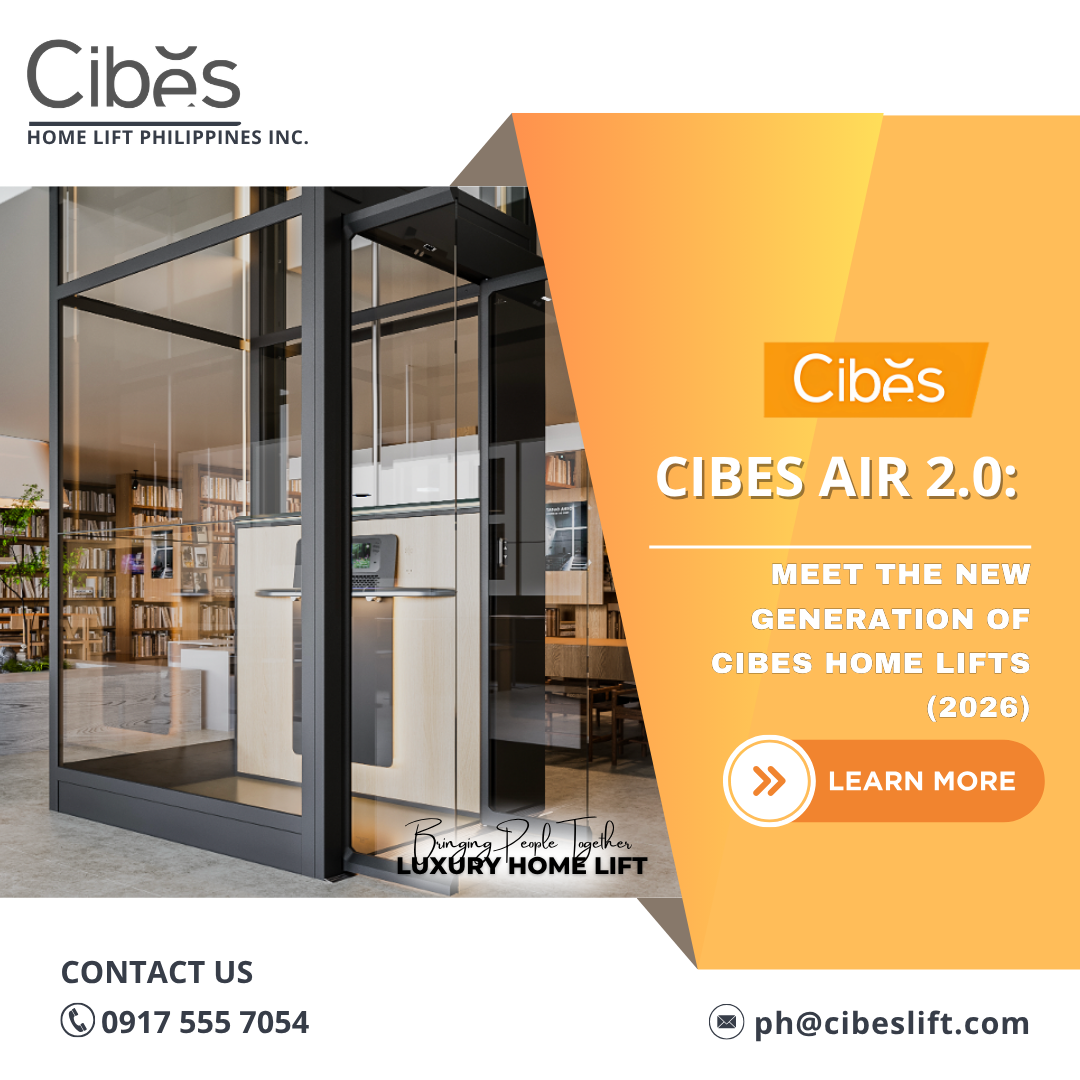
TL;DR The Cibes Air 2.0 is a new-generation home lift that brings modern Scandinavian design into the home. With its frameless panoramic glass shaft, refined cabin, elegant lighting, quiet performance, and flexible installation, it combines everyday comfort with a beautifully designed lift that feels naturally part of your living space. What Makes the New Cibes […]

TL;DR Three-story homes are becoming more common across the Philippines, especially in Metro Manila, Cebu, Davao, Iloilo, and Cagayan de Oro, where homeowners want to maximize limited lot sizes. Adding a home lift makes every floor easier to access for elderly parents, children, and future generations. When choosing a residential home elevator, consider the available […]

TL;DR Permits to Install a Home Lift are usually required in the Philippines before a residential lift can be legally installed. Home lifts are legal in the Philippines, but they must comply with local building regulations. Most residential installations require a building permit from your local government and must follow the National Building Code of […]

TL;DR Delaying a home lift can increase long-term costs beyond the initial purchase price. Waiting until mobility declines may lead to higher medical expenses after stair-related falls, emergency home modifications, or reduced independence. Installing a home lift earlier gives homeowners more time to compare models, plan installation, and create a safer, more accessible home that […]